Views: 214 Author: SENHEDA WOOD Publish Time: 2026-05-09 Origin: Site
Movingui (scientific name: Distemonanthus benthamianus), also known as Ayan or Nigerian Satinwood, is a popular African tropical hardwood valued for its beautiful hue, stable structure, and versatile applications—from furniture and flooring to veneer and interior joinery. However, not all Movingui is created equal. To avoid low-quality stock and ensure your investment pays off, it’s critical to master the art of identifying premium Movingui. Below is a complete guide covering color, grain, texture, and core material features.
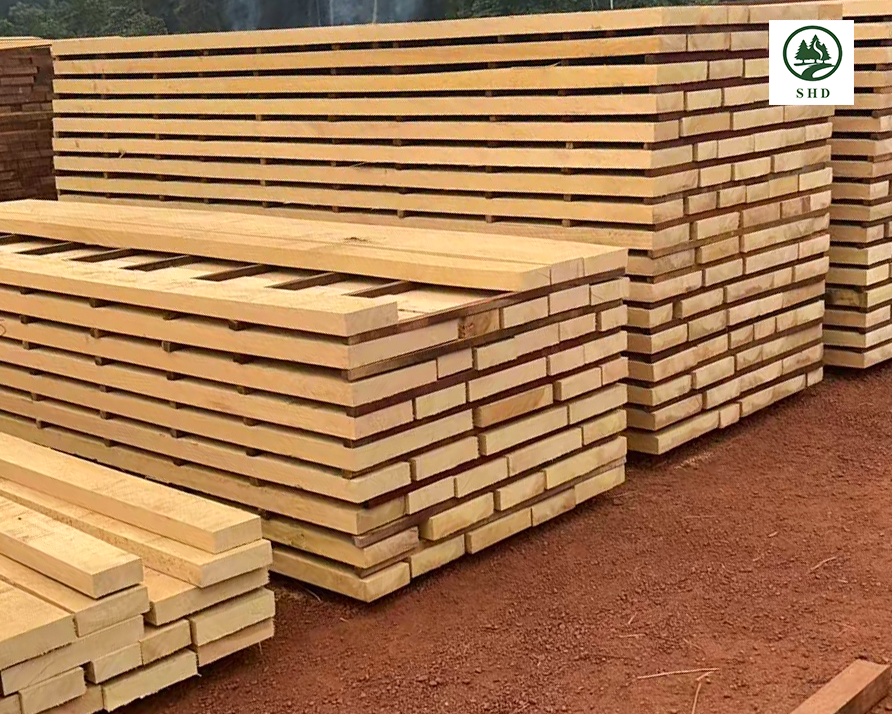
High-quality Movingui boasts a distinct, uniform color that sets it apart from inferior alternatives.
Heartwood: Premium pieces show a pale lemon-yellow to golden-brown tone, often with subtle orange undertones. The color is consistent across the surface, without dull gray patches, dark stains, or uneven discoloration. Over time, high-quality Movingui darkens slightly to a rich amber hue—this is a natural sign of aging, not a defect.
Sapwood: Clearly demarcated from the heartwood, sapwood is a pale straw or creamy yellow color. In top-grade Movingui, sapwood is narrow (typically ≤5cm) and free of blemishes, mold, or insect marks.
Red Flags: Avoid wood with faded, washed-out yellow, or blotchy coloration—these indicate poor drying, improper storage, or low-grade logs.
Grain pattern is a hallmark of Movingui’s beauty and quality.
Premium Grain: High-quality Movingui features straight to slightly interlocked grain, with a fine, even pattern. Many top logs display attractive figured grain—such as mottle, ripple, or curl—that adds a luxurious, satin-like sheen (earning it the nickname “Satinwood”). The grain is tight and consistent, no wild, chaotic patterns or large, irregular gaps.
Low-Quality Grain: Inferior Movingui often has highly irregular, loose grain, or excessive waviness that causes tearing during processing. Avoid pieces with large, open grain pockets or inconsistent grain direction.
Texture directly impacts workability and finish quality—premium Movingui excels here.
Key Features: High-grade Movingui has a fine to medium, even texture with a smooth, silky feel when touched. It’s dense (720–750 kg/m³) and firm, not lightweight or spongy. When planed or sanded, it produces a glassy, lustrous surface with no fuzzy fibers.
Red Flags: Rough, coarse texture, or a “dry” brittle feel signals low density or poor processing. Avoid wood with splintery surfaces or uneven texture—these lead to messy finishes and reduced durability.

Beyond appearance, premium Movingui must meet strict structural and quality standards.
High-quality Movingui is medium-to-high density (720–750 kg/m³) with a Janka hardness of 5,680 N (1,280 lbf)—hard enough for heavy-use applications like flooring or cabinetry. It feels substantial in the hand, not light or flimsy.
Top-grade Movingui is moderately durable against fungi, termites, and decay. It resists warping, shrinking, and cracking when properly dried—critical for long-term stability in furniture or construction. Note: It contains up to 1.3% silica, which adds hardness but may dull tools (normal for premium Movingui).
Premium Movingui is kiln-dried to 10%–12% MC (ideal for most applications). Too high MC (>15%) leads to warping; too low (<8%) causes brittleness. Always verify MC with a moisture meter—reliable suppliers provide test reports.
High-quality Movingui is free of major defects:
No large dead knots, cracks, splits, or insect holes.
Minimal sapwood (≤5cm) and no mold, stains, or discoloration.
No internal stresses (common in low-grade wood) that cause warping after processing.
Premium Movingui is sourced from legal, sustainable forests in Central/West Africa (Gabon, Cameroon, Nigeria). Reputable suppliers provide full documentation: origin certificate, phytosanitary certificate, and harvesting license. Avoid wood with unclear origin—this risks customs detention or illegal logging ties.

Inspect samples in natural light to check color consistency and luster.
Run your hand along the surface—smooth, silky texture = high quality.
Ask for MC test reports and origin documentation from suppliers.
Avoid “too-good-to-be-true” low prices—premium Movingui commands a fair price for its quality. With this guide, you can confidently identify high-quality Movingui for your projects—whether you’re sourcing for furniture, flooring, or decorative veneer.
We specialize in 17 years of African timber export, with direct access to legal, sustainable Movingui forests in Gabon and Cameroon.
✅ Premium grade Movingui with consistent color, fine grain, and zero major defects
✅ Kiln-dried to 10%–12% MC for optimal stability
✅ Full set of export documents (origin, phytosanitary, etc.)
✅ Custom sizes & grades tailored to your project needs
✅ Competitive FOB/CIF pricing & reliable containerized shipping We also supply Azobe, Sapelli, Okoume, and other African hardwoods—one-stop sourcing for all your timber needs.
Send us your required grade, size, and quantity—we’ll provide a competitive quote and professional sourcing support.
WhatsApp/WeChat: +86 13554764997
Email: sales@shdwood.com
Website: https://www.shdtimber.com


