


Content Menu
● Understanding Wenge Wood's Properties
● Toxicity and Chemical Composition
● Food Contact Safety Assessment
>> Occupational Concerns vs. End Use
>> Current Scientific Perspective
● Hygiene and Maintenance Considerations
● Determining Suitability for Food-Contact Use
● Expanding on Food-Safe Finishing Options
>> 4. Shellac Finish (Natural Resin)
● Comparing Wenge with Common Kitchen Woods
● Environmental and Ethical Concerns
● Durable Design Applications in Modern Kitchens
● FAQs
>> 1. Is wenge wood toxic to handle?
>> 2. Can wenge be used for cutting meat or vegetables?
>> 3. What's the best coating for food safety?
>> 4. Does wenge have antibacterial properties?
>> 5. Is wenge environmentally sustainable?
Wenge wood (Millettia laurentii) is well-known for its luxurious chocolate-brown color interlaced with dark veining. It exudes sophistication and durability, making it a prized choice for furniture, flooring, instrument making, and even high-end kitchenware. However, its use in food contact applications such as cutting boards, serving platters, or utensils has sparked debate. The central question remains: Is wenge wood truly food safe?
This article provides a detailed and updated evaluation of wenge wood's toxicity, safety, hygiene behavior, and finishing potential, integrating credible scientific findings and professional woodworking experiences.

Originating from Central and West Africa, particularly Cameroon and the Congo Basin, wenge belongs to the Fabaceae family, the same botanical group as many legumes. It is characterized by its exceptionally high density (870–910 kg/m³) and substantial hardness of 1,930 lbf (8,600 N) on the Janka scale. These physical properties make it both resilient and visually distinct.
Notable features:
- Color and texture: Dark chocolate brown base with black streaks. The coarse, open grain enhances tactile depth.
- Durability: Exceptionally resistant to wear, decay, and moisture, making it attractive for wet environments like kitchens.
- Workability: Difficult to saw and machine; its oily nature can dull blades quickly.
- Splinter behavior: The wood's density creates sharp splinters that are hard to remove and may cause inflammation if untreated.
Despite its strength and beauty, these mechanical and biological characteristics lead to important questions about hygienic performance and biological safety in food-contact use.
Wenge contains quinones and extractives such as *pterocarpans*, *millettone*, and *isoderrone*, known to cause skin and mucous membrane irritation. The *Wood Database* and *Toxic Wood Research by Woodworkers Source* confirm that exposure to wenge dust can provoke symptoms ranging from mild dermatitis to allergic reactions involving eye irritation, conjunctivitis, or respiratory distress. Long-term or repeated exposure can cause sensitization, where even minimal contact triggers a response.
However, severity depends on form and exposure:
- Inhalation of dust: Irritating or toxic during woodworking operations.
- Direct contact with raw splinters: May introduce infections or allergic responses.
- Contact with finished, sealed wood: Minimal to negligible toxic transfer when completely cured.
Therefore, raw wenge poses occupational hazards for craftsmen and fabricators, but poses no substantial risk to end-users of sealed items.
Contrary to popular belief, not all tropical hardwoods are automatically unsafe for food use. Safety primarily depends on extractive migration potential and surface hygienic management after finishing.
- During processing, the dust can be hazardous.
- After sealing with a food-safe finish, no measurable toxin migration has been observed.
- Long-term food contact (especially with moisture or acid) can erode surface finishes, potentially exposing raw fibers.
Recent research from hygiene studies challenges the long-standing distrust of wooden cutting surfaces. A 2025 hygienic evaluation published in Elsevier journals found that sugar maple cutting boards reduced bacterial survival rates of E. coli and Staphylococcus aureus faster than plastic surfaces after only a few hours, suggesting that wood surfaces can naturally inhibit microbial growth. Similarly, *antimicrobial wood research* has demonstrated that certain species, due to natural polyphenols and stilbenes, have bactericidal properties against Salmonella, Listeria, and Staphylococcus strains.[2][5]
Although wenge has not been the primary subject of such antimicrobial studies, its chemical group (*pterocarpans*) is structurally similar to these active phenolics, suggesting potential intrinsic antibacterial resistance. However, more data are required to confirm this behavior specifically for wenge.
The debate around food safety often extends to cleanability and microbial behavior on wooden surfaces. One of the main critiques against wood is its porosity, which might trap bacteria. Yet studies demonstrate that bacteria on wood tend to die faster due to desiccation and chemical inhibition.
For wenge:
- The coarse texture means microgrooves could harbor residues more easily.
- High density discourages deep microbial penetration, unlike softer woods.
- Proper sealing effectively prevents microbial infiltration into pores.
When maintained correctly, sealed wenge can stay hygienic for serving applications. Routine disinfection with mild soap and water—avoiding soaking—is sufficient for general kitchen safety.
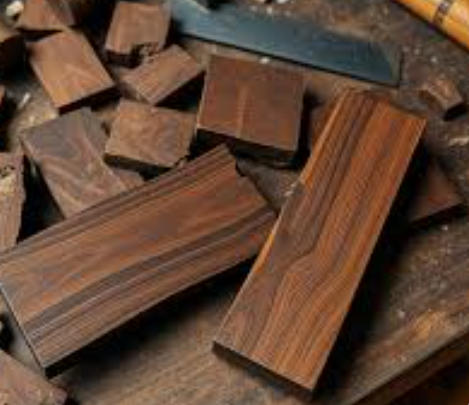
- Serving boards, charcuterie trays, and bread platters
- Utensil handles and knife handles (properly sealed)
- Hot plate bases and decorative serving gear
- Direct-cutting boards exposed to knife impact
- Countertops or wet-food prep areas
- Surfaces intended for raw meat cutting or juicing
The key risk lies in penetration of food acids or water through compromised finishes. Hence, sealed and low-contact applications are safer.
Finishes serve as the essential barrier between the wood and food. The following methods are proven safe and effective when applied to wenge:
Derived from the *Aleurites fordii* nut, tung oil forms a waterproof, flexible polymer film upon polymerization. For wenge, multiple coats (at least three) with drying intervals ensure complete pore sealing.
Mineral oil remains the most affordable and widely recognized solution for FDA-compliant food-contact safety. It enriches the rich brown tone of wenge while protecting surface fibers.
Blending beeswax (30%) with mineral oil (70%) offers a soft satin texture that's ideal for charcuterie boards. The wax layer increases water repellency and smooths out the grain, reducing bacterial retention.
Shellac derived from the *lac insect* creates a glossy, natural barrier suitable for dry-use trays. However, it should not be used where liquids and knife abrasion are involved, as alcohol dissolves shellac.
Avoid finishes containing chemical hardeners, varnishes, or unverified drying agents, which may release solvents unsafe for food contact.[6]
| Wood Type | Food Safety Rating | Janka Hardness | Antimicrobial Potential | Sustainability | Comments |
|---|---|---|---|---|---|
| Maple (Hard) | Very High | 1,450 lbf | Moderate | Excellent | Hygienic, industry standard for cutting boards |
| Beech | High | 1,300 lbf | Moderate | Excellent | Stable, closes pores well after sealing |
| Walnut | High | 1,010 lbf | Good | Good | Softer, kind on knives |
| Cherry | High | 995 lbf | Mild | Good | Moderate resistance to microbes |
| Wenge | Conditional | 1,930 lbf | Unknown to moderate | Poor (Endangered) | Best for decorative/serving, not active cutting |
Wenge's extreme hardness surpasses preferred values for kitchen boards (900–1800 lbf range). Beyond dulling knives faster, its open pores complicate cleaning, making it more decorative than practical.[6]
Sustainability adds another dimension to wenge's suitability. Millettia laurentii is listed as Endangered on the IUCN Red List, facing population reductions exceeding 50%. Uncontrolled logging across African tropical forests has limited reproduction cycles and regional biodiversity.
Buyers must insist on FSC-certified supply chains or consider alternatives such as domestically sourced walnut, beech, or bamboo. Research into engineered composites and laminated woods with food-safe, non-toxic binders offers eco-friendly substitutes with comparable aesthetics.
Although unsuitable for raw food-cutting surfaces, wenge excels in decorative and functional kitchen components:
- Accent edge boards: Thin wenge strips combined with maple or ash enhance visual contrast.
- Knife handles: Resistant to deformation and elegant when polished; ensure sealed joints.
- Serving utensils: Handles for spoons, salad forks, or spatulas benefit from wenge's grip and durability.
- Coasters and trays: Moisture-resistant when properly oiled, adding sophistication to kitchen decor.
In contemporary design, mixing wenge with light-toned woods (like maple) yields a striking aesthetic balance between warmth and modern minimalism.
1. Avoid dishwasher use: Heat and detergents degrade finish layers quickly.
2. Clean immediately after use: Use mild detergent and wipe dry with a soft towel.
3. Reapply protective oil monthly: Regular re-oiling maintains luster and safety.
4. Inspect edges frequently: Sand lightly and reseal any worn areas before exposure worsens.
5. Use for serving, not chopping: Reserve for dry or plated foods—bread, fruit, or cheese boards.
Continuous maintenance extends the functional and aesthetic lifespan of wenge kitchen items while preventing bacterial buildup.
Wenge wood stands out for its strength, beauty, and prestige—but not as the safest medium for heavy kitchen use. Although no meaningful toxins leach from sealed wenge surfaces, its pronounced hardness and dust toxicity make it unsuitable for active food preparation tools like cutting boards. Instead, it thrives in serving, decorative, and utensil applications, where aesthetic appeal meets safety under light-duty conditions.
Through responsible sealing, maintenance, and sustainable sourcing, wenge can remain a refined part of the kitchen—so long as users understand its limitations. For all-around safety and sustainability, maple, beech, or walnut remain the benchmark choices for daily use.
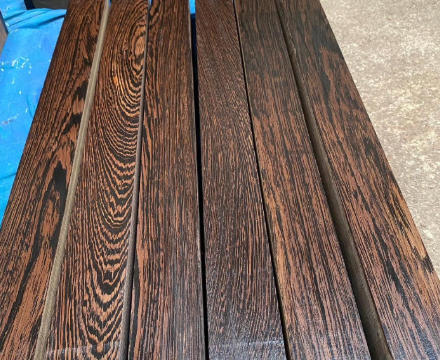
Finished wenge wood is safe to handle, but sawdust can cause dermatitis or allergic reactions, so using respirators and gloves during cutting or sanding is crucial.[3]
No. Knife action may breach the finish, exposing open grain and harboring bacteria. It's better suited for dry, decorative food presentation than direct food preparation.
Pure tung oil, raw linseed oil, or mineral oil are food-grade, natural finishes that protect wenge surfaces without releasing harmful chemicals.[6]
Limited studies show some hardwoods can suppress microbial activity due to natural extractives , but there's no conclusive evidence that wenge itself provides antibacterial properties.[5]
No. Millettia laurentii is an endangered species, and non-certified logging severely impacts ecosystems. Opting for FSC-labeled or reclaimed wood ensures ethical use and sustainability.


