
Views: 222 Author: SENHEDA WOOD Publish Time: 2026-05-22 Origin: Site


Choosing the right lumber for a pole barn is not just a technical decision – it directly impacts your building's strength, service life, and total cost of ownership. As a timber supplier with over 16 years of experience in African hardwoods and global logistics, we've seen how the correct wood species and grade can mean the difference between a barn that lasts decades and one that requires constant repair. [polebarnsdirect]
In this guide, we will walk through the six most commonly used lumber types for pole barn construction, unpack how species and grading work, and share real-world expert insights on where each wood performs best. We'll also show how high‑quality African hardwood can complement these materials for demanding applications like posts, beams, and high-traffic structural members. [blog.uvm]

Before choosing between Southern Yellow Pine or Douglas Fir, you need to understand what "species" really means in structural lumber. [fao]
Lumber species refers to the specific type of tree the wood comes from, such as pine, fir, spruce, cedar, or hardwoods like iroko and padauk. Each species has its own typical profile for: [blog.uvm]
- Density (weight per volume, often in kg/m³)
- Strength (load‑bearing capacity and stiffness)
- Durability (resistance to decay, termites, and insects)
- Workability (ease of cutting, nailing, and finishing)
In pole barn construction, softwoods such as pine, fir, and spruce are widely used because they offer a good balance between strength, affordability, and ease of handling on site. Hardwoods – including many African species – are typically stronger and more durable but heavier and often more expensive, making them ideal for critical structural or high-wear components rather than every single member. [senhedawood]
> Expert insight: In markets like Africa and Asia, we see a hybrid approach increasingly common – softwoods for framing and roofing, combined with African hardwood posts, sill plates, or beams for superior durability in ground-contact or high-moisture zones. [shdtimber]
Even within the same species, not all boards are created equal. That's where lumber grading comes in. [blog.uvm]
Lumber grade classifies boards based on structural quality and visible defects such as knots, splits, slope of grain, and wane. Common structural grades include: [blog.uvm]
- Select Structural / No. 1 – Fewer defects, higher strength and stiffness, preferred for posts, beams, and other load‑bearing elements. [polebarnsdirect]
- No. 2 / No. 3 – More knots or minor defects but still suitable for non‑critical components such as wall girts, blocking, or secondary framing. [polebarnsdirect]
Higher grades cost more but allow you to:
- Reduce the risk of structural failure under snow, wind, and live loads
- Maintain straighter, more stable framing over time
- Achieve better fastener holding and reduced splitting
In practice, many builders mix grades – using No. 1 or better for posts and major beams, and No. 2 for purlins and girts – to optimize both safety and budget. [diypolebarns]
> From a supplier's perspective: When we ship mixed loads of structural timber, we usually recommend separating critical members (higher grade, often treated) from non‑critical components (standard grade), and labelling packs accordingly to avoid mistakes on site. [senhedawood]
The six most widely used species in post‑frame (pole barn) construction are: [polebarnsdirect]
1. Southern Yellow Pine (SYP)
2. Douglas Fir
3. Hem‑Fir
4. Cedar
5. Spruce
6. Redwood
Each has a distinct role depending on climate, budget, treatment requirements, and local availability. In the sections below, we'll examine where each shines – and where they don't. [hansenpolebuildings]
Southern Yellow Pine (SYP) is one of the most common structural softwoods in North American post‑frame and pole barn construction. With a density around 620 kg/m³, it is one of the strongest softwoods used in framing. [hansenpolebuildings]
Key advantages of SYP for pole barns: [polebarnsdirect]
- High load‑bearing capacity – Ideal for primary posts, columns, and beams.
- Excellent response to pressure treatment – When properly treated, it gains strong resistance to rot, decay, and insects, making it suitable for in‑ground or near‑ground use. [sutherlands]
- Wide availability and competitive pricing – Particularly in southern United States and export markets supplied from those regions. [polebarnsdirect]
Best uses in a pole barn:
- Ground‑contact posts (when pressure-treated to appropriate retention levels)
- Primary beams and truss carriers
- Skirt boards near grade (with proper treatment)
However, SYP is relatively prone to movement (shrinkage, warping) if not properly dried and stored, so moisture management and kiln‑drying are important quality factors. [blog.uvm]
Douglas Fir is another staple species in structural framing, known for its high strength‑to‑weight ratio and good dimensional stability. With a density around 530 kg/m³, it offers very respectable load-bearing performance. [blog.uvm]
Why builders choose Douglas Fir: [hansenpolebuildings]
- Strong enough for rafters, trusses, and beams
- Good stiffness, which helps control deflection under roof loads
- Commonly available as engineered products (e.g., laminated posts or glulam members)
While Douglas Fir does not have the same natural decay resistance as Cedar or Redwood, pressure treatment can enhance its durability for exposed or in‑ground uses. [sutherlands]
Typical applications in pole barns:
- Roof trusses and rafters
- Long-span beams (with or without lamination)
- Structural framing members where straightness and stiffness are critical
Hem‑Fir is a commercial grouping that typically includes Western Hemlock and several fir species, commonly used where cost and ease of handling are priorities. [hansenpolebuildings]
With a density around 480 kg/m³, Hem‑Fir is lighter than SYP or Douglas Fir, but also less strong, especially in bending. [blog.uvm]
Pros of Hem‑Fir: [hansenpolebuildings]
- Lighter and easier to handle on site
- Typically lower cost compared to stronger species
- Suitable for non‑critical framing members
Limitations to be aware of:
- Not naturally decay resistant – Must be pressure-treated if used outdoors or near ground level. [sutherlands]
- Less ideal for primary posts in high‑load, high‑moisture environments
Where Hem‑Fir works best:
- Wall girts and interior framing
- Roof purlins in low to moderate load regions
- Non‑load‑bearing interior partitions in pole barn homes or shops

Cedar is renowned for its natural resistance to rot and insects, thanks to its extractives and oils. With a density around 360 kg/m³, it is one of the lightest woods on this list, yet still remarkably durable in outdoor conditions. [fao]
Benefits of Cedar in pole barn applications: [fao]
- Excellent decay resistance without chemical treatment
- Very stable, with lower shrinkage and warping
- Attractive grain and color, ideal for exposed architectural elements
Because of its higher cost compared to commodity softwoods, Cedar is often used strategically instead of across the entire structure. [polebarnsdirect]
Common cedar uses in pole barns:
- Exterior cladding or accent walls
- Trim and fascia in visible areas
- Posts or beams in high‑visibility or high‑moisture zones where aesthetics and longevity matter
Spruce (often as part of SPF – spruce‑pine‑fir groupings) is a widely used construction softwood, especially in colder climates. With a density around 450 kg/m³, it offers moderate strength and is generally easy to work with. [hansenpolebuildings]
Why builders use Spruce: [polebarnsdirect]
- Widely available and often cost-effective
- Sufficient strength for many framing applications
- Good nailing and fastening performance
Like Hem‑Fir, Spruce is not naturally decay resistant, so pressure treatment is essential for any exterior or ground-contact use. [sutherlands]
Typical spruce applications:
- Wall studs and girts in enclosed pole barns
- Roof purlins in enclosed, ventilated structures
- Interior framing where exposure to moisture is limited
Redwood sits at the premium end of softwood species, known for its excellent natural durability and attractive appearance. With a density of about 450 kg/m³, it offers a solid balance of strength and manageable weight. [fao]
Key advantages of Redwood: [fao]
- Natural resistance to decay, insects, and moisture, thanks to its extractives
- Highly stable and long‑lasting in outdoor environments
- Visually appealing, making it ideal for high‑end pole barn homes, shops, and façades
Because of its cost, Redwood is rarely used for entire pole barn structures but can be a strategic choice for:
- Exposed beams, posts, and decorative trusses
- Siding and cladding in premium projects
- High‑visibility trim and architectural details
While most pole barns globally rely on softwoods, certain applications benefit tremendously from African hardwoods, especially where extreme durability is required. [cn.linkedin]
African hardwoods such as Iroko, Tali, Okan, Padouk, Sapelli, and Azobe are known for their very high density, strength, and natural resistance to decay and marine borers. These properties make them ideal for: [cn.linkedin]
- Ground-contact posts in tropical or termite‑rich environments
- Pole barn foundations in coastal, humid, or flood‑prone areas
- Heavy‑duty beams, sill plates, or high‑traffic structural members
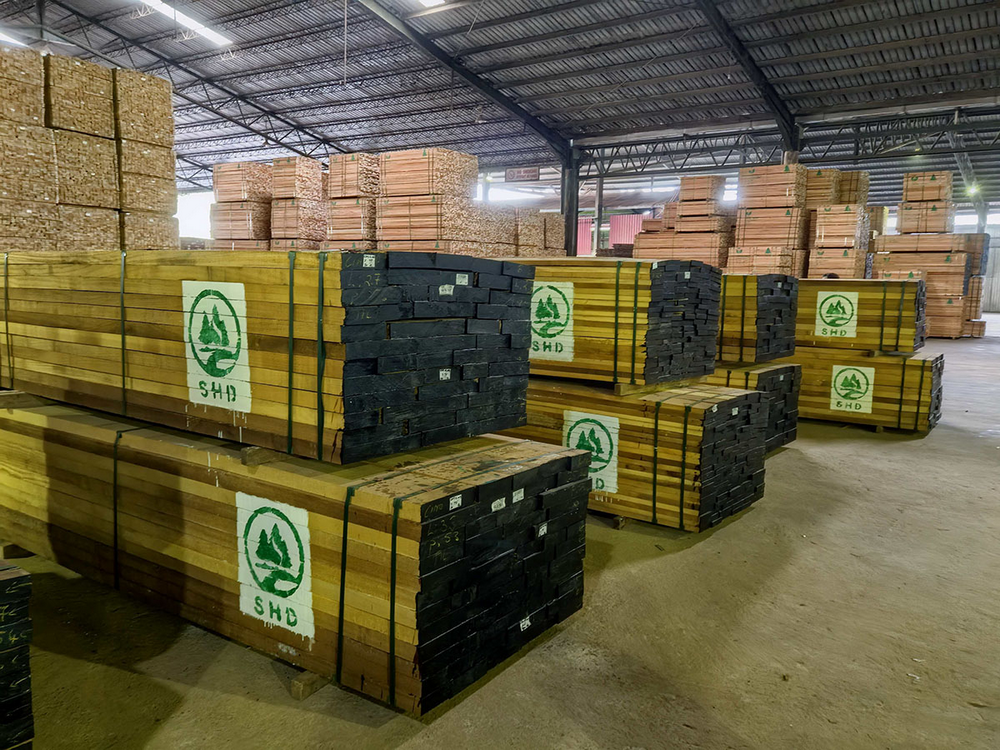
As a supplier handling 4000–8000 tons (CBM) of African wood per month and exporting over 200 containers to markets such as Vietnam, we have seen African hardwoods outperform untreated softwoods in some of the most challenging conditions worldwide. [shdtimber]
> Real‑world example: In several West and Central African markets, builders have shifted from untreated local softwoods to treated SYP combined with hardwood posts like Azobe or Tali for premium barns and industrial sheds, significantly extending service life in termite and high‑humidity zones. [cn.linkedin]
To make your pole barn both cost-effective and durable, consider the following step‑by‑step approach:
1. Define your climate and exposure conditions
- High humidity, heavy rainfall, or termite presence? Prioritize treated posts or hardwood for ground contact. [sutherlands]
2. Identify critical structural members
- Posts, beams, truss carriers, and purlins need higher‑grade lumber or engineered products. [diypolebarns]
3. Match species and grade to function
- Use SYP or Douglas Fir for primary load‑bearing members, Hem‑Fir or Spruce for non‑critical framing, and Cedar/Redwood/African hardwoods for exposed or high‑durability zones. [senhedawood]
4. Plan for treatment and protection
- Ensure all ground‑contact wood is properly pressure-treated or replaced with naturally durable species. [sutherlands]
5. Work with a specialized supplier
- Partner with a timber supplier experienced in both softwoods and African hardwoods to optimize cost, availability, and performance for your project. [shdtimber]
Recent trends show that pole barns are no longer just simple storage buildings; they are evolving into multi‑use structures, homes, and commercial spaces. [grabercustomstructures]
Key trends affecting lumber choices include:
- Multi‑use pole barns – Combining storage, workshops, and living areas, often requiring higher aesthetic finishes and engineered framing. [permabilt]
- Energy efficiency and comfort – Better insulation, controlled moisture, and higher‑quality framing materials for long‑term performance. [grabercustomstructures]
- Hybrid structures – Blending wood posts and framing with steel components to achieve longer spans and improved durability, while keeping the warm look of wood. [permabilt]
In this context, reliable timber sourcing and consistent grading become even more important, especially for international buyers working across continents. [senhedawood]
Below is a quick‑reference table summarizing typical species choices for key pole barn elements. [senhedawood]
| Pole barn component | Recommended species (primary) | Alternative / premium options | Notes on use and treatment |
|---|---|---|---|
| Ground-contact posts | Treated SYP, Douglas Fir | African hardwoods (e.g., Tali, Azobe) senhedawood | Always treated or naturally durable for decay and termite resistance |
| Beams / truss carriers | SYP, Douglas Fir | Engineered glulam, LVL blog.uvm | Use higher grades (No. 1 or better) |
| Roof purlins | SYP, Hem‑Fir | Spruce | Match span and loading requirements |
| Wall girts / studs | Hem‑Fir, Spruce | SYP | Lower grades acceptable where loads are moderate |
| Siding / cladding | Cedar, Redwood blog.uvm | African hardwood cladding senhedawood | Consider aesthetics and exposure |
| Trim / decorative parts | Cedar, Redwood blog.uvm | Selected African hardwoods senhedawood | Balance cost and appearance |
For many builders and export buyers, the challenge is not only choosing the right species but ensuring consistent quality, legal compliance, and reliable delivery.
As HONG KONG SENHEDA WOOD LIMITED, we operate with: [shdtimber]
- 16+ years of experience in African timber trading and global logistics
- Monthly handling of 4000–8000 tons (CBM) of wood from Africa and export of 200+ containers to markets such as Vietnam and beyond
- A wide portfolio including species like Okume, Tali, Okan, Padouk, Sapelli, Iroko, Mussivi, Bosse, Doussie, and more to support diverse structural and decorative applications [cn.linkedin]
This scale and experience allow us to help partners select the right combination of softwoods and African hardwoods for their pole barns and post‑frame projects – balancing durability, cost, and sustainability. [shdtimber]
If you are planning a new pole barn – whether for agricultural storage, workshops, or residential use – the lumber choices you make now will determine how your building performs for decades. [blog.uvm]
For builders, distributors, and project owners looking for high‑quality African hardwoods and reliable export‑ready timber, our team at HONG KONG SENHEDA WOOD LIMITED can support you with:
- Species selection tailored to your climate and design
- Mixed loads of softwood and hardwood for optimized cost and performance
- Stable supply from established operations across multiple African countries
Contact us today to discuss your upcoming pole barn or post‑frame project and receive a tailored lumber recommendation and quotation. [senhedawood]
1. What is the best lumber species for pole barn posts?
For many markets, pressure‑treated Southern Yellow Pine or Douglas Fir is a practical, cost‑effective choice for pole barn posts due to their strength and treatment compatibility. In very harsh or termite‑heavy environments, naturally durable African hardwoods like Tali or Azobe can provide even longer service life. [cn.linkedin]
2. Do I always need pressure-treated lumber for pole barns?
Any wood that is in contact with the ground or exposed to moisture, such as posts and skirt boards near grade, should be pressure-treated to appropriate standards or made from naturally durable species. Above‑grade components inside enclosed, dry barns may use untreated lumber if properly protected. [fao]
3. Can I mix different lumber species in one pole barn?
Yes. Many successful projects use SYP or Douglas Fir for primary structural members, Hem‑Fir or Spruce for secondary framing, and Cedar, Redwood, or hardwoods for cladding and decorative elements. The key is to respect each species' strength and durability limits in the design. [hansenpolebuildings]
4. Are African hardwoods suitable for temperate climates?
African hardwoods are not limited to tropical regions; their high strength and durability make them a robust choice for demanding applications in both temperate and tropical climates. They are especially useful in foundations, marine‑adjacent structures, and industrial buildings where long life is critical. [cn.linkedin]
5. How do I ensure my lumber meets structural codes?
Work with suppliers who provide proper grading documentation and treatment certificates, and coordinate with your designer or engineer to ensure species, grade, and treatment levels meet local building codes for post‑frame structures. This is particularly important when combining local softwoods with imported hardwoods. [regina]
1. Pole barn lumber options and specifications – Pole Barns Direct. [polebarnsdirect]
2. Post‑Frame Building Handbook – structural guidance on species and grades. [blog.uvm]
3. Building materials: poles and timber – FAO technical chapter. [fao]
4. Pressure‑treated lumber and ground‑contact recommendations – Sutherlands Post Frame Building Basics. [sutherlands]
5. Wood types commonly used in post‑frame construction – Hansen Pole Buildings resources. [hansenpolebuildings]
6. HONG KONG SENHEDA WOOD LIMITED – company overview and African timber capabilities. [shdtimber]
7. Company profile and African hardwood portfolio – LinkedIn overview for HONG KONG SENHEDA WOOD LIMITED. [cn.linkedin]
8. DIY Pole Barns – typical pole barn kit components and material specs. [diypolebarns]
9. Recent trends in pole barn design and material choices – Graber Custom Structures. [grabercustomstructures]
10. Design Trends in Pole Barn Construction for 2026 – PermaBilt. [permabilt]


