
Views: 222 Author: SENHEDA WOOD Publish Time: 2026-05-20 Origin: Site


If you're a wood supplier, importer‑exporter, or sawmill operator dealing with African tropical hardwoods—like Okoumé, Sapele, Iroko, Padouk, or Doussié—controlling moisture content is not optional; it's your first line of quality control. As a professional with 16+ years sourcing African timber for global markets (including over 200 TEU‑container shipments per month and 4,000–8,000 tons of monthly throughput), we know that one inaccurate moisture reading can trigger warping, mold, claims, and reputational damage in the finished product. [blog.protimeter]
In this guide, we'll go beyond the generic "top‑5 list" and show you which wood moisture meters are truly accurate enough for African tropical hardwoods, how to choose the right type, and how to apply them in real‑world export and processing workflows.

A wood moisture meter measures the percentage of water content (moisture content, MC) in wood, typically expressed as mass of water relative to the oven‑dry mass of the wood. Because wood is hygroscopic, it constantly exchanges moisture with the surrounding air, so an incorrect reading during fumigation, drying, or loading can mean the difference between stable flooring planks and cupped, gapped panels in a distant warehouse. [wagnermeters]
While exact thresholds depend on destination climate and species, many furniture and joinery applications aim for equilibrium moisture content (EMC) between 6–12%, whereas rough sawn lumber or packaging‑grade stock may tolerate up to 18–25% before decay becomes a serious risk. For African exporters shipping to Vietnam, Europe, or the Middle East, misjudging this window by even 2–3% can trigger dimensional change demands, insurance claims, or rejections at customs. [blog.kett]
Before listing the "top 5", let's define the evaluation criteria professionals actually use:
For export‑grade operations, ±0.5% accuracy is the serious‑pro standard; cheaper meters claiming ±1.5–2% are often only suitable for rough DIY checks. Always look for: [wagnermeters]
- Species‑specific calibration (for 100+ species, including exotics). [lignomatusa]
- Field recalibration or on‑demand calibration check. [blog.protimeter]
- Pin‑type meters penetrate the wood (typically 3–5 mm) and are excellent for spot‑checking moisture gradients (e.g., surface vs core). [szflus]
- Pinless meters use electromagnetic fields to scan up to 19–25 mm deep, ideal for finished surfaces and large boards without leaving pinholes. [wagnermeters]
Export yards and sawmills are dusty, humid, and rough. A good meter should be:
- Drop‑tested or rugged‑cased. [moisturemeter]
- Suited to temperature and humidity swings, with automatic temperature compensation where possible. [blog.kett]
For exporters and B2B suppliers, Bluetooth‑enabled logging and EMC calculations help:
- Generate moisture‑content reports for customs or buyers. [wagnermeters]
- Track drying curves during kiln or air‑drying. [blog.protimeter]
Widely regarded as one of the most accurate professional meters on the market, the Orion 950 uses pinless electromagnetic sensors plus IntelliSense technology to deliver readings across a wide spectrum, including African tropical hardwoods, treated wood, and composite panels. [facebook]
- Accuracy: Wagner advertises ±0.5% moisture content in typical wood ranges, with species‑density compensation for over 100 wood types. [wagnermeters]
- Depth: Measures up to ~19–25 mm, making it suitable for thick Sapele or Iroko boards without surface damage. [blog.protimeter]
- Features:
- Backlit display for low‑light warehouses. [wagnermeters]
- On‑demand calibration check and Bluetooth data export to create logs for each shipment. [blog.protimeter]
- Calculates equilibrium moisture content (EMC) and Grain Path Perpendicular (GPP) values important for export‑grade lumber. [wagnermeters]
- Pre‑loading checks on finished boards.
- Quality‑control checks at the sawmill or port terminal.
- Documentation‑ready reports for buyers who demand traceability.
- High price point, typically over 600 USD, which may be overkill for very small workshops. [facebook]
The MMD4E is a cost‑effective pin‑type meter favored by many small‑to‑mid‑sized operations that need decent accuracy without investing in premium pinless hardware. [moisturemeter]
- Accuracy: Provides readings with minimal deviation, usually within ±1% in controlled testing environments. [moisturemeter]
- Display: Backlit LCD screen with three LED indicators (green/yellow/red) and pre‑set tones for moisture‑level alerts. [wagnermeters]
- Durability: Stainless‑steel pins suitable for hardwoods and softwoods alike. [wagnermeters]
- Range: Typically 5–50% moisture, which covers most rough‑sawn and kiln‑dried stock. [wagnermeters]
- Spot‑checking incoming logs or dry stacks at the yard or kiln.
- Budget‑constrained subscribers who still need noticeably better accuracy than bargain‑bin meters. [moisturemeter]
- Lacks advanced features like Bluetooth, detailed species calibration, or EMC calculation. [wagnermeters]
Tavool's model is a user‑friendly, multi‑scale meter that balances ease of use and marginal accuracy for semi‑professional users. [wagnermeters]
- Accuracy: Around ±2% moisture content, which is acceptable for non‑critical or rough‑grade checks. [wagnermeters]
- Species scales: Eight calibration scales for different wood types, which helps when you handle mixed African species (e.g., Okoumé, Sapele, Iroko). [wagnermeters]
- Display: LED‑backlit screen with hold function and data‑freeze for recording values. [wagnermeters]
- Temperature measurement: Also measures wood temperature, useful for understanding how environment affects readings. [wagnermeters]
- Best suited for small workshops or individual buyers who don't need lab‑grade precision. [blog.kett]
- Not ideal for high‑value export shipments where ±0.5% matters.
The Proster meter is a pin‑type device aimed at small woodworking shops and serious hobbyists who want to handle a wide range of species. [wagnermeters]
- Accuracy: Claims ±0.5% accuracy, which makes it one of the more precise affordable pin‑type options. [wagnermeters]
- Species support: Designed to measure moisture for up to 50 different wood species, which is valuable when you process mixed African grades. [wagnermeters]
- Range: Typically 0–99.9% moisture, allowing you to check very wet logs as well as well‑dried stock. [wagnermeters]
- Excellent as a secondary tool for checking core vs surface moisture in thick slabs. [blog.kett]
- No preset EMC or advanced logging, so it's less suited for documentation‑heavy export workflows. [wagnermeters]
The Dr. Meter 2‑in‑1 offers both pin and pinless modes, giving you flexibility without the premium price of a full‑featured pinless meter. [wagnermeters]
- Dual operation: Pin mode for core‑penetration and pinless mode for quick surface scans. [wagnermeters]
- Range: Typically 5–53% (pinless) and 5–50% (pin), which covers most common lumber and flooring‑grade stock. [wagnermeters]
- Build: Compact, simple design with a large LCD screen, suitable for on‑the‑go checks at the yard or warehouse. [wagnermeters]
- Mid‑range operations that occasionally need non‑invasive scanning but still rely mainly on pin‑type checks. [wagnermeters]
- Not recommended as a primary export QC tool for high‑value tropical hardwood shipments. [wagnermeters]
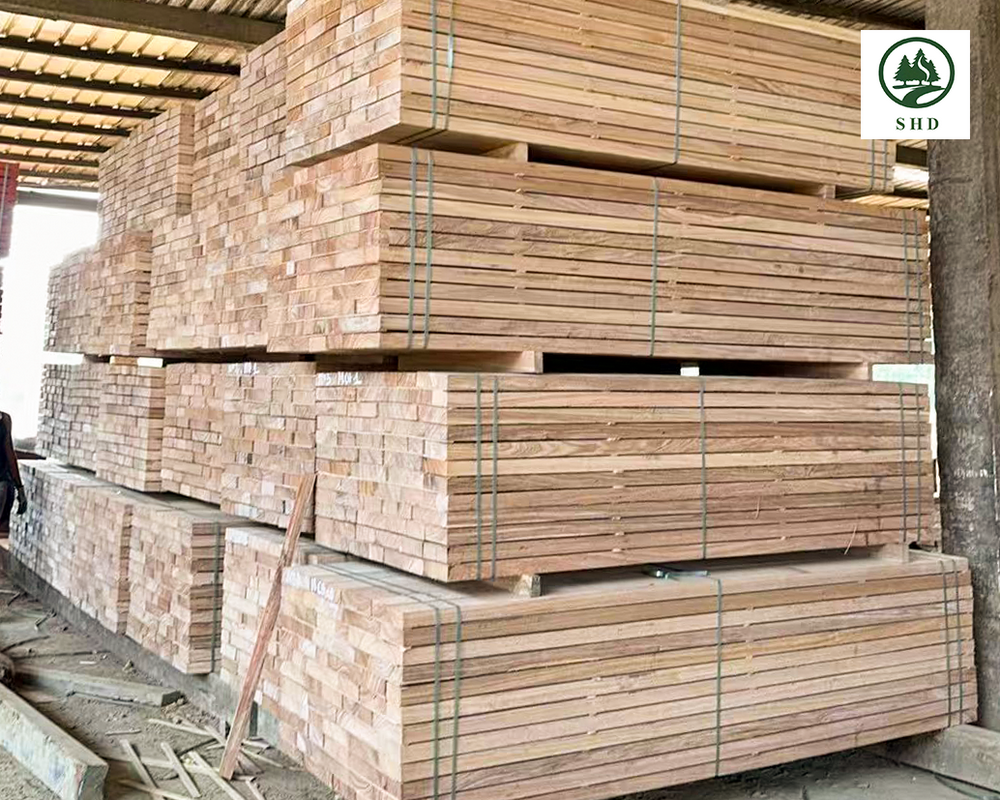
At our own operations, we apply the following simple but powerful routine when measuring tropical hardwoods like Sapele, Okoumé, or Iroko:
- Step 1: Pre‑select representative boards (thickest, most suspect).
- Step 2: Use pin‑type meters to check surface vs core at multiple points; record any gradient >2% as a risk zone. [blog.kett]
- Step 3: Use a pinless meter (like Orion 950) to scan full surfaces and detect localized over‑ or under‑dried spots. [wagnermeters]
Instead of drying "to 12% and ship", we use meters that calculate EMC based on local temperature and humidity, so we know when the wood has truly stabilized before crating for Vietnam or Europe. This reduces post‑shipment movement and warping at the end customer's site. [blog.protimeter]
For each 200‑container monthly shipment, we require:
- At least 3–5 random boards per container checked with both pin and pinless methods. [blog.protimeter]
- A digital log exported from the meter (when available) and attached to the packing list. [wagnermeters]
Need advice on the right moisture meter for your African hardwood exports? Contact us for a customized recommendation.
Q1: Which moisture meter is best for African tropical hardwoods?
A1: For high‑value export operations, the Wagner Orion 950 pinless meter offers the highest accuracy and species‑specific calibration for African tropical hardwoods.
Q2: Should I use a pin‑type or pinless meter for export QC?
A2: Use pin‑type meters for core‑depth checks and pinless meters for quick, non‑destructive surface scans; combining both gives the most reliable picture.
Q3: What is the ideal moisture content for African lumber destined to Vietnam?
A3: For most furniture and flooring applications, aim for equilibrium moisture content (EMC) between 8–12%, depending on local humidity and kiln‑drying practice. [blog.kett]
Q4: Can I trust cheap meters under 100 USD for export?
A4: Budget meters are acceptable for rough grading, but exporters should invest in pro‑level tools (±0.5% accuracy) to avoid costly claims and disputes. [moisturemeter]
Q5: How often should I recalibrate my wood moisture meter?
A5: Follow the manufacturer's guidelines, but many professionals recalibrate every 6–12 months or after heavy use that may affect impact resistance. [blog.kett]
- Wagner Meters – Wood Moisture Meter 2025 Buying Guide (Pinless vs Pin). [wagnermeters]
- Wagner Meters – Orion 950 product information and accuracy claims. [wagnermeters]
- ProTimeter – "Best Moisture Meter for Lumber: 7 Must‑Have Features." [blog.protimeter]
- K–Timber – "5 Most Accurate Types of Wood Moisture Meters." [wagnermeters]
- K–Timber – "How to Determine the Moisture Content of Wood." [wagnermeters]
- Wood.data96 – "Nationwide Wood Moisture Content Detailed Data." [blog.kett]
- Moisture Meter Experts – Reviews and ratings of leading brands. [moisturemeter]
- Lignomat – Pin, Pinless, and RH Wood Moisture Meters. [lignomatusa]


