
Views: 222 Author: Loretta Publish Time: 2026-03-06 Origin: Site


Content Menu
● Best Types of Wood for Outdoor Flooring and Furniture
● Why Wood Choice Matters for Outdoor Projects
>> Key Performance Factors Outdoors
● Overview – Top Woods for Outdoor Flooring and Furniture
● In‑Depth Profiles of the Best Outdoor Woods
>> Teak – Benchmark for Outdoor Durability
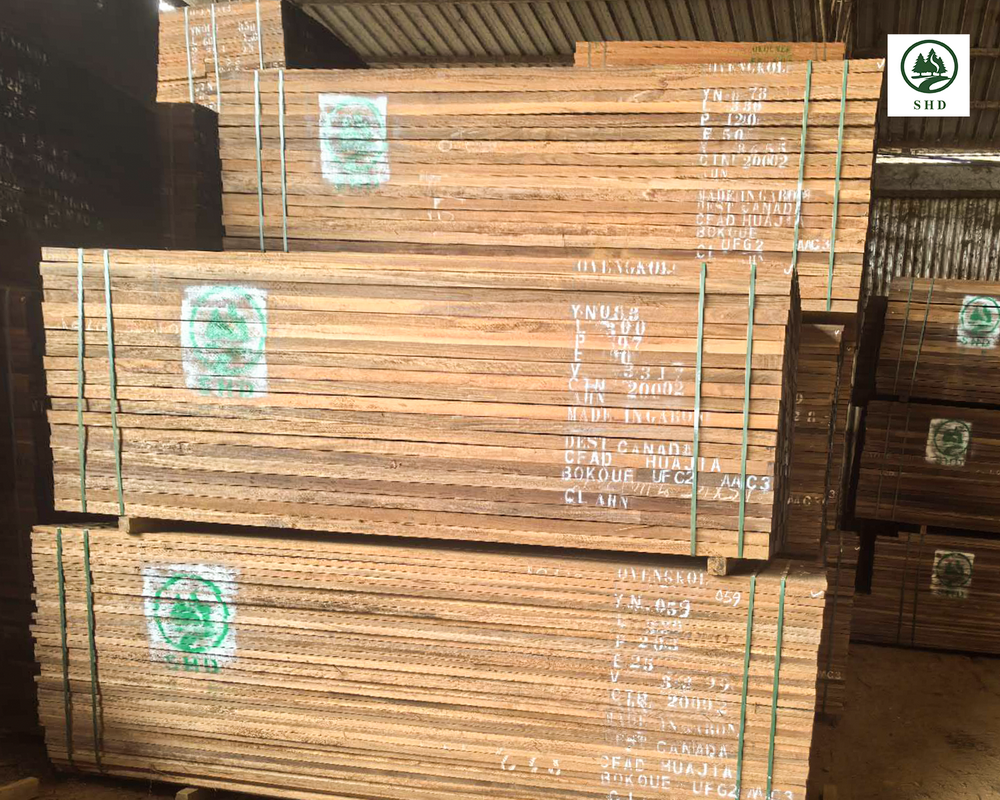
>> Iroko – "King of Outdoor Woods" from Africa
>> Doussie – Heavy‑Duty Outdoor Flooring Choice
>> Sapele – Elegant Look for Semi‑Exposed Areas
>> Eucalyptus – Cost‑Effective Hardwood for Outdoor Projects
>> Mussivi – Premium Grade I Hardwood
>> Sipo – Modern Look with Balanced Performance
>> Mahogany – Classic Outdoor Aesthetics
>> Oak – High‑Tannin Wood for Rustic Outdoor Style
>> Pine – Budget Option Requiring Extra Protection
● How to Choose the Right Wood for Your Outdoor Space
>> Step‑by‑Step Selection Framework
>> Species Recommendation Matrix
● Practical Installation and Maintenance Tips
>> Installation Best Practices for Outdoor Wood
>> Maintenance Guidelines for Outdoor Flooring and Furniture
● Why Work with HONG KONG SENHEDA WOOD LIMITED
>> Reliable Supply of African Outdoor Hardwoods
>> Benefits for Global Outdoor Projects
● Final Call to Action – Start Your Outdoor Wood Project with SENHEDA
● FAQs about Wood for Outdoor Flooring and Furniture
>> Q1. Which wood lasts the longest outdoors with minimal maintenance?
>> Q2. Is Eucalyptus a good budget alternative to Teak?
>> Q3. Can Pine be used for outdoor decks?
>> Q4. How often should outdoor wood furniture be maintained?
>> Q5. What makes African hardwoods attractive for outdoor projects?
Choosing the right wood for outdoor flooring and furniture is a long‑term investment in safety, beauty, and lifecycle cost. This guide explains which species perform best outdoors, how to compare them, and how HONG KONG SENHEDA WOOD LIMITED can support your project with stable African hardwood supply.

Outdoor decks, terraces, pool surrounds, and garden furniture must handle UV, rain, temperature changes, and heavy foot traffic every day. Selecting a durable, weather‑resistant wood with the right density, oil content, and maintenance needs will dramatically extend service life and reduce replacement costs.
When evaluating wood for outdoor flooring and furniture, focus on these factors:
- Durability and rot resistance: Naturally oily, dense hardwoods resist decay, cracking, and warping better under sun and rain.
- Moisture and dimensional stability: Woods that expand and contract less maintain tighter joints and smoother surfaces.
- Mold, insect, and termite resistance: Natural extractives and tannins help protect wood from biological attack.
- Strength and load‑bearing capacity: Outdoor flooring and structural furniture components must support constant load and impact.
- Aesthetic consistency: Color, grain, and texture should match your design style and other materials on site.
- Maintenance level: Some woods perform with minimal care, while others require regular sealing or oiling to stay stable and attractive.
For large commercial decks or hospitality projects, choosing a species that balances lifecycle cost (initial price plus maintenance plus service life) often matters more than just the upfront material cost.
The following woods combine proven outdoor durability with attractive appearance and solid mechanical performance.
Wood species | Typical color & look | Outdoor durability | Maintenance level | Best uses outdoors | Relative cost |
Teak | Golden brown, fine grain | Excellent rot and weather resistance | Low, optional oiling | Premium decks, coastal furniture, yachts | High |
Iroko | Light to dark brown, even texture | Excellent, often called "king of outdoor woods" | Low-medium, periodic oil or sealer | High-end decks, benches, structural outdoor joinery | Medium-high |
Doussie | Warm brown, striking grain | Very high, dense and oily | Medium, benefits from sealing | Heavy-duty flooring, commercial terraces | Medium-high |
Sapele | Rich brown, ribbon grain | High, stable in humidity | Medium, regular finishing | Covered decks, exterior joinery, upscale furniture | Medium |
Eucalyptus | Red-brown, fine grain | Good, budget-friendly | Medium-high, yearly sealing | Residential decks, garden sets under partial cover | Medium |
Mussivi | Light tone, refined grain | Very high, grade I, termite resistant | Medium, preserve color with oil | Luxury decks, feature stairs, statement furniture | High |
Sipo | Bright color, uniform grain | Good, stable and strong | Medium | Modern-style flooring, pergolas, railings | Medium |
Mahogany | Deep brown, classic look | Good to very good | Medium, needs protective finish | Balconies, verandas, garden furniture | Medium |
Oak (white) | Pale brown, prominent grain | Good, high tannin content | Medium-high, careful sealing outdoors | Rustic decks, outdoor tables, beams | Medium |
Pine | Light, soft grain | Fair, depends on treatment | High, requires preservative and sealing | Fences, light structures, budget decking | Low |
Teak is widely regarded as the reference standard for outdoor wood due to its high natural oil content and silica, which make it extremely resistant to rot, insects, and water. Its dense structure allows teak to perform in fully exposed locations such as pool decks, marine applications, and coastal furniture for decades.
- Advantages: Outstanding weather resistance, dimensional stability, and low maintenance needs.
- Design value: Teak's golden brown tone can be maintained with oil or allowed to weather to a silver patina for a more natural look.
- Best for: High‑end residential and hospitality projects where lifecycle performance is more critical than initial cost.
Iroko wood is a highly durable African hardwood often used as a more economical alternative to teak and is frequently described as the "king of outdoor woods." Its color ranges from light to dark brown, making it easy to coordinate with both classic and contemporary design schemes.
- Performance: Excellent resistance to weathering, wear, and biological attack, with very good dimensional stability.
- Applications: Outdoor flooring, marina decking, benches, pergolas, and heavy‑duty exterior joinery.
- Value: Offers a strong balance between long service life and cost, especially in large‑scale commercial projects.
Brand authority note: HONG KONG SENHEDA WOOD LIMITED has long‑term sourcing experience for African hardwoods such as Iroko, helping ensure consistent quality and supply for global customers.
Doussie is a dense, oily African hardwood known for its impressive load‑bearing capacity and luxurious appearance. The wood has attractive grain and tends to gain extra surface sheen over time as natural oils migrate to the surface.
- Advantages: Very high hardness, strong resistance to indentation, and excellent performance under heavy foot traffic.
- Best uses: High‑traffic terraces, commercial decks, hotel boardwalks, and outdoor stair treads.
- Considerations: Its density requires sharp tooling and careful installation but rewards projects with long service life.
Sapele wood offers a rich brown color with fine, decorative grain and has become popular for both interior and exterior use. It maintains good stability in humid environments and does not easily warp or shrink when properly dried and installed.
- Advantages: Strong, attractive, and suitable for both flooring and exterior furniture in covered or semi‑exposed areas.
- Best uses: Covered decks, verandas, exterior doors, and outdoor furniture that benefits from its elegant appearance.
Eucalyptus is a fast‑growing hardwood that offers a balance between appearance, performance, and cost. It presents a warm red‑brown tone with fine grain and is widely used in outdoor furniture and decking.
- Performance: Good natural resistance to weathering and termites, suitable for outdoor applications when regularly sealed.
- Maintenance: Requires annual sealing or oiling to prevent cracking and to maintain color.
- Best uses: Residential decks, garden seating, and budget‑sensitive projects that still need genuine hardwood.
Mussivi is a grade I African hardwood that combines a refined appearance with exceptional durability. It is prized for its hardness, termite resistance, and subtle fragrance, making it a premium choice for high‑value projects.
- Advantages: Extremely long service life, excellent structural properties, and premium aesthetics that elevate outdoor spaces.
- Best uses: Luxury decks, high‑end stair systems, and signature outdoor furniture pieces.
- Consideration: Higher material cost, typically chosen for flagship or prestige projects.
Sipo wood combines a bright color tone with attractive grain and good mechanical strength. It is widely used for flooring in modern‑style interiors and exteriors and has become an increasingly popular option for outdoor structures.
- Performance: Good load‑bearing capacity and dimensional stability when properly dried.
- Best uses: Contemporary decks, pergolas, handrails, and outdoor cladding systems.
Mahogany provides a deep brown color and warm atmosphere, making it a traditional favorite for outdoor verandas and balconies. Its hardness and structural strength help minimize warping and cracking under normal service conditions.
- Advantages: Timeless appearance, good weather resistance with appropriate finishing, and comfortable underfoot.
- Best uses: Balconies, terraces, traditional garden furniture, and architectural details.
White oak is commonly used for flooring and can also be applied outdoors when carefully detailed and protected. Its high tannin content offers natural antibacterial and antifungal benefits, improving resistance to decay.
- Advantages: Strong, hard, and visually appealing, especially in rustic or farmhouse‑style projects.
- Best uses: Rustic decks, outdoor tables and benches, beams, and pergola structures under partial cover.
- Important: Proper sealing and end‑grain protection are essential to extend service life outdoors.
Pine is a softwood used for flooring, structural elements, and budget‑oriented outdoor products such as fences and stairs. While it offers a light, modern look at relatively low cost, its natural durability is lower than dense hardwoods.
- Advantages: Lightweight, easy to work, and cost‑effective for large surface areas.
- Limitations: Requires preservative treatment and consistent maintenance to avoid decay, especially in ground‑contact or fully exposed decks.
- Best uses: Fences, non‑critical structures, and decks where budget is the primary constraint and owners accept higher maintenance.
To make a confident decision, follow this five‑step process:
1. Define exposure level
Decide whether your space is fully exposed, partially covered, or fully covered.
2. Identify structural requirements
Consider heavy foot traffic, static loads from furniture, or structural spans that need higher strength.
3. Set maintenance expectations
Decide how much annual cleaning, sealing, or oiling you are willing to perform.
4. Determine design style and color palette
Choose between warm browns, golden tones, lighter modern shades, or classic dark woods.
5. Align with budget and lifecycle goals
Compare initial material cost against expected service life and ongoing maintenance.
For example, a coastal resort deck with high UV and salt exposure, premium branding, and heavy foot traffic will typically favor Teak, Iroko, or Doussie, while a residential covered terrace with moderate budget may choose Sapele, Eucalyptus, or Sipo.
Project type | Exposure | Priority | Recommended species |
Coastal resort deck | Fully exposed | Maximum durability and brand image | Teak, Iroko, Doussie |
Urban rooftop terrace | Partially covered | Strength and modern look | Doussie, Sipo, Sapele |
Private garden deck | Partially covered | Balanced cost and performance | Eucalyptus, Sapele, Oak |
Budget backyard platform | Fully exposed | Lowest upfront cost | Treated Pine, Eucalyptus (with yearly sealing) |
Luxury villa pool deck | Fully exposed | Aesthetics and longevity | Teak, Iroko, Mussivi |
Correct installation is as important as wood selection for long‑term performance.
- Acclimatize boards onsite before installation to reduce future movement.
- Respect expansion gaps, especially with dense hardwoods, to allow seasonal movement.
- Use corrosion‑resistant fasteners, such as stainless steel or coated screws, to avoid staining and premature failure.
- Elevate and ventilate decks to keep the underside dry and reduce moisture‑related decay.
- Seal all cut ends with appropriate end‑grain sealer to limit moisture uptake.
These practices significantly extend the service life of species such as Iroko, Doussie, Sapele, and Eucalyptus.
Even naturally durable woods last longer with a structured maintenance plan.
- Annual cleaning: Wash surfaces with mild soap and water to remove dirt, mildew, and salt deposits.
- Regular inspections: Check for cracks, loose fasteners, or localized damage and repair early.
- Protective coatings:
- Use penetrating oils for Teak, Iroko, Doussie, and Sapele when you want to preserve color.
- Apply high‑quality sealers to Eucalyptus, Pine, and Oak to enhance water resistance.
- Covers and shelter: Use furniture covers or place pieces under partial roof when possible to reduce UV and moisture stress.
HONG KONG SENHEDA WOOD LIMITED (SENHEDA) has extensive experience in African timber trading and supplies a wide range of high‑quality hardwoods suitable for outdoor flooring and furniture, including Okume, Tali, Okan, Padouk, Sapelli or Sapele, Iroko, Mussivi, Doussie, and more. The company cooperates closely with strong partners in key African regions and manages large monthly volumes, helping ensure stable supply for global customers.
By partnering with SENHEDA, buyers gain:
- Consistent quality control backed by on‑the‑ground African sourcing expertise.
- Flexible product formats, including sawn timber, outdoor decking profiles, and furniture components.
- Efficient logistics and documentation for smooth delivery to Asia, Europe, and worldwide destinations.
- Technical support when selecting species and specifications for specific outdoor applications.
This combination of product range, volume capability, and technical knowledge helps project owners, distributors, and manufacturers reduce risk and accelerate project timelines.
If you are planning a new deck, terrace, pool area, or outdoor furniture collection, choosing the right wood species and a reliable timber partner will directly determine how your project performs over the next 10 to 20 years. HONG KONG SENHEDA WOOD LIMITED is ready to help you match your design, budget, and durability requirements with suitable African hardwood solutions tailored to your market.
Contact our team today to request a detailed quotation for Iroko, Doussie, Sapele, Mussivi, Eucalyptus, and other outdoor‑grade species, and to get expert guidance on dimensions, moisture content, and finishing systems. Visit our website or email our sales department now to start designing a long‑lasting, high‑value outdoor space with the right wood from SENHEDA.
A1. Teak and Iroko are among the best performers thanks to their high natural oil content, density, and strong resistance to rot and insects. They maintain structural integrity and appearance even in fully exposed conditions when basic periodic cleaning is performed.
A2. Yes, Eucalyptus offers a similar warm appearance at a lower cost, and it can perform well outdoors when maintained correctly. However, it requires yearly sealing or oiling to prevent cracking, checking, and color loss, so maintenance expectations should be clearly communicated to end users.
A3. Pine can be used outdoors if it is properly treated with preservatives and regularly maintained, especially in high‑moisture climates. Because its natural durability is lower than that of dense hardwoods, it is better suited for budget or lower‑risk applications, where owners accept the need for frequent inspection and refinishing.
A4. At minimum, outdoor furniture should be cleaned and inspected once per year to remove dirt and check for damage. In high‑exposure locations or with softer species, you may also need yearly re‑sealing or oiling to keep the surface protected and extend the product's service life.
A5. Many African hardwoods, such as Iroko, Doussie, Mussivi, and Sapele, combine high density, natural resistance to insects and decay, and distinctive aesthetics. This mix of performance and visual character makes them ideal for outdoor flooring, decking, and furniture where long‑term durability and design impact are equally important.
1. https://k-timbers.com/best-types-of-wood-for-outdoor-flooring-and-furniture/
2. https://k-timbers.com/acacia-wood-properties-characteristics-uses/
4. http://www.senhedawood.com/about.html
5. https://forestplywood.com/blog/lumber/the-best-types-of-wood-for-outdoor-furniture/
6. https://tablelegsonline.com/blog/9-wood-species-best-for-outdoor-projects/
7. https://authenteak.com/blog/choosing-the-best-wood-for-outdoor-furniture-/86344/
8. https://www.cedarcreekfurniture.com/blogs/news/best-material-for-outdoor-furniture
9. https://www.rstbrands.com/blog/everything-you-need-to-know-about-outdoor-wood-furniture
10. https://emmarosehardwoods.com/outdoor-wood-furniture
11. https://sawmillcreek.org/threads/best-wood-for-outdoor-furniture.244040/


