
Views: 222 Author: Loretta Publish Time: 2026-01-30 Origin: Site


Content Menu
● Key factors when choosing boat-building wood
● Overview of the 6 best woods for boat building
● Comparative properties of popular boat-building woods
● Iroko: African teak alternative for decks and hulls
>> Key characteristics of Iroko
>> Best applications for Iroko
● Acajou (Mahogany-type): Classic appearance with balanced performance
>> Typical marine applications of Acajou
● Mukulungu: High-density structural hardwood for demanding marine use
>> Performance advantages of Mukulungu
>> Best uses of Mukulungu in boats
● Cedar: Lightweight favorite for small craft and planking
>> Typical marine applications of Cedar
● Douglas Fir: Reliable structural softwood for masts and framing
>> Why Douglas Fir is widely used
>> Best uses of Douglas Fir in boats
● Marine plywood: Versatile, stable panels for hulls and decks
>> Advantages of marine plywood
>> Typical boat applications of marine plywood
● How to match wood species to boat parts
>> Recommended wood by application zone
● Practical steps to select the right boat-building wood
>> Step 1: Define the boat type and usage
>> Step 2: Identify critical performance priorities
>> Step 3: Select species for each structural zone
>> Step 4: Confirm certification and grading
>> Step 5: Plan for protection and maintenance
● Why work with a professional marine timber supplier
● Take the next step: Secure the right boat-building timber today
● Frequently asked questions about wood for boat building
>> 1. What is the best all-round wood for boat decks?
>> 2. Is Cedar strong enough for a wooden boat hull?
>> 3. Why is marine plywood preferred over standard plywood?
>> 4. Can Douglas Fir be used below the waterline?
>> 5. How do I choose between Okoume and Meranti marine plywood?
Choosing the best wood for boat building is one of the most important decisions if you want a boat that is strong, safe, and durable in harsh marine conditions. The right species can significantly improve resistance to rot, marine borers, and saltwater, while also affecting weight, stability, and long-term maintenance costs.
Selecting boat-building timber should never be about appearance alone; performance in real marine conditions matters more.
- Durability class and rot resistance: Look for naturally durable species (Durability Class 1–2) with high resistance to decay and marine borers to reduce chemical treatment needs.
- Moisture and dimensional stability: Wood that moves too much with moisture changes can cause leaks, fastener loosening, and paint or varnish failure.
- Strength-to-weight ratio: A good boat wood balances strength and weight so the hull remains stiff without becoming excessively heavy.
- Workability and availability: Species that machine, bend, and glue well are easier for both professional yards and DIY builders, and stable supply is important for long projects.
- Cost and lifecycle value: Premium woods like teak are excellent but expensive; alternatives such as Iroko or high-quality marine plywood often provide better value for money.

The most commonly recommended woods for modern boat building include Iroko, Acajou (mahogany-type), Mukulungu, Cedar, Douglas Fir, and Marine Plywood, each suited to different parts of the vessel.
- Iroko: Durable African hardwood often called “African teak,” used for decks, hulls, and structural parts where strength and rot resistance are essential.
- Acajou (mahogany group): Attractive, moderately durable hardwood used for planking, interiors, and bright-finished topsides.
- Mukulungu: Very dense Central African hardwood suitable for highly loaded structural components and continuous immersion zones.
- Cedar: Light, pleasantly scented softwood ideal for planking and small craft such as canoes and kayaks where weight must be minimized.
- Douglas Fir: Strong, relatively light softwood widely used for masts, spars, stringers, and other structural members.
- Marine Plywood: Engineered wood with waterproof glue and controlled veneers, valued for stability, ease of shaping, and efficient material usage.
Property / Aspect | Iroko | Acajou (Mahogany type) | Mukulungu | Cedar (Western Red) | Douglas Fir | Marine Plywood |
Typical use | Decks, hulls, structural members | Planking, interiors, trim | Keel, frames, underwater structure | Planking, decks, small boats | Masts, frames, stringers | Hull panels, bulkheads, decks |
Durability (rot) | High, natural oils | Moderate–good (species-dependent) | Very high, improves in water | Good, naturally rot-resistant | Moderate, better when protected | High in true marine-grade products |
Density | Medium–high | Medium | High (very dense hardwood) | Low | Medium | Varies (e.g., Okoume lighter, Meranti heavier) |
Strength-to-weight | Excellent for structural work | Good, adequate for hulls | Very high strength | Moderate, suited to light craft | Very good, high stiffness | Good, especially in panel applications |
Workability | Machines and glues fairly well | Easy to shape and finish | Hard, requires sharp tools | Easy to work but can splinter | Machines and glues well | Easy to cut, bend, and fasten |
Iroko is a West African hardwood often called “African Teak” thanks to its excellent durability, natural oils, and similar performance in marine environments. It resists rot, fungi, and marine borers, making it a trusted option for both traditional and modern wooden boats.
- High natural durability: Iroko is widely used in marine and coastal constructions and can provide long service life with minimal chemical treatment.
- Natural oils and stability: Its oil content reduces water uptake, improves dimensional stability, and helps protect against marine organisms.
- Cost-effective vs. Teak: Teak remains the luxury benchmark, but Iroko delivers comparable performance at a more accessible price, especially for large decks and hulls.
- Decking and exterior trim: The wood's hardness and weather resistance make it suitable for walkable decks, combings, and cap rails.
- Hull planking and structural members: Iroko's strength and resistance to decay suit hull planking, frames, and stem or stern posts in both traditional and modern glued construction.
- Interiors with a premium look: Its rich color and grain add a high-end aesthetic to cabins, seating, and paneling while still performing well in humid spaces.
Acajou generally refers to mahogany-type timbers used widely in traditional boat building for their combination of workability, appearance, and moderate durability. While not always as durable as Iroko or teak, properly selected Acajou can perform well above the waterline and in protected areas.
- Attractive grain and color: The warm, even texture is ideal for bright-finished hull sides, cabin trunks, and interiors.
- Good bending and machining: Acajou typically bends and steams well, which is valuable for rounded hulls and curved structures.
- Stable and predictable: With correct selection and seasoning, it provides good dimensional stability, helping coatings and joints last longer.
- Topsides and planking in classic yachts, where aesthetics are a priority and service environments are well-maintained.
- Cabin joinery, furniture, and trim, where beautiful appearance and ease of finishing are important.
- Transoms and decorative elements that will be varnished and regularly maintained.
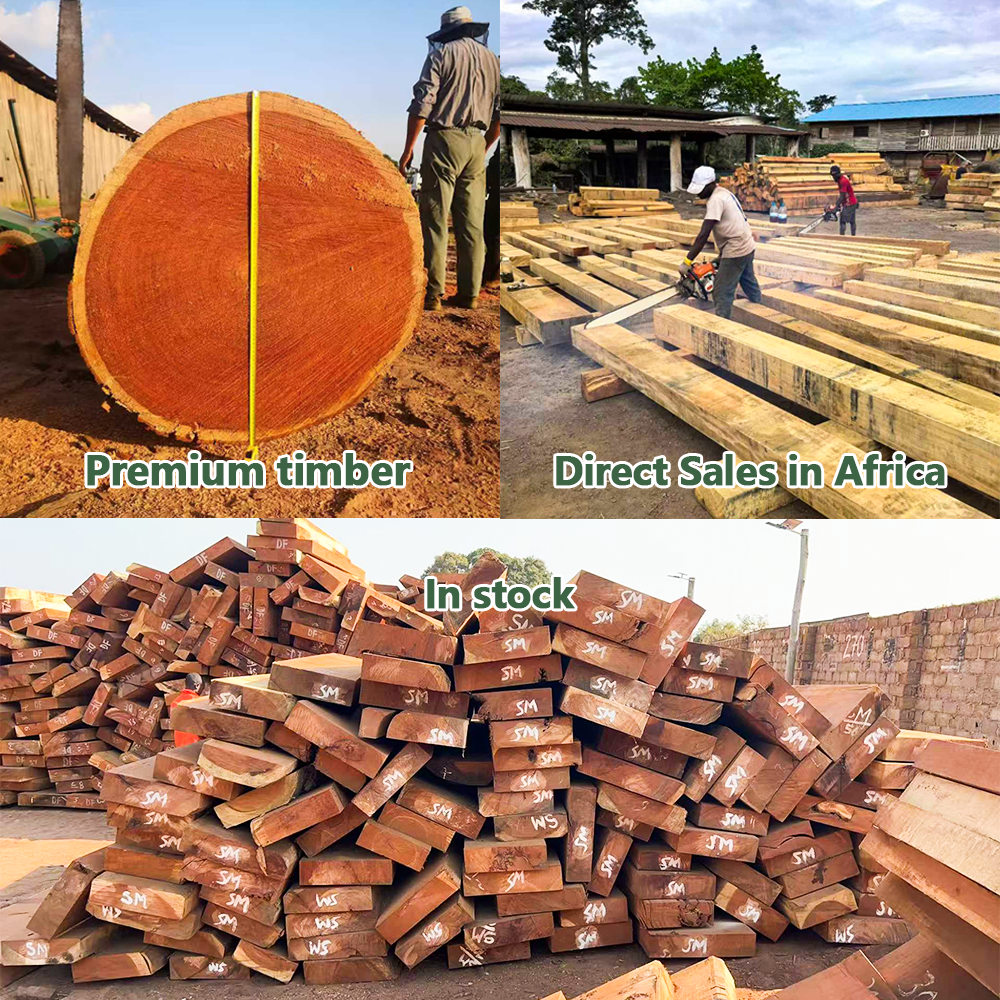
Mukulungu is a dense Central African hardwood known for its extraordinary hardness, strength, and increasing resistance when exposed to water over time. This makes it particularly suitable for heavy-duty marine and structural applications where failure is not an option.
- Exceptional strength and hardness: Its density supports high loads, impact resistance, and long-term structural integrity.
- Outstanding decay resistance: Mukulungu is naturally resistant to termites and marine decay, and it is reported to harden further with prolonged immersion.
- Long service life under water: This property is especially valuable for components that remain submerged or are repeatedly wet.
- Keel and backbone elements where compressive loads, grounding impacts, and fastening strength are critical.
- Frames, floors, and stringers in high-stress hull areas.
- Heavily loaded deck beams or support structures where strength and durability are more important than light weight.
Cedar, especially Western Red Cedar, is widely used for small boats, canoes, kayaks, and strip-planked hulls because it is very light and naturally resistant to decay. Its pleasant aroma also helps repel insects, which is a practical bonus in long-term storage.
- Excellent weight savings: Its low density helps keep displacement down, improving responsiveness and ease of handling.
- Natural rot resistance: Cedar heartwood contains extractives that slow fungal decay, making it suitable for planking above and just below the waterline when correctly coated.
- Good insulation and comfort: Cedar can improve thermal comfort inside small cabins and cockpits.
- Strip-planked hulls for canoes, kayaks, and sailboats where fairness and low weight are essential.
- Decking and seating, especially when combined with fiberglass sheathing for abrasion resistance.
- Interior linings and non-structural elements where lightness matters.
Because Cedar can splinter and tear if tools are dull, sharp tooling and careful shaping are recommended.
Douglas Fir is a classic boat-building timber with a very good strength-to-weight ratio and reliable availability in long, straight boards. When properly selected and protected, it is suitable for both structural and certain hull applications.
- High stiffness and strength: Douglas Fir can offer a strong combination of stiffness and toughness relative to weight.
- Long, clear lengths: Boat builders value its ability to provide long, straight mast blanks and structural members without major defects.
- Good glue performance: It bonds well in laminated spars, frames, and backbone components when surfaces are prepared correctly.
- Masts, spars, and booms, especially where other premium spar woods are unavailable or too costly.
- Keelsons, stringers, and internal structure that benefit from its stiffness and moderate weight.
- Plywood veneers and planked hulls, with extra attention to sealing and maintenance since it is less durable than top-tier hardwoods in constant immersion.
Marine plywood remains one of the most versatile materials for modern wooden boat construction, especially for hulls, decks, and bulkheads in stitch-and-glue or panel-based designs. True marine-grade panels use waterproof glue, high-quality veneers, and controlled voids to maximize strength and durability.
- Dimensional stability and uniform strength: Cross-laminated veneers reduce movement across the sheet and distribute loads evenly.
- Design efficiency and speed: Large, flat or gently curved panels allow faster construction with less joinery complexity.
- Species options for different needs: Light Okoume marine plywood reduces weight, while denser Meranti panels offer more impact and abrasion resistance.
- Hull panels and chines in dinghies, tenders, and small yachts, often sheathed with fiberglass and epoxy.
- Decks, cabin tops, and sole panels where large unsupported areas benefit from panel stiffness.
- Bulkheads and interior structural partitions where flat, stable panels are required.
Different parts of a boat place different demands on the wood, so it is smart to combine species for optimal performance and cost.
1- Below the waterline (keel, backbone, frames):
- Mukulungu for extremely high load and long-term immersion zones.
- Iroko for structural members needing both strength and easier workability.
2- Hull planking and topsides:
- Iroko or durable mahogany-type Acajou for traditional planking.
- Cedar strip planking for lightweight small boats, combined with glass and epoxy.
3- Decks and exterior trim:
- Iroko for heavy-duty decks exposed to sun and spray.
- Cedar for lightly loaded decks with composite sheathing.
4- Masts, spars, and stringers:
- Douglas Fir as a robust and economical choice for spars and long structural elements.
5- Bulkheads and interiors:
- Marine plywood as the primary panel material.
- Acajou and Iroko for visible trim and furniture.
To move from research to a successful project, boat builders can follow a simple, practical selection process.
- Decide whether you are building a light recreational canoe, coastal cruiser, workboat, or high-load commercial craft.
- Clarify expected exposure: freshwater vs. saltwater, continuous mooring vs. trailer-stored.
- For racing dinghies, prioritize low weight and stiffness, using lighter species and plywood.
- For workboats and long-term mooring, prioritize maximum durability, choosing dense, rot-resistant hardwoods and tougher plywood options.
- Assign Iroko or Mukulungu to underwater and highly loaded parts.
- Choose Douglas Fir for spars and long internal members.
- Use marine plywood for panels and Cedar or Acajou for planking and interiors.
- Check any claims of “marine grade” against recognized standards, especially for plywood.
- Request grading information or durability class data for solid woods from suppliers.
- Combine species choice with proper epoxy sealing, paint or varnish systems, and well-designed ventilation.
- Schedule periodic inspections of high-risk areas such as fastener zones and joints.
Even the best species can fail prematurely if the lumber is poorly graded, improperly dried, or not suited to marine use. Partnering with a professional supplier that understands boat-building requirements reduces risk and improves project outcomes.
A specialist marine timber partner can:
- Recommend the right species mix based on boat design, sailing waters, and budget.
- Supply consistent, project-grade stock in the correct dimensions, moisture content, and quality for reliable lamination and joinery.
- Provide long-term support for future repairs, refits, or fleet expansion with the same species and quality level.
If you are planning a new build, a refit, or a production run of wooden boats, the most important decision you can make now is to secure a stable supply of the right species in the right quality. Get in touch with our team to discuss your design, target waters, and expected volumes so we can recommend the ideal combination of Iroko, Mukulungu, Acajou, Cedar, Douglas Fir, and marine plywood for your project. Our specialists can help you balance durability, weight, cost, and lead time, and arrange consistent export logistics to keep your building schedule on track.
Contact us to get more information!

For many projects, Iroko offers the best balance of durability, price, and availability for boat decks, especially in saltwater conditions. It provides strong resistance to rot and marine borers, good workability, and a stable surface for coatings.
Cedar is sufficiently strong for many small boats and strip-planked hulls when the design includes appropriate thickness and, in many cases, fiberglass and epoxy sheathing. It is not usually chosen for heavily loaded structural components, but it is excellent for light craft where weight is critical.
Marine plywood uses waterproof glue and high-quality veneers with minimal voids, which improves strength, durability, and resistance to delamination in wet conditions. Standard construction plywood can contain core gaps and non-durable species that are more likely to fail in marine service.
Douglas Fir can be used in certain below-waterline structural elements if well-selected and thoroughly protected with modern coatings, but it is generally less durable in permanent immersion than the most decay-resistant hardwoods. Many builders prefer Douglas Fir for spars and internal members while using more durable species like Iroko or Mukulungu for the keel and external structure.
Okoume marine plywood is lighter and bends more easily, making it ideal for performance-oriented or highly curved hulls. Meranti marine plywood is denser and more impact-resistant, which suits workboats and applications where toughness and long-term abrasion resistance matter more than minimal weight.
1. https://k-timbers.com/6-best-types-of-wood-for-boat-building/
2. https://www.fyneboatkits.co.uk/info/wood/
3. https://mkm.com/blog/advice-and-reviews/marine-grade-timber-explained-sourcing-wood-for-coastal-conditions
4. https://www.boatingvalley.com/here-are-the-best-wood-types-to-build-a-boat-detailed-guide/
5. https://clcboats.com/blogs/boatbuilding-tips/boatbuilding_wood
6. https://www.yywtimber.com/okoume-vs-meranti-marine-plywood/
7. https://www.pbo.co.uk/expert-advice/boat-wood-a-complete-guide-for-yacht-owners-81059
8. http://www.rosslaird.com/articles/blog/choosing-wood-marine-applications/
9. https://sandypointboatworks.com/boat-building-articles-journals/boat-building-articles/wood-types-and-uses


