
Views: 222 Author: Rebecca Publish Time: 2025-10-22 Origin: Site


Content Menu
● Understanding Wenge Wood Characteristics
● Methods for Applying a Headstock Logo on Wenge Wood
>> 1. Waterslide Decal Technique
>> 4. Inlay Work for Premium Branding
>> 5. Stamping and Metal Embellishment
● Preparing the Wenge Surface: Key to Success
● Comparing Headstock Logo Methods on Wenge Wood
● Additional Tips for Professional Results
● FAQ
>> 1. Can decals be applied directly to unfinished wenge wood?
>> 2. How many coats of finish should I apply before placing my logo?
>> 3. Does engraving damage the wood surface?
>> 4. Which method looks most professional on wenge wood?
>> 5. What color logos work best on dark wenge wood?
Wenge wood is one of the most striking materials used in lutherie, recognized for its deep chocolate tones, intricate grain patterns, and exceptional density. It is favored among high-end custom guitar builders for both its beauty and tonal character. However, applying a headstock logo on wenge wood presents unique challenges due to its hardness, oil content, and open-pore texture.
Achieving a clean, professional headstock logo on wenge requires the right preparation, materials, and technique. This article explores several proven methods — waterslide decal, laser engraving, painting, inlay, and even stamping — that musicians and luthiers use to personalize guitars crafted from this exotic hardwood.

Before applying any logo, it's essential to understand what makes wenge wood special — and tricky to work with.
- Texture: Wenge has an open-pore surface that can result in uneven logo adhesion if left unfinished.
- Color: The wood's natural darkness reduces contrast, making bright or metallic logos ideal.
- Density: Its hardness helps resist scratches but requires extra patience when sanding and finishing.
- Natural Oils: These oils can interfere with certain adhesives and paints, so surface cleaning is crucial.
A thorough cleaning with naphtha or isopropyl alcohol, followed by fine sanding (up to 1000–1500 grit), helps create a receptive surface for decals or finishes.
Waterslide decals are among the most common and beginner-friendly options for applying logos on guitar headstocks. They allow for fine details, gradients, and multicolor prints that would be challenging to achieve with hand paint or engraving.
Step-by-Step Guide:
1. Sand and finish the headstock with 3–4 coats of lacquer or polyurethane, sanding lightly between coats.
2. Prepare your decal by spraying 3–4 thin coats of varnish or clear coat over it to waterproof the ink.
3. Once dried, soak the decal in warm water for 45–60 seconds.
4. Gently slide the decal onto the headstock surface, smoothing out air bubbles.
5. Let it dry for 8–12 hours.
6. Seal with 2–3 thin coats of lacquer, allowing full curing before polishing.
Advantages:
- Excellent for detailed or multi-tone logos
- Affordable and replaceable
- Smooth integration after final finish coats
Disadvantages:
- Requires a pre-finished surface
- Susceptible to tearing if mishandled
- Not suitable for raw or unfinished wenge
.[1][2]
Laser engraving is increasingly popular among builders for its durability and precision. The process uses a focused laser beam to etch lines into the wood surface, achieving a natural contrast without additional materials.
Tips for Engraving on Wenge:
- Optimize your laser settings: Begin with low-to-mid power and moderate speed to avoid over-burning.
- Pre-test on a scrap piece: Wenge's variations in grain can affect burn consistency.
- Seal afterward: Applying a clear finish deepens contrast and protects the engraving.
Pros:
- Permanent and wear-resistant
- Works well for minimalist or tonal logos
- No added material — purely wood-based aesthetics
Cons:
- Low contrast on dark wenge unless filled with lighter resin or paint
- Requires access to laser equipment
Laser-engraved logos often pair beautifully with subtle satin finishes for boutique instrument aesthetics.[10][11]
Painting a logo can be an excellent choice for bold and creative designs. Artists typically use enamel, acrylic, or metallic inks for sufficient visibility on dark wood.
Procedure:
1. Apply a light-colored primer to improve paint adhesion and brightness.
2. Use fine stencils or film masks to outline the logo.
3. Apply paint using fine brushes or airbrush equipment.
4. Let it dry completely before sealing with 2–3 clear lacquer coats.
Advantages:
- Unlimited creative freedom
- Can produce vivid results
- Works for both simple and intricate shapes
Disadvantages:
- Demands artistic skill and patience
- Paint bleeding possible on uneven wood pores
This method gives a handmade charm and complements artistic or signature-style logos.[3][7]
Inlaying is the hallmark of luxury guitar craftsmanship. Materials like Mother of Pearl, Abalone, acrylic, or metal can be precisely embedded into the wood. The result is a timeless, highly durable emblem.
Inlay Process Overview:
1. Design and cut the logo pattern on CNC or by hand.
2. Route the wenge headstock surface according to the inlay shape.
3. Glue the inlay with cyanoacrylate or epoxy adhesive.
4. Sand flush and apply final clear coats.
Advantages:
- Highly durable and elegant
- Premium aesthetic suited for professional instruments
- Permanent and unaffected by humidity or handling
Disadvantages:
- Expensive and time-consuming
- Requires skilled craftsmanship
Complex inlays turn your headstock into a work of art, enhancing not just branding but overall visual harmony.[5][8]
A low-cost but surprisingly effective method is rubber stamping or heat branding. Rubber stamps can transfer ink logos quickly, while brass branding irons create permanent imprints.
Stamp Method:
- Apply high-quality pigment ink compatible with finished wood.
- Press gently and evenly, ensuring full logo transfer.
- Allow full drying before applying a clear topcoat.
Branding Iron Method:
- Preheat the custom metal brand.
- Align and press gently on the wood for a few seconds.
- Finish with a clear satin coating.
This gives a rustic, artisan appearance, often used by independent luthiers as their signature mark.[6][7]
Regardless of the method, success depends on preparation.
Sanding and Leveling:
Start with P320 and progress to P1000 grit paper for a satin-smooth surface.
Dust Management:
Clean with compressed air and naphtha to remove oil residues.
Priming/Sealing:
For decals and paint, apply sanding sealer or clear lacquer before applying the logo.
For engraving or inlay, only apply a final clear coat afterward.
A smooth, clean surface minimizes air bubbles and ensures proper adhesion or engraving contrast.
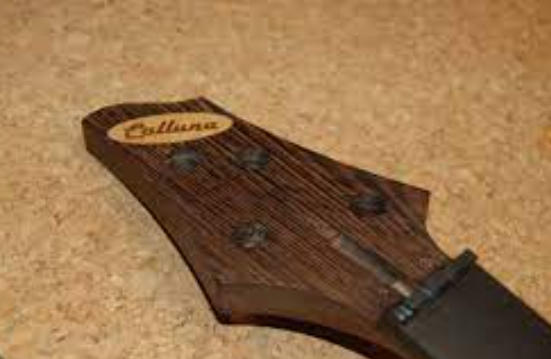
| Method | Visibility on Wenge | Durability | Skill Level | Cost | Key Features |
|---|---|---|---|---|---|
| Waterslide Decal | Excellent, with bright inks | Moderate | Beginner | Low | Ideal for custom designs |
| Laser Engraving | Subtle to medium contrast | Very High | Intermediate | Medium | Long-lasting and modern |
| Painted Logo | Bright and expressive | Medium | Advanced | Medium | Full creative color control |
| Inlay | Highest aesthetic result | Very High | Expert | High | Luxurious and traditional |
| Stamping/Branding | Rustic and organic | High | Beginner | Low | Fast and simple DIY method |
- Temperature and humidity: Apply decals and finishes in stable conditions to prevent bubbles.
- Avoid silicone-based cleaners: They can repel adhesives or varnish.
- Patience with drying times: Rushing steps often leads to silvering or cracking under lacquer.
- Test before applying to the guitar: Practice on scrap wenge for perfect consistency.
- Finish Polishing: Once sealed, buff with ultra-fine compound to restore gloss and blend layers seamlessly.
Customizing your wenge wood guitar headstock with a personalized logo adds both artistic flair and professional identity to your instrument. Whether you choose the traditional elegance of inlay, the sleek precision of laser engraving, or the simplicity of a waterslide decal, the key lies in careful surface prep, methodical execution, and the right finishing touches. Wenge's luxurious texture deserves equally refined attention — with the proper approach, your logo will stand out beautifully against its dark, exotic canvas.
No. Wenge's open-pore texture and natural oils prevent proper decal adhesion. It must first be sealed with multiple coats of lacquer or varnish and wet sanded for smoothness.[2][1]
Preferably three to four coats of clear finish before placing the decal, and two to three coats afterward to seal and protect it.[1]
Not if correctly calibrated. Laser engraving lightly etches into the top layer and can be sealed later with a clear coat for protection.[11][10]
Inlay logos offer unmatched elegance and durability but require expertise. Decals and laser engravings balance aesthetics and practicality for most DIY builders.[8][5]
Light or metallic colors such as silver, gold, or pearl create the best contrast. Black or dark brown logos will blend too deeply with the surface.[7][3]
[1](https://theguitarfabrik.com/us/blog/install-custom-decals-on-guitar-headstock.html)
[2](https://hazeguitars.com/blog/applying-a-logo-decal-to-a-guitar-headstock)
[3](https://www.facebook.com/groups/736353126390291/posts/3083532718338975/)
[4](https://www.youtube.com/watch?v=WXuwUG2hnYM)
[5](https://calicoguitarworks.com/guitar-headstock-decal-replacement/)
[6](https://www.youtube.com/watch?v=RQgPqVEJiCQ)
[7](https://www.reddit.com/r/Luthier/comments/15ujopm/how_do_you_guys_make_your_headstock_logo_any/)
[8](https://www.youtube.com/watch?v=KrZqg5xBmaw)
[9](https://www.youtube.com/watch?v=PkawGOSFjWQ)
[10](https://www.1laser.com/blogs/topic/laser-engraving-wood)
[11](https://www.facebook.com/groups/203376080793152/posts/1529479151516165/)


