
Views: 222 Author: Rebecca Publish Time: 2025-10-15 Origin: Site


Content Menu
>> Key Technical Characteristics
● Why Choose Jatoba Wood for Cutting Boards?
>> 1. Superior Strength and Durability
>> 2. Enhanced Food Safety and Hygiene
>> 3. Distinctive Aesthetic Value
>> 4. Natural Resistance to Elements
>> 5. Eco-Friendlier Alternative to Exotic Woods
● Drawbacks and Challenges of Using Jatoba
>> 3. Potential Surface Checking
● Comparison With Other Cutting Board Woods
● Best Applications for Jatoba Boards
● Sustainability and Food Safety Considerations
● Expert Opinions and Real-World Usage Feedback
● FAQ
>> 1. Will Jatoba dull knives faster than other woods?
>> 2. Is Jatoba safe for food contact?
>> 3. How should I maintain a Jatoba board?
>> 4. Does Jatoba warp or crack easily?
Selecting the right wood for your cutting board is not merely a matter of style—it's about functionality, durability, and food safety. Jatoba wood, commonly known as Brazilian Cherry, has increasingly gained attention among chefs, woodworkers, and home kitchen enthusiasts for its exceptional density and striking appearance. However, is Jatoba truly suitable for cutting board applications, especially compared to traditional options like maple, walnut, or teak?
This in-depth article will analyze the features, advantages, and drawbacks of Jatoba wood in the context of cutting board manufacturing and kitchen use. It integrates expert insights, technical data, and real-world testing outcomes to help readers make an informed decision.

Jatoba, scientifically named *Hymenaea courbaril*, grows in Central and South American rainforests, primarily in Brazil, Mexico, and the Caribbean. It is classified as a tropical hardwood and is known for its deep reddish-brown tone and fine interlocking grain. Over time, its color darkens naturally when exposed to light, resulting in timeless warmth and richness in any environment.
| Property | Description/Value |
|---|---|
| Janka Hardness | 2,690 lbf (extremely hard; nearly twice that of hard maple) |
| Density | Approximately 910 kg/m³ |
| Grain Type | Interlocked to slightly wavy |
| Workability | Difficult with standard tools due to density |
| Bacterial Resistance | High, due to low porosity |
| Food Safety | Safe when properly finished (food-grade oils) |
This intrinsic combination of hardness and fine grain makes Jatoba a unique hardwood—resilient enough for mechanical wear but dense enough to act as a natural barrier against moisture.
Jatoba is one of the *hardest woods* available in global markets. It resists warping, cracking, and denting better than most domestic hardwoods. This means your board maintains shape even after heavy cleaver use or prolonged kitchen exposure. Reports from woodworkers also indicate that Jatoba's hardness ensures it can resist blade indentation, offering longevity for decades if maintained correctly.[1][3]
Its low porosity impedes the absorption of juices and food residues. Unlike porous woods such as oak, Jatoba doesn't harbor bacteria easily, making it ideal for meat or vegetable preparation where hygiene is vital.[5][1]
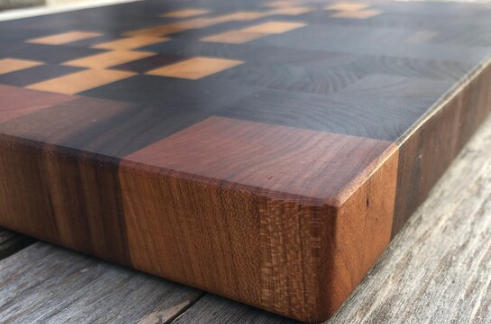
Visually striking and highly decorative, Jatoba features vibrant reddish-brown hues complemented by golden undertones. When properly finished, its natural sheen enhances the appeal of modern or rustic kitchens alike. The wood's unique luster and color variation make every board one-of-a-kind.
Due to its high oil content and closed cellular structure, Jatoba offers a degree of resistance to moisture, rot, and insects, similar to teak. It's less likely to develop mold or warp under typical kitchen humidity, an advantage for long-term use.[10][1]
While classified as a tropical hardwood, Jatoba is not listed in CITES appendices and is reported as a species of “Least Concern” by the IUCN. Responsible sourcing from certified plantations ensures sustainability while offering comparable durability to rarer woods like ipe or mahogany.[3]
Despite its versatility, Jatoba wood presents several challenges that should not be overlooked.
One of the most common criticisms of Jatoba boards is that its density dulls knife edges quickly. Professional chefs often report needing more frequent sharpening cycles when using Jatoba surfaces. This makes it less ideal for high-precision culinary tasks like filleting or sushi preparation.
Jatoba's extreme density poses difficulties during production. Carpenters find it hard to cut or sand compared to standard domestic hardwoods. Each board can be significantly heavier, making it less convenient for daily use or cleaning.[2][3]
A cutting board made of Jatoba usually weighs two to three times more than a similar-sized maple board, emphasizing stability on countertops but reducing portability.
Some users note that improperly kiln-dried Jatoba may develop surface cracks or internal stress after cutting, due to high internal pressures within the wood fibers. This means sourcing from a reputable manufacturer is critical.[4]
While naturally durable, Jatoba tends to darken with sustained exposure to sunlight and warmth. Over time, it develops a richer mahogany-like tone that some may find desirable but others might perceive as discoloration.
Compared with maple or beech, Jatoba is moderately more expensive due to import costs. However, considering its lifespan and resistance, it may actually offer better long-term value.
| Wood Type | Durability | Knife Impact | Porosity | Cost | Recommended Use |
|---|---|---|---|---|---|
| Jatoba | Excellent | High (dulls knives fast) | Low | Moderate-High | Heavy-duty chopping/serving |
| Maple | Great | Moderate | Medium | Moderate | General-use cutting |
| Walnut | Great | Low (knife-friendly) | Medium | High | Kitchen prep/presentation |
| Teak | Excellent | Medium (due to silica) | Low | High | High-moisture environments |
| Bamboo | Good | Medium | Medium | Low | Eco-friendly households |
- Butcher blocks: Perfect for professional kitchens handling meats or heavy chopping
- Decorative serving boards: Highlights food presentation beautifully
- Kitchen countertops: Ideal for integrated cutting surfaces
- Gift items or heirloom boards: Because of its color and longevity value
Its hardness ensures long service and aesthetic consistency—a major factor if you desire both functionality and style.
To preserve the beauty and hygiene of a Jatoba cutting board, follow these essential care tips:
1. Clean promptly after use: Use mild soap and warm water; avoid soaking.
2. Avoid dishwashers: Excessive heat can damage even hardy woods.
3. Dry vertically: Ensures air circulation and prevents warping.
4. Recondition regularly: Apply food-grade mineral oil or beeswax every few weeks.
5. Remove knife marks: Light sanding can restore surface smoothness.
6. Store away from sunlight: Prevent darkening or uneven color exposure.
Recent studies confirm that Jatoba is non-toxic and food safe when properly processed. While prolonged contact with sawdust can cause mild irritation in some individuals, finished boards pose no such risk. Many suppliers now ensure FSC-certified sourcing, promoting eco-conscious production practices.[6][7][1][3]
Unlike certain tropical woods such as wenge or cocobolo—which are prone to toxic reactions—Jatoba is safe for daily culinary use, provided only natural oils or food-grade sealants are applied.
Woodcraft forums feature dozens of reports supporting Jatoba's resilience and finish quality. Builders commend its “excellent dimensional stability” once kiln-dried, though they caution against improper drying or stress release during processing.[4]
Professional chefs attest to its reliable chopping surface but note that *“you trade knife sharpness for durability.”* In many kitchens, Jatoba boards are rotated with softer maple or walnut alternatives—a strategic mix optimizing longevity and blade care.[2]
Jatoba wood stands out as a premium choice for those who value longevity, visual appeal, and sturdiness in their kitchen tools. It's nearly indestructible, beautifully grained, and naturally hygienic. However, its hardness presents challenges—it dulls blades faster and is heavier than typical cutting boards.
For heavy-duty users or design-conscious homeowners, Jatoba cutting boards can be a remarkable investment blending durability and elegance. Still, cooks who prioritize knife longevity or easy maintenance might prefer alternatives like maple or walnut.
Ultimately, Jatoba is a strong, sustainable, and beautiful material that bridges craftsmanship and practicality, making it an excellent option for both functional and decorative kitchen applications.
Yes. Because of its density, Jatoba edges are less forgiving, causing rapid knife dulling. Frequent sharpening or occasional use is advisable.
Yes—when treated with food-safe oil finishes. It's non-toxic and commonly approved for kitchen use once properly sealed.
Hand-wash after use, dry immediately, and oil every few weeks. Avoid dishwashers and extreme heat exposure to prevent damage.
If kiln-dried and sealed correctly, no. However, poor-quality Jatoba lumber can warp or check due to internal tension.
Yes. It's not endangered and is often sustainably harvested. Choosing FSC-certified boards ensures responsible sourcing and environmental protection.
[1](https://lignawooddesign.com/blog/jatoba-wood-uses/)
[2](https://www.kitchenknifeforums.com/threads/brazilian-cherry-wood-for-cutting-board.66264/)
[3](https://www.wood-database.com/jatoba/)
[4](https://www.lumberjocks.com/threads/anyone-used-jatoba-with-good-results.25380/)
[5](https://dalstrong.com/blogs/news/the-best-wood-for-cutting-boards)
[6](https://sawmillcreek.org/threads/using-wenge-or-other-toxic-woods-for-cutting-boards.251479/)
[7](https://www.reddit.com/r/Cuttingboards/comments/xpw4c3/part_2_choosing_wood_for_a_cutting_board/)
[8](https://abelyfashion.livepositively.com/the-ultimate-guide-to-jatoba-wood-beauty-durability-and-versatility/)
[9](https://www.lumberjocks.com/threads/woods-known-to-be-safe-for-cutting-boards.13318/)
[10](https://www.mcilvain.com/jatoba-wood/)


