


Scientific name: Pericopsis elata - Fabaceae, Afromosia genus
English name: Afrormosia - Primary log end code AFA
International Convention Status: CITES Appendix II (regulated species for international trade)
Main market names: King Citronwood, African Citronwood, Reddish Citronwood, Thai King Citronwood
Main Origin names: Afrormosia, Assamela (Côte d'Ivoire/French Zone), Obang (Cameroon, Gabon), Ejen (Cameroon), Awawabi, Kokrodua, Awawai (Ghana), Ole, Bahala, Mohole (Democratic Republic of the Congo, Gabon), Ayin (Nigeria)
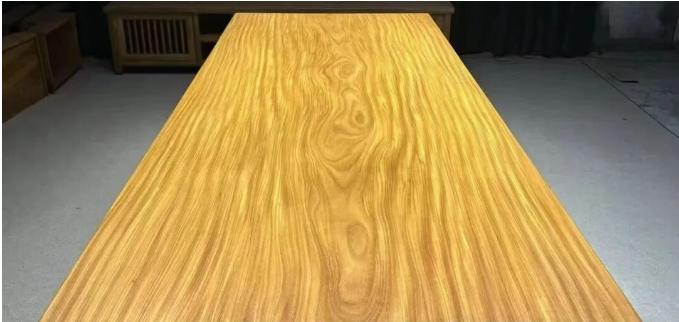

I. Tree Species and Resource Distribution · Tree Characteristics: Tall trees, with a height of up to 30-50 meters and a trunk diameter of approximately 1.5 meters. They often have prominent root plates. They are the dominant tree species in the upper layer of forests.
· Species Distribution: There are 7 species in the Fabaceae family's Pericopsis genus worldwide, with 5 of them found in Africa. The commercially harvested King Ebony (P. elata) is mainly distributed in the tropical rainforests of West and Central Africa.
· Trade Sources: Mainly imported in bulk as logs or sawn timber from countries such as the Democratic Republic of the Congo (Kinshasa), the Republic of the Congo (Brazzaville), Gabon, Cameroon, etc. The CITES Appendix II status requires that international trade must have a legal source certificate.

II. Macroscopic and Microscopic Identification Characteristics of Wood
1. Cross-section:
· The distinction between heartwood and sapwood is extremely clear.
· Heartwood: The freshly cut surface presents an attractive yellowish-brown color. When exposed to the air, it gradually oxidizes to a deep, noble dark brown color, with great charm.
· Sapwood: Narrow (about 2.5 cm), with a light yellow or grayish-white color.
· Growth rings: Usually not obvious.
2. Bark:
· Thin (about 0.5 cm), with a relatively soft texture.
· Outer bark: Grayish-yellow to grayish-brown, with irregular surface cracks and prone to flaking in fragments.
· Inner bark: Light yellow, with distinct characteristics - when pressed, it easily forms short bristle-like fibers, which is an important identification point.
3. Macroscopic Structure (Open Pithwood):
· Pith pores: Clearly visible under a magnifying glass, with a slightly higher number and slightly smaller size; mainly single pith pores and 2-4 radial row compound pith pores; often containing yellowish-white deposits and abundant dark resin.
· Axial parenchyma: Well-developed and obvious (under a magnifying glass), in various forms: annular bundle-like, wing-like, polypod-like, and wheel-bound-like.
· Wood rays: Visible under a magnifying glass, with slightly denser density and narrow width.
· Special structures: Wave patterns can be seen on the surface and tangential section of the wood; dark tissue bands often appear on the radial section.
4. Key Differences from True Teak (Tectona grandis):
· Lack of the characteristic oily texture and natural lubricity of true teak.
· Non-semicircular pithwood (true teak is semicircular pithwood).
· Significantly different bark characteristics (the inner bark with bristle-like fibers).
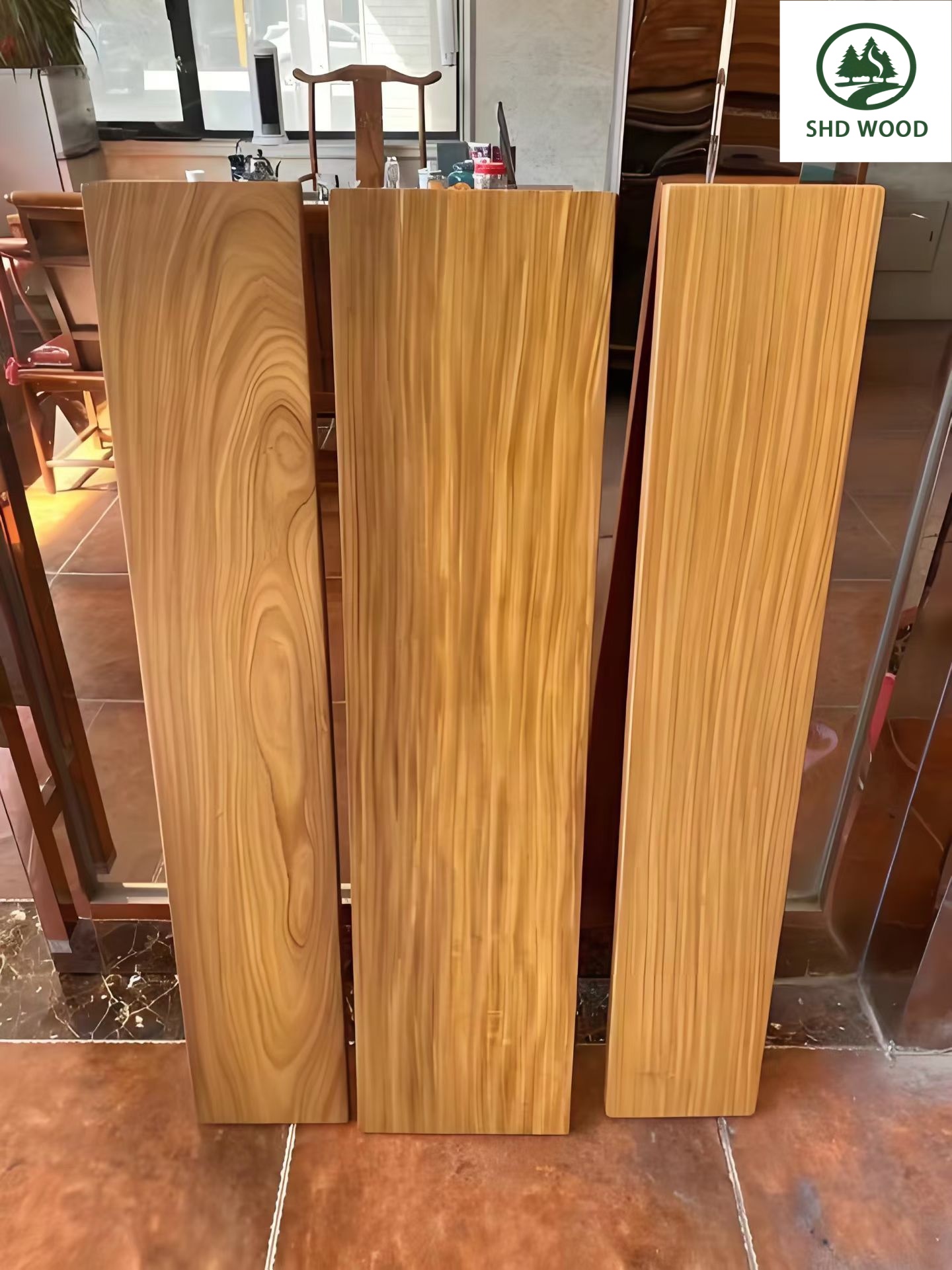
III. Physical and Mechanical Properties and Processing Performance of Wood
· Gloss: The surface of the wood has a natural luster, and the effect is even better after polishing.
· Texture and Structure: The texture is straight or slightly interlaced; the structure is fine and uniform.
· Weight and Density: It is medium to heavy-hard wood. The air-dry density ranges from 0.70 to 0.86 g/cm³, and it is firm and stable.
· Strength and Hardness: The strength and hardness are slightly higher, and it has good load-bearing and wear resistance.
· Drying: The drying rate is moderate.
· Processing Performance:
· Excellent: Good processing performance for sawing, planing, turning, surface sanding, etc., and easy to obtain a smooth surface.
· Gluing and Painting: Excellent gluing performance and paint adhesion performance, suitable for high-quality painting.
· Flexibility: Moderate.
· Riveting Force: Strong, fixed firmly.
· Drying: The drying speed is slow, and it needs to be controlled properly to prevent cracking and warping, but the dimensional stability after drying is good.
· Durability: Very wear-resistant; excellent ant-termite performance, and natural corrosion resistance is good.
· Important Precautions: Contact with black metals such as iron and copper is prone to chemical reactions, causing the wood to change color and even rusting of the metal, so stainless steel or inert material connecting pieces/fittings should be used.
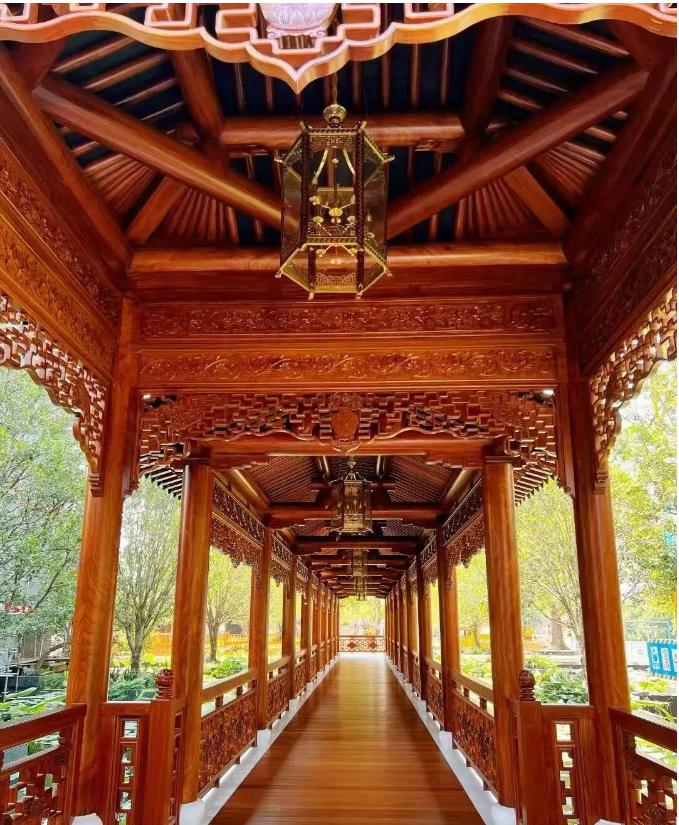

HONG KONG SENHEDA WOOD LIMITED,we have been focusing on African wood business for 16 years ,Our variety include OKOUME, IROKO, SAPPELLY,ZEBRA, TALI, PADOUK, BOSSE, AZOBE, EYOUM,DABEMA, AFROMOSIA, TIAMA, OVANGOL, WENGE, KOSIPO, BILLINGA,TEAK,OKAN,etc.
our website:www.shdtimber.com
Whatsapp:+8613418472425


