Views: 222 Author: SENHEDA WOOD Publish Time: 2026-06-22 Origin: Site
Content Menu
● What Makes Underwater Wood Different?
● Key Factors When Selecting Underwater Wood
● Top 5 Types of Wood for Underwater Use
>> 2. Acajou (African Mahogany)
>> 3. Mukulungu (High‑Density African Structural Hardwood)
● Quick Comparison of Underwater Wood Options
● How to Maximize Underwater Wood Lifespan
● Expert Insights from 16+ Years in African Timber
● Practical Steps to Choose the Right Underwater Wood
● Why Work with a Specialist African Timber Supplier?
● Call to Action: Plan Your Next Underwater Wood Project
● Frequently Asked Questions (FAQ)
>> References
Choosing the right underwater wood can make or break a marine or waterfront project, both in terms of safety and long‑term cost. As a seasoned African hardwood supplier working with global shipyards and construction companies, we have seen projects succeed—or fail—based largely on this single decision. [harborexports]

The underwater environment is one of the harshest places you can put wood. Constant immersion, water pressure, biological attack and, in marine settings, high salinity all accelerate degradation. [duffieldtimber]
To perform reliably underwater, wood must combine several critical properties: [harborexports]
- Water resistance to limit swelling, cracking and rot
- Dimensional stability to reduce warping and movement
- Natural durability against fungi, bacteria and marine borers
- Density and hardness to resist impact and abrasion
- Corrosion‑compatible behavior with fasteners and metal parts
From an engineering standpoint, this is not just about "wood that doesn't rot." It is about predictable performance over decades under load, vibration and continuous moisture cycling. [design-guide.build-in-wood]
Before choosing a species, clarify the real‑world conditions of your project: [duffieldtimber]
- Water type: Freshwater vs brackish vs saltwater
- Depth and load: Shallow decking vs deep piles or ship components
- Exposure pattern: Fully submerged, splash zone, tidal zone or intermittent contact
- Maintenance access: Easily accessible marina vs remote fishery or river structure
- Regulatory needs: FSC or other sustainable sourcing requirements
In our African operations, for example, the species we recommend for ship keels and frames are not always the ones we suggest for piers or decorative waterfront structures, even if all are technically "water‑resistant." [shdtimber]
Below are five proven species used worldwide in underwater and marine applications, along with their strengths, trade‑offs and typical use cases. [thestewartlumberco]
Iroko (often called African Teak) is a dense West African hardwood widely used as a cost‑effective substitute for true teak. It contains natural oils and extractives that give it strong resistance to rot, marine borers and decay. [thestewartlumberco]
Key properties: [harborexports]
- Medium‑to‑coarse texture, interlocked grain, good dimensional stability
- Color ranges from yellow‑brown to medium brown, darkening over time
- High resistance to wear and abrasion in wet service
Best underwater & marine uses: [duffieldtimber]
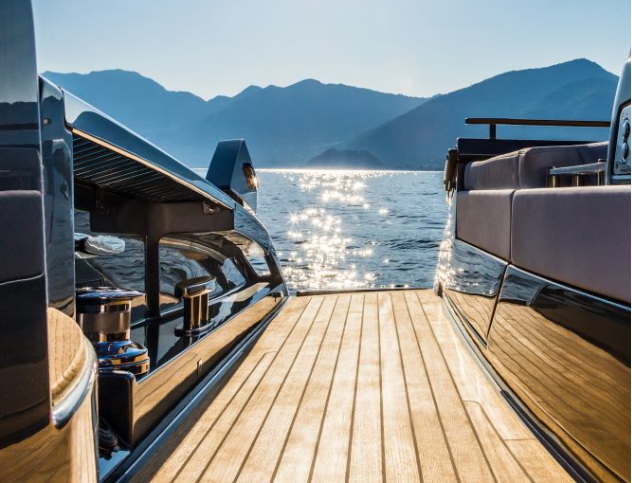
- Boat and yacht decking
- Hull planking in seawater
- Marine interiors subject to humidity and occasional spray
From our own export experience, Iroko is often chosen by Vietnamese and European boatyards that need teak‑like performance with tighter budgets and reliable volume supply. [shdtimber]
Acajou, marketed internationally as African mahogany, is appreciated for its balance of strength, workability and visual appeal. While not as dense as Iroko, it still offers good durability when properly specified and finished. [thestewartlumberco]
Key properties: [harborexports]
- Medium to coarse texture, straight to interlocked grain
- Heartwood darkens from pale pink to rich reddish‑brown over time
- Good machining, gluing and finishing performance
Best underwater‑related uses:
- Hull panels in protected or partially submerged areas
- Interior joinery in high‑humidity marine cabins
- Trim, rails and decorative components on boats and waterfront structures
Acajou is ideal when aesthetic value is as important as structural performance, particularly for higher‑end vessels and marina architecture. [thestewartlumberco]
Mukulungu is a Central African hardwood valued for its exceptional density and strength, making it suitable for highly loaded structural elements in marine environments. Field experience suggests that, when properly used, it becomes increasingly hard and stable with prolonged water exposure. [design-guide.build-in-wood]
Key properties: [design-guide.build-in-wood]
- Heavy, solid wood with fine to medium texture
- Straight to interlocked grain, reddish‑brown to purplish‑brown heartwood
- Very high compressive strength and excellent resistance to biological attack
Best underwater uses:
- Ship keels and main frames
- Structural ribs and load‑bearing components
- Heavy‑duty piles and foundation members in demanding sites
Because of its mechanical profile, Mukulungu is usually specified where failure is not an option, and where steel or concrete alone would be costly or difficult to install. [dot.state.mn]
Western Red Cedar is a North American softwood known for its light weight, natural decay resistance and good workability. It is not as hard as African hardwoods, but its durability and low density make it a favorite for certain marine applications. [duffieldtimber]
Key properties: [harborexports]
- Light weight, straight grain, uniform fine texture
- Natural extractives that deter insects and fungal decay
- Excellent thermal and acoustic insulation properties
Best underwater‑adjacent uses: [harborexports]
- Canoe and kayak hulls
- Planking and decking where low weight is critical
- Cladding and trim in high‑moisture, splash‑zone environments
Cedar excels in small craft and partially submerged structures where reduced weight and easy handling outweigh the need for extreme hardness. [harborexports]
Douglas Fir is widely used in structural marine work due to its high strength‑to‑weight ratio and broad availability at competitive prices. With the right preservative treatment and maintenance, it performs reliably in submerged and near‑water conditions. [dot.state.mn]
Key properties: [dot.state.mn]
- Medium to coarse texture, typically straight grain
- Strong, moderately dense, with good stiffness
- Responds well to pressure treatment for added decay resistance
Best underwater‑related uses: [harborexports]
- Masts and spars for sailing vessels
- Structural ribs, frames and beams
- Piles, docks and bridges when treated to marine grade
For large‑scale civil projects—piers, small bridges, harbor infrastructure—Douglas Fir often offers the best balance of cost, strength and treatability. [dot.state.mn]
| Wood species | Density & strength | Natural decay resistance | Typical underwater / marine roles |
|---|---|---|---|
| Iroko (African Teak) | Medium‑high, very durable (duffieldtimber) | Excellent vs rot & borers (harborexports) | Boat decks, hull planking, marine interiors |
| Acajou (Afr. Mahogany) | Medium, good workability (thestewartlumberco) | Good with proper finishing (harborexports) | Hull panels, interior joinery, trim |
| Mukulungu | Very high structural strength (duffieldtimber) | Excellent in submerged use | Keels, frames, ribs, heavy piles |
| Western Red Cedar | Low density, moderate strength (harborexports) | Very good natural durability (thestewartlumberco) | Canoes, kayaks, light planking, cladding |
| Douglas Fir | High strength‑to‑weight (dot.state.mn) | Moderate, improves with treatment (harborexports) | Masts, structural beams, treated piles |
Even the best species will fail prematurely if design and protection are neglected. To extend service life, focus on three areas: [duffieldtimber]
1. Material selection and grading
- Choose species whose natural durability matches water type and exposure. [duffieldtimber]
- Specify appropriate structural grades (e.g., FAS or equivalent) to avoid defects that can concentrate stress and moisture. [dot.state.mn]
2. Protective treatment and coatings
- Use marine‑grade preservatives and sealers to reduce moisture ingress, especially in end‑grain. [harborexports]
- In saltwater, pair wood with corrosion‑resistant fasteners such as stainless steel or specialized marine alloys to avoid staining and hardware failure. [harborexports]
3. Design for drainage, inspection and replacement
- Avoid trapped water pockets and design joints that shed water instead of holding it. [design-guide.build-in-wood]
- Plan for periodic inspection and maintenance, especially in the splash and tidal zones where decay is most aggressive. [harborexports]
Projects that incorporate these principles routinely achieve decades of service life, even in demanding marine climates. [duffieldtimber]
As a Chinese‑owned supplier specializing in African hardwoods for global markets, we handle roughly 4,000–8,000 tons of timber per month and ship over 200 containers to Vietnam alone. This volume gives us a practical view of what actually works in the field—not just on paper. [cn.linkedin]
From our long‑term customers in shipbuilding, marine construction and heavy civil engineering, several patterns emerge: [shdtimber]
- African hardwoods such as Iroko and Mukulungu are often selected when European or Southeast Asian buyers need a blend of durability, sustainability and stable supply. [shdtimber]
- FSC‑certified sourcing is increasingly a prerequisite, not a bonus, especially for international projects financed by multilaterals or large corporates. [shdtimber]
- For complex projects, buyers value suppliers who can provide mixed species solutions—for example, Mukulungu for keels and Iroko or Acajou for decks and interiors—rather than pushing a single wood for every purpose. [duffieldtimber]
Because we operate directly in African sourcing regions and export globally, we also help customers navigate species substitutions when local regulations or supply changes require quick adjustment without sacrificing performance. [cn.linkedin]
To move from theory to a real bill of materials, you can follow a simple decision sequence: [duffieldtimber]
1. Define your environment and lifespan target
- Freshwater vs marine, design life (10, 25 or 50+ years).
2. Rank priorities: cost, durability, or appearance
- High‑end yacht vs industrial pier vs fish farming structure.
3. Match wood species to functions
- High‑load structural members: Mukulungu or Douglas Fir (treated). [dot.state.mn]
- Decking and exposed walking surfaces: Iroko or Cedar, depending on budget and aesthetic. [thestewartlumberco]
- Interior and decorative elements: Acajou or other visually attractive hardwoods. [thestewartlumberco]
4. Confirm grading, treatment and certification
- Specify structural grades and FSC or equivalent documents where required. [shdtimber]
An example: A coastal marina in a tropical climate might use Mukulungu piles, Douglas Fir beams, and Iroko decking, combining cost efficiency with long‑term reliability in each part of the structure. [duffieldtimber]
Selecting the right underwater wood is only half the story; ensuring consistent quality and logistics is equally important. HONG KONG SENHEDA WOOD LIMITED has over 16 years of experience focused on African timber, serving partners across Asia, Europe and other global markets. [cn.linkedin]
Key advantages we provide to marine and construction clients include: [shdtimber]
- Stable supply volumes: Monthly handling of 4,000–8,000 tons (or cubic meters) of African wood and exports exceeding 200 containers to Vietnam support large, ongoing projects.
- Species portfolio tuned for water exposure: Access to Iroko, Mukulungu, Acajou and other durable hardwoods suitable for submerged or high‑moisture use.
- Quality and grading control: Focus on high‑yield, defect‑controlled material to minimize waste and on‑site rejection.
- Global logistics support: Experience coordinating shipments for complex timelines and multi‑port deliveries.
For marine contractors, shipyards and industrial buyers, partnering with a specialist supplier reduces the risk of specification mismatch, inconsistent quality and delivery delays—all of which can be more costly than the wood itself. [shdtimber]
If you are planning a dock, marina, vessel refit or any project involving underwater or high‑moisture wood, early collaboration with your timber supplier can significantly improve design, cost and service life. [shdtimber]
Share your project environment, load requirements and desired lifespan, and we can help you build an optimized species mix—balancing Iroko, Mukulungu, Acajou, Douglas Fir or Cedar—to achieve long‑term performance at a competitive total cost. [shdtimber]
Q1: Does any wood actually get stronger when used underwater?
A1: Wood does not literally increase its mechanical strength in water, but dense species with stable cell structure, like Mukulungu, can become more dimensionally stable and harder to damage after prolonged saturation when correctly used. [design-guide.build-in-wood]
Q2: Is hardwood always better than softwood for underwater use?
A2: Not always. Hardwoods like Iroko or Mukulungu offer superior natural durability, but softwoods such as Douglas Fir can perform very well when properly treated and detailed, especially for large‑scale structural work. [dot.state.mn]
Q3: How important is FSC certification for underwater wood projects?
A3: For many international projects, especially those with ESG or institutional funding requirements, verified sustainable sourcing (such as FSC certification) is now a standard requirement rather than an optional extra. [shdtimber]
Q4: Can I mix different wood species within the same underwater structure?
A4: Yes. It is common to combine high‑density hardwoods for keels or piles with more workable or visually appealing species for decking and interiors, as long as design details and fasteners are correctly coordinated. [duffieldtimber]
Q5: How often should underwater wood structures be inspected?
A5: Inspection intervals depend on environment and loading, but planning a structured inspection program—often every 1–3 years for high‑value marine structures—helps detect early signs of decay, fastener corrosion or mechanical damage. [harborexports]
1. K‑TIMBER. “Top 5 Types of Underwater Wood.” https://k-timbers.com/top-5-type-of-underwater-wood/
2. Harbor Exports. “A Guide to the Best Wood for Underwater Use.” https://harborexports.com/best-wood-for-underwater-use/
3. Duffield Timber. “The Best Waterproof & Water Resistant Wood Types.” https://duffieldtimber.com/the-workbench/buyers-guides/water-resistant-timber-species-treatments
4. Stewart Lumber. “What Are The Best Water Resistant Woods?” https://thestewartlumberco.com/blog/what-are-the-best-water-resistant-woods/
5. Build‑in‑Wood Design Guide. “Wood Properties.” https://design-guide.build-in-wood.eu/wood-properties/
6. USDA Forest Service. “Properties of Wood and Structural Wood Products.” https://www.dot.state.mn.us/bridge/pdf/insp/USFS-TimberBridgeManual/em7700_8_chapter03.pdf
7. SHD WOOD (HONG KONG SENHEDA WOOD LIMITED). “About Us.” https://www.shdtimber.com/about-us.html
8. SHD WOOD. “Home.” https://www.shdtimber.com
9. HONG KONG SENHEDA WOOD LIMITED – LinkedIn profile. https://cn.linkedin.com/company/hong-kong-senheda-trade-limited


