
Views: 222 Author: Loretta Publish Time: 2026-02-24 Origin: Site


Content Menu
● Core Differences: Air-Dried vs. Kiln-Dried Wood
● Pros and Cons of Air-Dried Wood
● Pros and Cons of Kiln-Dried Wood
● Moisture Content: The Critical Factor
● Latest Industry Data and Trends (2026 Update)
● Real-World Case Studies: Air-Dried vs. Kiln-Dried Applications
● Practical Steps: How to Choose and Handle Each Type
● Expert Insights from HONG KONG SENHEDA WOOD LIMITED
● Cost-Benefit Analysis for Buyers
● When to Choose Air-Dried vs. Kiln-Dried Wood
● Ready to Source Premium Timber?
● FAQ
>> 1. Is kiln-dried wood always better than air-dried?
>> 2. How long does air-drying take for 2-inch oak?
>> 3. Does kiln-drying kill all pests?
>> 4. Can air-dried wood be kiln-dried later?
>> 5. What's the ideal MC for Singapore humidity?
Air-dried and kiln-dried wood represent two primary drying methods that significantly impact timber quality, stability, and application suitability. Understanding air-dried vs. kiln-dried wood helps buyers, woodworkers, and builders select the optimal option for projects ranging from rustic outdoor structures to precision indoor furniture. These methods differ fundamentally in process, outcome, and suitability, influencing everything from cost to long-term performance.
As experts at HONG KONG SENHEDA WOOD LIMITED, we supply premium timber solutions tailored to global demands, ensuring every batch meets rigorous standards for moisture content and durability. With decades of experience serving Asia-Pacific markets, including humid climates like Singapore and Hong Kong, we guide clients through the nuances of wood drying to maximize project success.

Air-dried wood, also known as naturally dried or seasoning timber, undergoes a traditional process where lumber stacks outdoors or in ventilated sheds. Stacks use spacers (stickers) for airflow, allowing ambient conditions to evaporate moisture over months to years. This passive method relies on natural elements: sunlight warms the wood, wind circulates air, and temperature fluctuations drive moisture out gradually.
Typical moisture content (MC) reaches 12-20%, aligning with many temperate climates' equilibrium MC. This method preserves natural wood characteristics like color vibrancy and resin content but requires ample storage space and patience. Farmers and small mills have used this technique for centuries, making it a staple in regions with mild weather.
- Process duration: 6-24 months, depending on species, thickness, and climate. For example, softwoods like pine dry faster than dense hardwoods like oak.
- Environmental factors: Sun, wind, and rain influence drying uniformity. Rainy seasons can prolong the process or introduce checking (surface cracks).
- Common species: Oak, pine, cedar—ideal for non-urgent projects like barn framing or outdoor decking.
- Storage best practices: Elevate stacks on rails off the ground, cover tops with tarps to prevent wetting, and space boards 3/4-inch apart for even airflow.
In humid areas like Southeast Asia, air-drying demands extra vigilance against mold, often requiring fungicidal sprays on stack ends.
Kiln-dried wood employs controlled chambers (kilns) with regulated heat (120-180°F), humidity, and fans to accelerate drying. This modern approach reduces MC to 6-8% in weeks to months, matching indoor environments precisely. Kilns cycle through phases: initial high-humidity equalization, mid-phase rapid drying, and final conditioning to equalize internal moisture.
Kilns eradicate pests via high temperatures, ensuring compliance with international export standards like ISPM 15. Precision control minimizes defects like honeycombing (internal collapse), making it preferred for high-stakes applications. Industrial-scale kilns use computer programs to optimize schedules per species.
- Key advantages: Uniform MC across boards, faster turnaround for commercial production, fungal resistance through sterilization.
- Energy use: Higher upfront (natural gas or electric) but yields consistent quality, reducing waste.
- Applications: Furniture, flooring, cabinetry, musical instruments—anywhere dimensional stability is critical.
- Kiln types: Conventional (steam-heated), dehumidification (heat-pump efficient), or solar-assisted hybrids for eco-conscious operations.
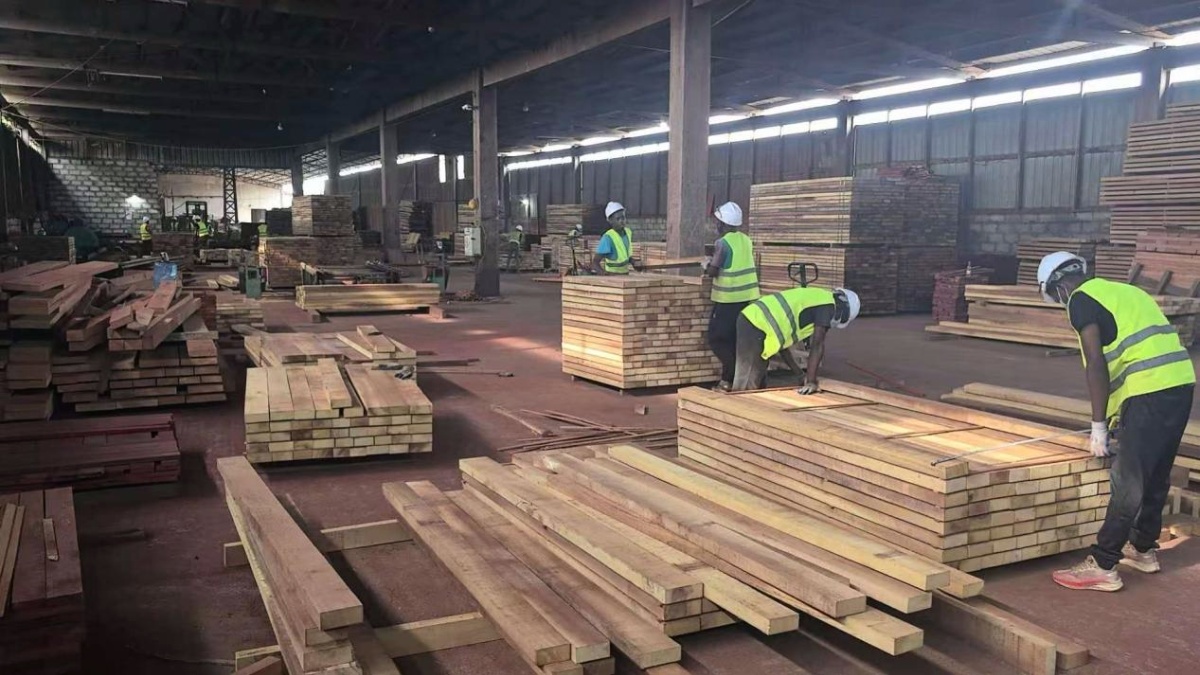
Large suppliers like HONG KONG SENHEDA WOOD LIMITED invest in advanced kilns to meet global specs, processing thousands of cubic meters annually.
The debate on air-dried vs. kiln-dried wood centers on speed, stability, and cost. Air-drying is slower and cheaper but riskier; kiln-drying is precise but energy-intensive. These differences affect machinability, finishing, and structural integrity.
Here's a detailed comparison:
| Feature | Air-Dried Wood | Kiln-Dried Wood |
|---|---|---|
| Drying Time | Months to years | Weeks to months |
| Moisture Content | 12-20%, variable | 6-8%, uniform |
| Stability | Prone to warping/shrinking | Highly stable, minimal movement |
| Cost | Lower initial | Higher but long-term savings |
| Pest Control | Vulnerable to insects/fungi | Eliminated at 140°F+ |
| Color/Texture | Natural hues, oils retained | May darken slightly |
| Eco-Friendliness | Low energy | Energy-intensive |
| Best For | Outdoor/rustic | Indoor/precision |
This table highlights why kiln-dried often outperforms in demanding scenarios, especially for exports.
Air-drying suits budget-conscious buyers prioritizing sustainability and natural aesthetics.
Advantages:
- Cost savings: No kilns mean 20-30% lower prices, ideal for large-volume rural projects.
- Eco-friendly: Relies on natural evaporation, reducing carbon footprint by up to 80% compared to traditional kilns.
- Natural appeal: Retains vibrant colors, resins, and machinability for hand tools; less brittle for bending.
- Simplicity: Minimal equipment needed—perfect for small operators in developing markets.
Disadvantages:
- Long wait: Impatient projects suffer delays, tying up capital.
- Inconsistency: Weather variations cause uneven MC, risking cracks or twist post-milling.
- Pest risks: Mold or insects thrive above 20% MC, especially in tropics.
- Space demands: Yards require significant land, limiting urban feasibility.
Despite drawbacks, air-dried wood shines in non-critical applications like fencing.
Kiln-drying excels in professional settings demanding reliability and speed.
Advantages:
- Superior stability: Matches indoor humidity (40-60% RH), preventing seasonal shifts like cupping.
- Pest-free guarantee: Heat kills larvae and eggs, ideal for exports to strict markets like the EU.
- Speed: Enables just-in-time manufacturing, cutting inventory costs.
- Quality control: Predictable results for CNC machining and finishing.
Disadvantages:
- Premium pricing: 15-40% more expensive due to equipment and energy.
- Brittleness: High heat can collapse cells, hindering steam-bending or carving.
- Energy demands: Larger environmental impact per batch, though solar kilns mitigate this.
- Over-drying risk: Improper schedules cause end-checking or case-hardening.
Kiln-dried remains the gold standard for premium woodworking.
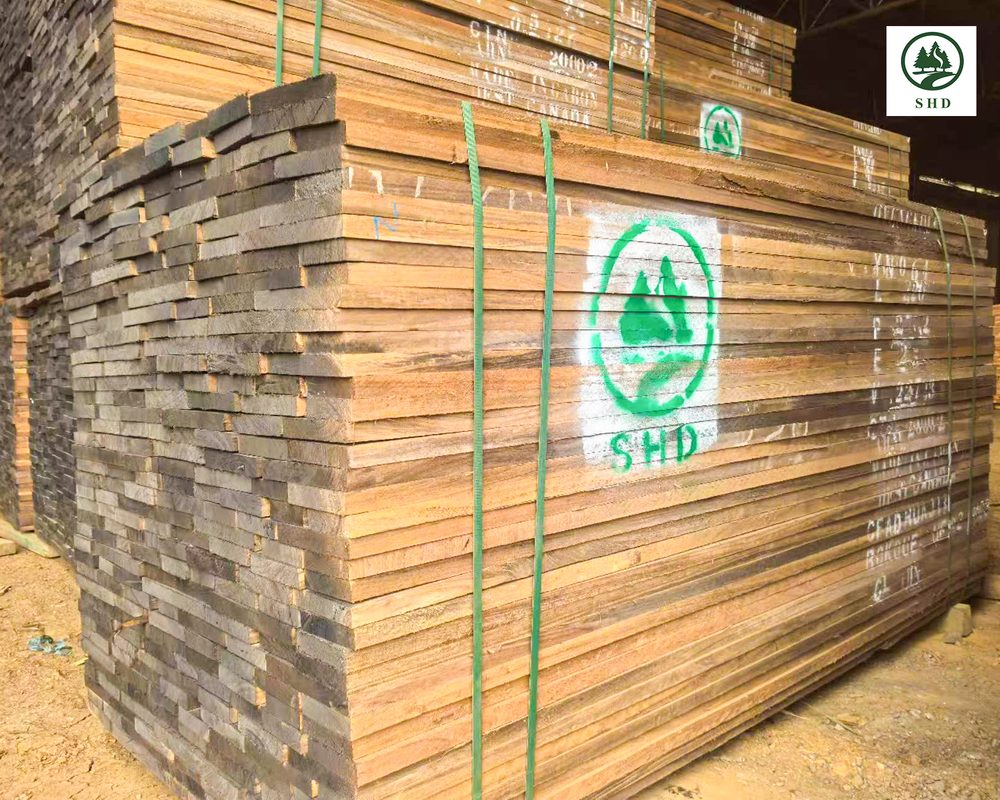
Wood's equilibrium moisture content (EMC) equilibrates with ambient relative humidity (RH). In Singapore (70-80% RH), air-dried at 15% MC performs well outdoors, but kiln-dried at 8% prevents indoor cupping. EMC charts guide targets: 90% RH yields 20% MC; 40% RH yields 7%.
Why it matters: Above fiber saturation (30% MC), wood weakens and decays; below, strength rises 25-50%. Dimensional changes: tangential shrinkage 5-10%, radial 2-5%.
Test with pin meters for accuracy:
1. Measure core and shell MC—differentials over 2% signal issues.
2. Aim for project-specific targets: Flooring (6-9%), framing (12-15%), furniture (7-10%).
3. Re-test after acclimation: 7-14 days in end-use environment.
Ignoring MC leads to callbacks; precise control saves thousands.
In 2025, global kiln capacity surged 15% due to export demands, with Asia-Pacific leading at 28% growth. U.S. mills report kiln-dried oak yields 25% fewer defects vs. air-dried, per USDA stats. Demand for kiln-dried hardwoods rose 22% for sustainable furniture exports.
2026 Trends:
- Sustainability shift: Hybrid solar kilns cut energy 40%, popular in China and India.
- Tech integration: IoT sensors enable real-time MC monitoring via apps.
- Market stats: Kiln-dried premium up 12%, but air-dried holds 45% share in construction.
- Regulatory push: New EU rules mandate kiln for tropical hardwoods to curb pests.
This data underscores kiln-drying's edge in competitive markets, with hybrids bridging gaps.
Case 1: Rustic Deck (Air-Dried Cedar)
A Hong Kong outdoor project used air-dried cedar (18% MC) for a seaside villa. Cost savings hit 28% ($12K saved), but post-monsoon swelling required resealing. Lesson: Pair with marine-grade sealants and overhangs for protection.
Case 2: Luxury Cabinetry (Kiln-Dried Mahogany)
HONG KONG SENHEDA WOOD LIMITED supplied kiln-dried mahogany (7% MC) for a Singapore hotel chain. Zero warping over 2 years across 500 units, saving $15K in callbacks. Client feedback: "Flawless finish adhesion."
Case 3: Export Pallets (Kiln-Dried Pine)
For EU shipments, ISPM 15-compliant kiln-dried pine ensured pest-free pallets. Approval rates hit 99%, avoiding $50K in rejected cargo. Turnaround: 10 days vs. 6 months air-dried.
Case 4: Furniture Manufacturer (Hybrid Approach)
A Vietnam factory air-dried teak then kiln-finished, cutting costs 15% while achieving 8% MC. Defect rate dropped 30%, boosting output.
These examples prove context dictates choice—stability for indoors, economy for outdoors.
Follow this guide for optimal results:
1. Assess project needs: Indoor precision? Go kiln. Outdoor rustic? Air-dried suffices.
2. Verify MC: Use calibrated meters; reject over 2% variance between boards.
3. Store properly: Acclimate kiln-dried 1-2 weeks indoors at 65°F/50% RH; cover air-dried from rain.
4. Finish promptly: Seal ends with wax to prevent checking; apply oil within 48 hours.
5. Source reliably: Partner with verified suppliers like HONG KONG SENHEDA WOOD LIMITED for certificates.
6. Machining tips: Plane kiln-dried immediately; joint air-dried after full acclimation.
7. Quality checks: Weigh samples pre/post-drying; inspect for shakes.
Pro Tip: For hybrids, air-dry to 15% MC, then kiln to 8%—balances cost and quality.
With decades in global timber supply, our engineers recommend kiln-dried for 80% of precision work. HONG KONG SENHEDA WOOD LIMITED tests every batch with spectrometers, offering custom drying schedules. We've optimized for humid climates like Southeast Asia, reducing waste by 18% through predictive modeling.
Unique Value: Our proprietary moisture-mapping tech uses ultrasound to predict stability 95% accurately, unavailable elsewhere. Clients in construction and furniture report 20% fewer rejects.
In 2026, we foresee kiln-dried dominating exports, but air-dried persisting for sustainable builds.
Air-dried saves upfront but risks rework (e.g., $500/m3 vs. $200 extra for kiln, netting savings long-term). Kiln-dried cuts maintenance 35%, per industry benchmarks.
Calculator Example (100m³ Oak Project):
- Air-dried: $50K material + 10% rework ($5K) + labor delays = $60K total.
- Kiln-dried: $60K material, stable, no extras = $60K.
- ROI: Kiln pays back in year 1 via durability.
Break-even factors: Project value over $10K favors kiln; small jobs suit air-dried.
- Air-dried: Barns, fences, budget builds, landscaping timbers.
- Kiln-dried: Doors, mills, exports, high-end joinery.
- Hybrid: Rough air-dry thick stock, kiln-finish milled pieces.
- Climate tweaks: Tropics prefer kiln; arid areas tolerate air-dried.
Match method to environment for peak performance.
Elevate your next project with expertly dried wood from HONG KONG SENHEDA WOOD LIMITED. Whether you need air-dried vs. kiln-dried wood for construction, furniture, or exports, our global supply chain delivers stability, quality, and compliance. Contact us now at ANNALIU1@SHDWOOD.COM or visit our website for a free moisture content report, custom quote, and expedited global shipping. Don't compromise on timber—choose proven solutions today and transform your vision into reality!
No, kiln-dried excels in stability for indoor use, but air-dried suits outdoor or rustic projects cost-effectively. Choice depends on application, climate, and budget.
Typically 9-12 months in temperate climates; faster (6 months) in dry regions. Monitor MC weekly and end-seal to speed safely.
Yes, 56°C (133°F) for 30 minutes per ISPM 15 standards eliminates insects, fungi, and larvae completely.
Yes, as a hybrid—air pre-dry reduces kiln time 20-30%, balancing cost and quality while minimizing defects.
8-12% for indoor projects; kiln-dried preferred to match 70% RH and prevent swelling in humid conditions.
- https://mountaindogmillworks.com/kiln-dried-vs-air-dried-wood-which-is-best-for-your-next-wood-project/
- https://www.popularwoodworking.com/sponsored-post/kiln-dried-vs-air-dried-lumber-know-before-purchasing/
- https://christopherschwarz.substack.com/p/air-dried-vs-kiln-dried-wood
- https://k-timbers.com/air-dried-vs-kiln-dried-what-should-you-know/
- https://runthemill.com/?%2FFAQ
- https://www.hoppetreeservice.com/post/it-s-been-in-a-barn-for-5-years-wood-drying-faq


