Views: 222 Author: SENHEDA WOOD Publish Time: 2026-06-23 Origin: Site
Content Menu
● Introduction: Why Water‑Resistant Wood Really Matters
● What Makes a Wood "Water‑Resistant"?
● Top 5 Most Water‑Resistant Wood Species
>> 1. Teak: The Gold Standard for Marine Use
>> 2. Afrormosia: The African "Teak Alternative"
>> 3. Ipe: Extreme Durability for Heavy‑Duty Projects
>> 4. Cedar: Accessible Water‑Resistant Softwood
>> 5. Mahogany: Versatile Indoor‑Outdoor Performer
● Quick Comparison Table: Water‑Resistant Wood Options
● Beyond the Big Names: African Hardwoods for Water‑Exposed Projects
● Expert Framework: How to Choose the Right Water‑Resistant Wood
>> Step 1: Define Exposure Class
>> Step 2: Clarify Budget vs Lifecycle Cost
>> Step 3: Consider Local Availability and Logistics
>> Step 4: Confirm Certification and Legality
● Practical Treatment and Protection Methods (Industry Best Practice)
● Design and Maintenance Tips From the Field
● Why Work With a Specialist African Timber Supplier
● Clear Next Step: Talk to a Timber Specialist About Your Project
● Frequently Asked Questions (FAQ)
Choosing the right water‑resistant wood can be the difference between a deck or boat that lasts decades and one that fails after a few rainy seasons. From outdoor furniture and decking to marine structures and industrial applications, moisture exposure is one of the most aggressive forces acting on timber. As a specialist who has spent over a decade sourcing African hardwoods for global buyers, I have seen how species choice and treatment strategy directly impact long‑term performance and lifecycle cost. [thestewartlumberco]
In this guide, we will walk through the top 5 most water‑resistant wood species, explain where they make the most sense, and share practical expert tips on selection, treatment, and maintenance for real‑world projects. I will also draw on our experience at HONG KONG SENHEDA WOOD LIMITED, a timber supplier with over 16 years in African hardwood sourcing and global export, to give you a buyer‑level perspective rather than just textbook theory. [shdtimber]

Before comparing species, it helps to understand what "water‑resistant" actually means in the timber trade. In practice, water‑resistant woods share three main characteristics: [cameroontimberexport]
- High natural density and tight grain structure that slow water penetration.
- Presence of natural oils, extractives, or resins that repel moisture and resist fungi.
- Inherent durability ratings that perform well in exterior or marine exposure classes.
True water‑resistant timber can survive years of rain, humidity, and splash without rapid decay, especially when combined with proper design and surface protection. This is why buyers sourcing for outdoor decks, cladding, boatbuilding, or waterfront structures almost always specify a shortlist of durable hardwoods instead of generic softwood. [brazilianlumber]
Below are five of the most commonly specified water‑resistant woods across global markets, combining field experience with published durability data. Note that availability and price vary by region, so later in the article we will also discuss sourcing strategy and African alternatives. [lignawooddesign]
Teak is widely regarded as the benchmark for water‑resistant wood, particularly in the marine industry. Its natural oils, silica content, and dense structure give it exceptional resistance to moisture, rot, and insects, even in harsh saltwater environments. [thestewartlumberco]
Typical use cases:
- Boat decks and trims.
- High‑end outdoor furniture.
- Exterior doors, windows, and cladding.
From a procurement perspective, teak is often the most expensive option on this list, but for critical marine or premium residential applications, the total cost of ownership is usually justified by its lifespan and low maintenance needs. [brazilianlumber]
Afrormosia is an African hardwood increasingly selected as a cost‑effective alternative to teak, especially in Europe and Asia. It offers very high durability, good dimensional stability, and strong resistance to moisture and biological attack, with a warm golden‑brown appearance that many designers appreciate. [cameroontimberexport]
Typical use cases:
- Exterior decking and outdoor flooring.
- Patio furniture and pergolas.
- Boat components and marina structures.
In our own exports from Africa, Afrormosia is one of the most requested species by customers who want near‑teak performance without teak pricing, particularly for large‑scale decking and outdoor hospitality projects. [shdtimber]
Ipe is a South American hardwood that has become synonymous with ultra‑durable decking. It combines exceptional density with very high resistance to moisture, rot, and insect attack, often surviving outdoors for well over 30 years with minimal structural degradation. [brazilianlumber]
Typical use cases:
- High‑traffic outdoor decks and boardwalks.
- Commercial terraces and rooftop projects.
- Heavy‑duty exterior stairs and landings.
Because of its density, Ipe can be challenging to machine and requires sharp tools and pre‑drilling, but for heavy‑duty exterior structures exposed to constant moisture, it is one of the longest‑lasting options available. [lignawooddesign]
Compared to tropical hardwoods, cedar is lighter, easier to work, and often more widely available in North America and parts of Europe. Certain cedar species, such as Western Red Cedar, contain natural compounds that make them quite resistant to decay and moisture, which explains their popularity in sheds, cladding, and fences. [thestewartlumberco]
Typical use cases:
- Exterior siding and cladding.
- Garden structures and screening.
- Light outdoor furniture and benches.
From a cost‑performance perspective, cedar offers a good balance for mid‑budget residential projects, especially where the design favors a softwood aesthetic and lighter weight. [cameroontimberexport]
Genuine mahogany is valued for its stability, workability, and attractive appearance, but it also provides solid resistance to moisture and rot. Its durability rating allows it to be used both indoors and outdoors, from fine furniture to exterior doors and trim. [cameroontimberexport]
Typical use cases:
- Exterior doors and window frames.
- Indoor‑outdoor furniture in covered areas.
- Decorative exterior elements with moderate exposure.
In buyer conversations, we often see mahogany specified for projects that require a refined look with reliable long‑term performance in humid climates, without the weight and hardness of ultra‑dense tropical decking species. [brazilianlumber]
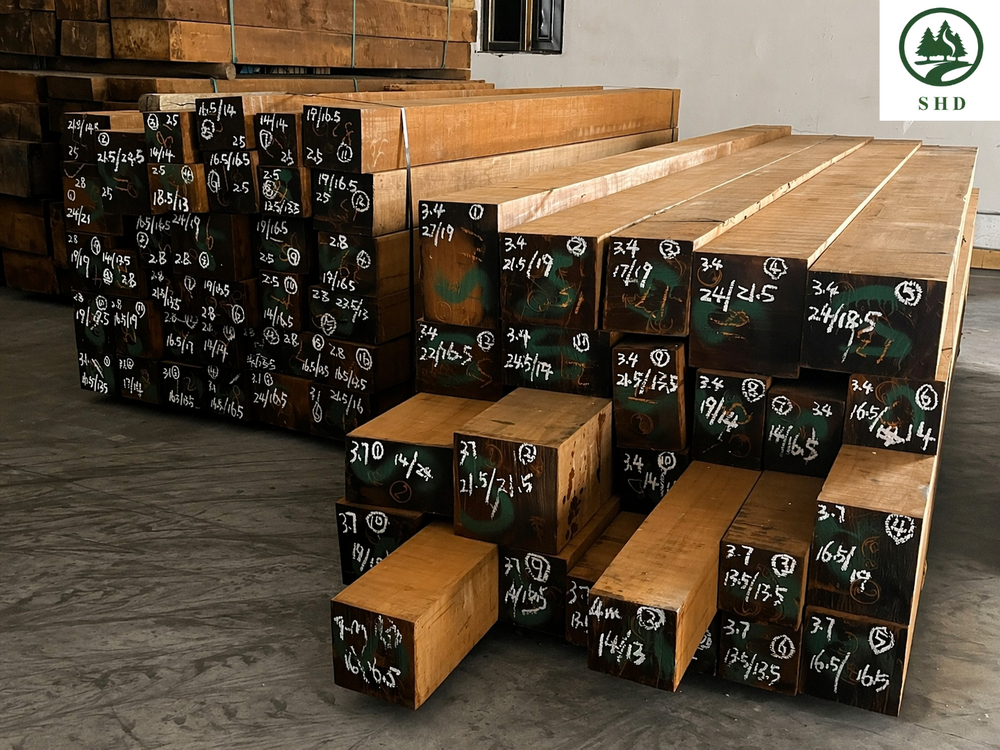
The following simplified table helps you compare the key traits of the five species discussed above, plus Afrormosia as a highlighted African option for export buyers. [lignawooddesign]
| Wood species | Water resistance level | Typical outdoor lifespan* | Workability (machining) | Common applications |
|---|---|---|---|---|
| Teak | Very high (thestewartlumberco) | 25–40+ years (thestewartlumberco) | Moderate | Marine decks, premium outdoor furniture |
| Afrormosia | High–very high (cameroontimberexport) | 20–30+ years (cameroontimberexport) | Moderate | Decking, terraces, outdoor structures |
| Ipe | Extremely high (brazilianlumber) | 30–40+ years (brazilianlumber) | Hard (pre‑drilling) | Heavy‑duty decks, boardwalks, commercial projects |
| Cedar | Moderate–high (thestewartlumberco) | 15–25 years (thestewartlumberco) | Easy | Cladding, light outdoor structures, fences |
| Mahogany | High (cameroontimberexport) | 20–30 years (cameroontimberexport) | Good | Exterior joinery, furniture, decorative elements |
\*Approximate ranges assuming correct design, treatment, and maintenance.
While global conversation often centers on teak and Ipe, the African continent offers a rich portfolio of durable hardwoods that perform extremely well in wet environments. Species such as Afrormosia, Azobe, Bilinga, and Iroko have long track records in bridges, marine piles, and exterior construction. [lignawooddesign]
As a supplier handling roughly 4,000–8,000 tons of African timber per month and exporting more than 200 containers to Vietnam alone, we see a consistent rise in demand for these alternative species from buyers seeking both performance and value. For many industrial or infrastructure projects, specifying African hardwoods can reduce material cost without sacrificing durability, especially when procurement is managed by an experienced regional specialist. [shdtimber]
Instead of chasing a single "best" species, professional buyers and specifiers use a structured approach. Below is a simple decision framework we use with clients when evaluating timber for moisture‑exposed projects.
- Constant immersion (e.g., marine piles, freshwater structures).
- Frequent wetting and drying (e.g., decks, docks, outdoor stairs).
- Occasional rain or splash (e.g., covered terraces, cladding).
The higher the exposure, the more you should prioritize natural durability and density over aesthetics alone. [cameroontimberexport]
- For critical marine use, Teak, Ipe, or some African heavy hardwoods are often preferred despite higher initial price.
- For mid‑budget decks and outdoor structures, Afrormosia, Iroko, or durable softwoods like cedar can be more cost‑effective over the project's lifetime. [lignawooddesign]
- Factor in lead times, shipping routes, and port capabilities.
- Work with a supplier that already handles regular volumes from your target regions so you avoid one‑off sourcing risks. [shdtimber]
- For public projects or export markets, legality and sustainability documentation are now standard expectations.
- Established African timber suppliers typically maintain clear traceability and export compliance for key markets in Asia, Europe, and the Middle East. [greenpeace.org]
Even the most water‑resistant timber benefits from proper treatment and protection. Industry practice usually combines natural durability with at least one of the following methods: [brazilianlumber]
- Penetrating oils and finishes: Maintain natural look while enhancing water repellency. Common for teak and Afrormosia decks.
- Waterproofing stains: Combine pigment with sealing agents to provide both UV and moisture protection, often extending effective waterproofing for several years per application. [cameroontimberexport]
- Sealants and topcoats: Clear or slightly tinted products that add a sacrificial layer to resist rain and surface wear, especially useful on horizontal surfaces. [cameroontimberexport]
- End‑grain sealing: Critical for decking boards and posts; the end grain absorbs moisture fastest and is where rot often begins.
Used correctly, these methods can significantly increase the interval between major maintenance cycles and extend the service life of even already durable woods. [brazilianlumber]
From project feedback and user comments on outdoor and marine builds, a few simple design decisions often have more impact than the exact species choice.
- Prioritize drainage and ventilation: Standing water is the enemy; design decks and cladding so water can shed and air can circulate freely. [cameroontimberexport]
- Avoid direct ground contact where possible: Use proper sub‑structure and spacers to keep wood off soil or permanently wet surfaces.
- Schedule regular inspections: A quick annual check for loose fasteners, finish failure, or early signs of decay can prevent small issues from becoming structural problems. [brazilianlumber]
- Follow manufacturer and supplier guidelines: Many failures traced in user experiences come from skipping recommended spacing, fastening, or finishing instructions.
When we support buyers in Africa‑sourced decking or marine timber projects, we often provide not only the species but also technical guidance on installation and maintenance, because real‑world performance is always a combination of material + design + care. [shdtimber]
Water‑resistant wood is not just about species; it is also about consistent quality, grading, and logistics. That is where a dedicated supplier makes a measurable difference.
HONG KONG SENHEDA WOOD LIMITED has more than 16 years of experience focused on African timber, supplying logs, sawn timber, and kiln‑dried products to buyers worldwide. We currently handle roughly 4,000–8,000 tons (or cubic meters) of African timber per month and ship over 200 containers of wood to Vietnam, alongside regular exports to other global markets. [shdtimber]
For buyers looking for water‑resistant hardwoods, this scale translates to:
- Stable sourcing of durable African species suited to outdoor and marine applications.
- Custom specifications (dimensions, moisture content, grading) to match project requirements.
- Streamlined shipping and documentation for cross‑border trade, including Asia‑bound shipments.
If you are planning a deck, marina, outdoor hospitality space, or industrial structure and need reliable water‑resistant wood, you should not have to make the decision in isolation.
Share your project location, exposure conditions, budget range, and desired look with a specialist supplier like HONG KONG SENHEDA WOOD LIMITED, and request tailored recommendations on species, grading, and treatment strategies. By aligning species choice with real‑world conditions and supply realities, you can secure a durable, cost‑effective solution that performs for decades rather than seasons. [shdtimber]
1. Is teak always the best choice for water‑resistant applications?
Teak is an excellent benchmark for water resistance and is often preferred in high‑end marine and luxury outdoor projects, but it is not always the most economical choice. For many large‑scale decks or infrastructure builds, African hardwoods like Afrormosia or other durable species can offer comparable performance at a lower total material cost. [thestewartlumberco]
2. How often should I re‑treat water‑resistant wood outdoors?
Maintenance intervals depend on climate, UV exposure, and the type of finish used, but many outdoor projects benefit from cleaning and re‑oiling or re‑staining every 12–24 months. High‑sun, coastal environments may require more frequent inspections and touch‑ups to keep surfaces protected and looking their best. [brazilianlumber]
3. Are African hardwoods suitable for marine structures?
Yes, several African hardwoods have long histories in bridges, marine piles, and waterfront structures thanks to their density and natural durability. With proper design and maintenance, they can be excellent alternatives to more costly or supply‑constrained tropical species. [lignawooddesign]
4. What is the biggest mistake when using water‑resistant wood outdoors?
A common mistake is assuming that natural durability alone is enough, and neglecting design details such as drainage, ventilation, and end‑grain protection. Even very durable woods can fail prematurely if constantly exposed to standing water or installed against poor‑ventilated substrates. [cameroontimberexport]
5. How can I reduce the lifecycle cost of a water‑exposed timber project?
Select an appropriate species for your exposure class, ensure proper installation with correct spacing and fasteners, and follow a realistic maintenance schedule. Working with an experienced supplier who understands both species characteristics and logistics can also reduce waste, delays, and re‑work costs over the project's lifetime. [shdtimber]
1. Stewart Lumber. “What Are The Best Water Resistant Woods?” (2023). https://thestewartlumberco.com/blog/what-are-the-best-water-resistant-woods/
2. Cameroon Timber Export. “Water Resistant Wood: Properties, Types & Uses In Detail.” https://cameroontimberexport.com/water-resistant-wood/
3. Brazilian Lumber. “The 8 Best Weather Resistant Woods.” (2021). https://brazilianlumber.com/the-8-most-weather-resistant-woods/
4. Ligna Wood Design. “Top 10 Moisture-Resistant Woods.” (2025). https://lignawooddesign.com/blog/moisture-resistant-woods/
5. SHD WOOD / HONG KONG SENHEDA WOOD LIMITED – Official Website & Company Profile. https://www.shdtimber.com
6. Greenpeace. “中国关键进口商在刚果盆地木材贸易中的角色.” (2015). greenpeace


