


African Hardwood for Heavy Construction
Azobe is a heavy African hardwood valued for its high density, strength and natural durability. It is commonly used in bridges, ports, railway sleepers and industrial flooring.
Azobe, botanically known as Lophira alata, is also traded as Ekki or Bongossi. Its Chinese names include winged red ironwood and red ironwood. It occurs mainly in West and Central Africa, with Cameroon, Gabon and Equatorial Guinea among its important producing countries.
In some markets, it is sold under the Chinese trade name “African Red Boluoge.” Similar trade names may refer to different species, so buyers should confirm the botanical name.
The heartwood is dark red to purple-brown, with paler sapwood, commonly interlocked grain and a coarse texture. At 12% moisture content, its reference air-dry density is approximately 1.06 g/cm³. The wood is hard and heavy; actual density varies with moisture content and individual specimens.
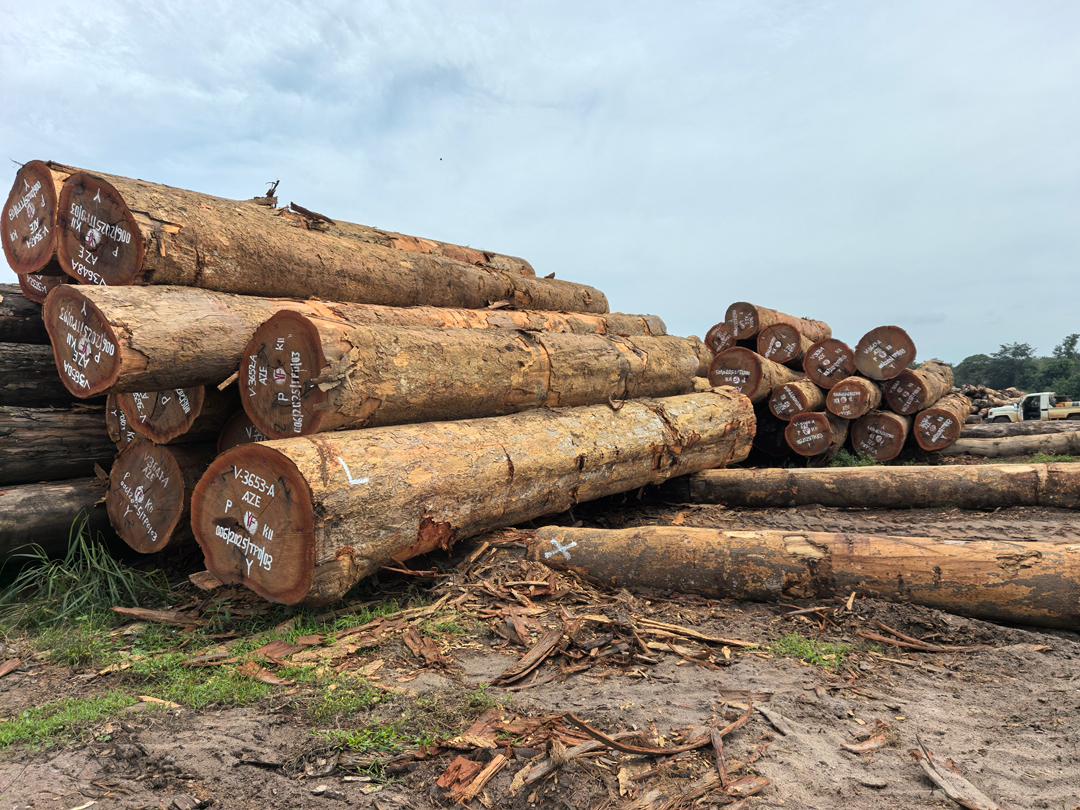
Azobe logs and end-grain features
Azobe is commonly used for bridge components, port and hydraulic structures, railway sleepers, heavy-duty flooring and some outdoor platforms. Selection should take account of loads, component dimensions, timber grade and service conditions.
Mature heartwood has good natural resistance to decay and termites. Sapwood and transitional wood should not be assumed to perform equally well. Marine applications also require consideration of water temperature and marine wood borers; decay resistance does not mean the wood is immune to damage in every seawater environment.
Azobe dries slowly and is prone to checking and distortion, particularly in thicker sections. Its high density and interlocked grain make machining more demanding. Pre-drilling is generally required when installing nails or screws.
 Azobe sawn timber and surface grain
When requesting a quotation, specify whether logs or sawn timber are required, together with dimensions, drying condition, quality requirements, quantity and destination port. For engineering applications, also define acceptable sapwood content, limits on checks and other defects, and the intended use.
For Azobe log and sawn timber availability, contact SHD Wood with your required specifications, quantity and destination port so that supply and pricing can be confirmed.


