
Views: 0 Author: Site Editor Publish Time: 2026-11-17 Origin: Site


Importing African sawn timber involves more than choosing the right wood species and negotiating a competitive price. Before shipment, buyers need to make sure the timber meets the agreed specifications, quality requirements, and shipping arrangements.
Whether you are purchasing Iroko, Sapelli, Okoume, or other African hardwoods, understanding what to check before loading can help reduce misunderstandings and avoid costly surprises.
Here are six important factors to consider when inspecting African sawn timber before shipment.

The first step is to verify that the timber matches the species specified in your purchase agreement.
African hardwoods can sometimes have similar appearances, especially when freshly sawn. For example, different reddish-brown hardwoods may look alike to an inexperienced buyer.
Before shipment, confirm:
· The commercial and, where appropriate, botanical name of the timber.
· The declared country of origin.
· The species and origin details stated in the shipping documents.
Buying Tip: Do not rely on color alone to identify a wood species. Request clear photographs and supporting product information from your supplier.
Dimensions are among the most important factors in international timber trading.
A purchase agreement should clearly specify the required thickness, width, and length, including any permitted tolerances.
For example, an order may require:
· Thickness: 50 mm (+3 mm)
· Width: Random Width (RW), mainly 150 mm and above
· Length: 2.4 m and above
It is also important to confirm whether dimensions refer to rough-sawn or finished timber.
Buying Tip: If your order includes a specific proportion of shorter lengths or narrower widths, make sure these allowances are clearly agreed upon before production.
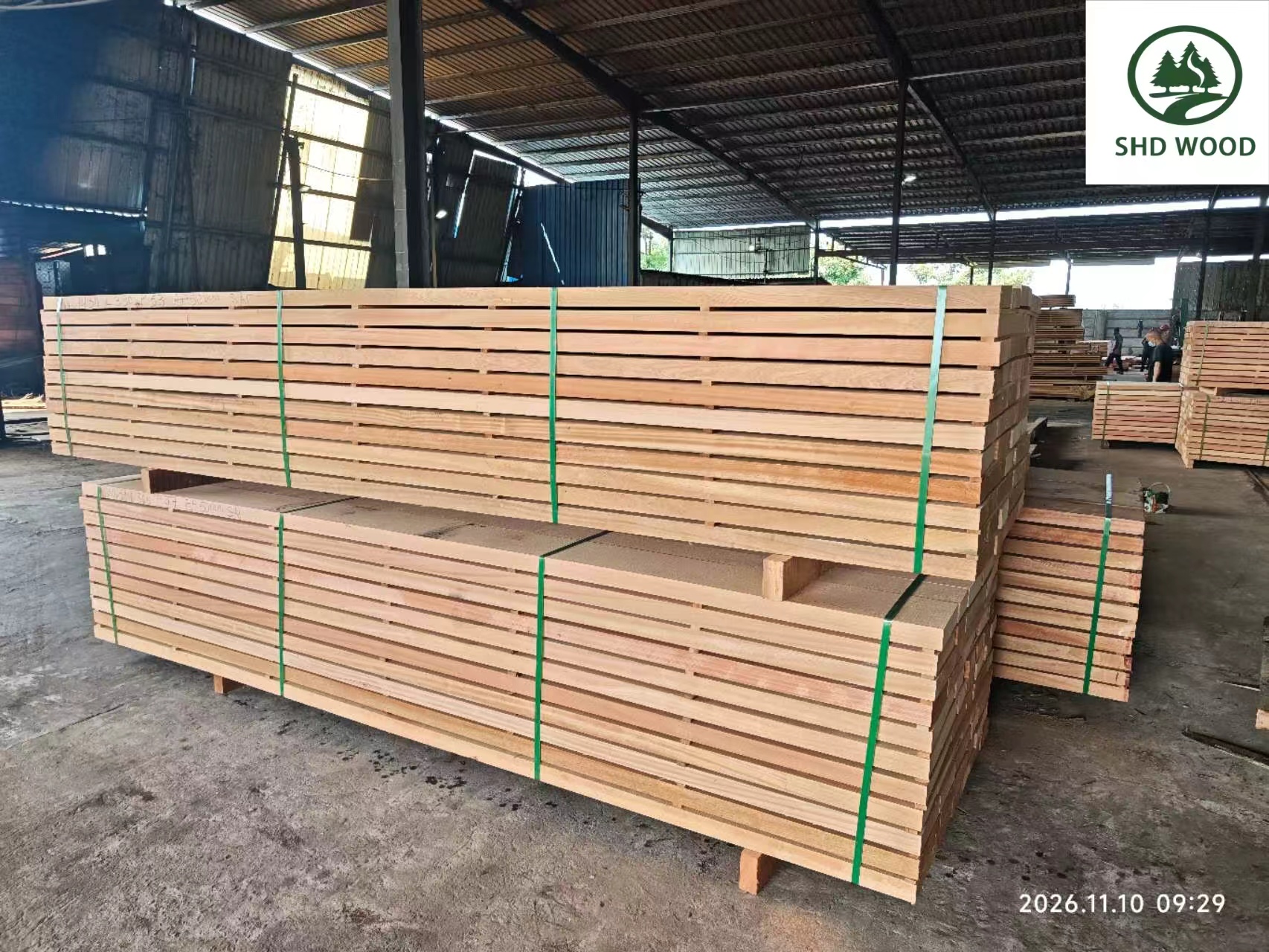

Moisture content affects timber stability, weight, and suitability for different applications.
African sawn timber is commonly supplied in two drying conditions:
Kiln-Dried (KD) Timber
Timber dried in a controlled kiln environment to achieve a specified moisture content.
Air-Dried (AD) Timber
Timber dried naturally through exposure to circulating air over time.
The appropriate moisture content depends on the species, thickness, intended application, and agreed requirements.
For kiln-dried orders, buyers should confirm the target moisture content and understand that readings may vary between individual boards and at different stages of transportation.
Buying Tip: Ask your supplier about the drying condition and agreed moisture content before shipment, particularly when purchasing timber for furniture, doors, or interior applications.

Before loading, it is important to review the timber's visible condition.
Depending on the agreed grade and intended use, buyers may need to pay attention to:
· Excessive cracks or splits
· Large or unacceptable knots
· Visible insect holes
· Significant warping, bowing, or twisting
· Discoloration or other visible defects
Not every natural characteristic is necessarily a defect. Acceptance depends on the timber species, grade, and contractual quality requirements.
For example, timber intended for structural construction may have different acceptance criteria from timber purchased for high-end furniture manufacturing.
Buying Tip: Establish clear grading expectations before placing an order rather than relying only on general descriptions such as "good quality."

Proper packing and loading are important for protecting timber during international transportation.
Before shipment, buyers should pay attention to how the timber is bundled, arranged, and secured inside the container.
Important considerations include:
· Bundles are properly arranged and secured.
· Timber dimensions and quantities correspond to the packing list.
· Loading methods are suitable for the product.
· The container is in suitable condition for transportation.
Loading photographs and videos can help buyers understand how their cargo has been prepared for shipment.
Buying Tip: Request loading records when available, especially for large-volume orders or products with specific dimensions.
The final step is to ensure that the shipping documents are consistent with the agreed order and actual cargo.
Depending on the shipment, relevant documents may include:
· Commercial Invoice
· Packing List
· Bill of Lading
· Certificate of Origin
· Phytosanitary Certificate
· CITES Permit, where applicable
Buyers should check product descriptions, quantities, dimensions, consignee details, and destination information.
Additional documentation may be required depending on the importing country, timber species, and applicable regulations.
Buying Tip: Inform your supplier of any specific documentation requirements early in the purchasing process to avoid unnecessary delays.
At SHD WOOD, we understand that international timber buyers need clear product information and reliable communication throughout the purchasing process.
We supply African hardwood logs, sawn timber, and square timber, mainly sourced from the Republic of the Congo, the Democratic Republic of the Congo, and Gabon.
Before shipment, we can provide photographs and videos of the actual timber for customers to review. We also share loading photos and container stuffing information to help buyers follow the shipment process.
Our team works closely with production and shipping partners to coordinate specifications, documentation, and export arrangements.

A successful African timber import starts with clear specifications and realistic quality expectations.
By checking species, dimensions, moisture content, visible defects, packing, and shipping documents, buyers can reduce misunderstandings and make more informed purchasing decisions.
Whether you are importing Iroko, Sapelli, Okoume, or other African hardwoods, clear communication with your supplier remains one of the most important parts of the process.
Looking for a reliable African hardwood supplier?
Contact me with your required species, dimensions, quantity, and destination port.
WhatsApp / WeChat / Call:
+86 13530895049 (Vivian Jiang)
www.shdtimber.com
www.africanlumber.com


