
Views: 0 Author: Site Editor Publish Time: 2026-11-17 Origin: Site


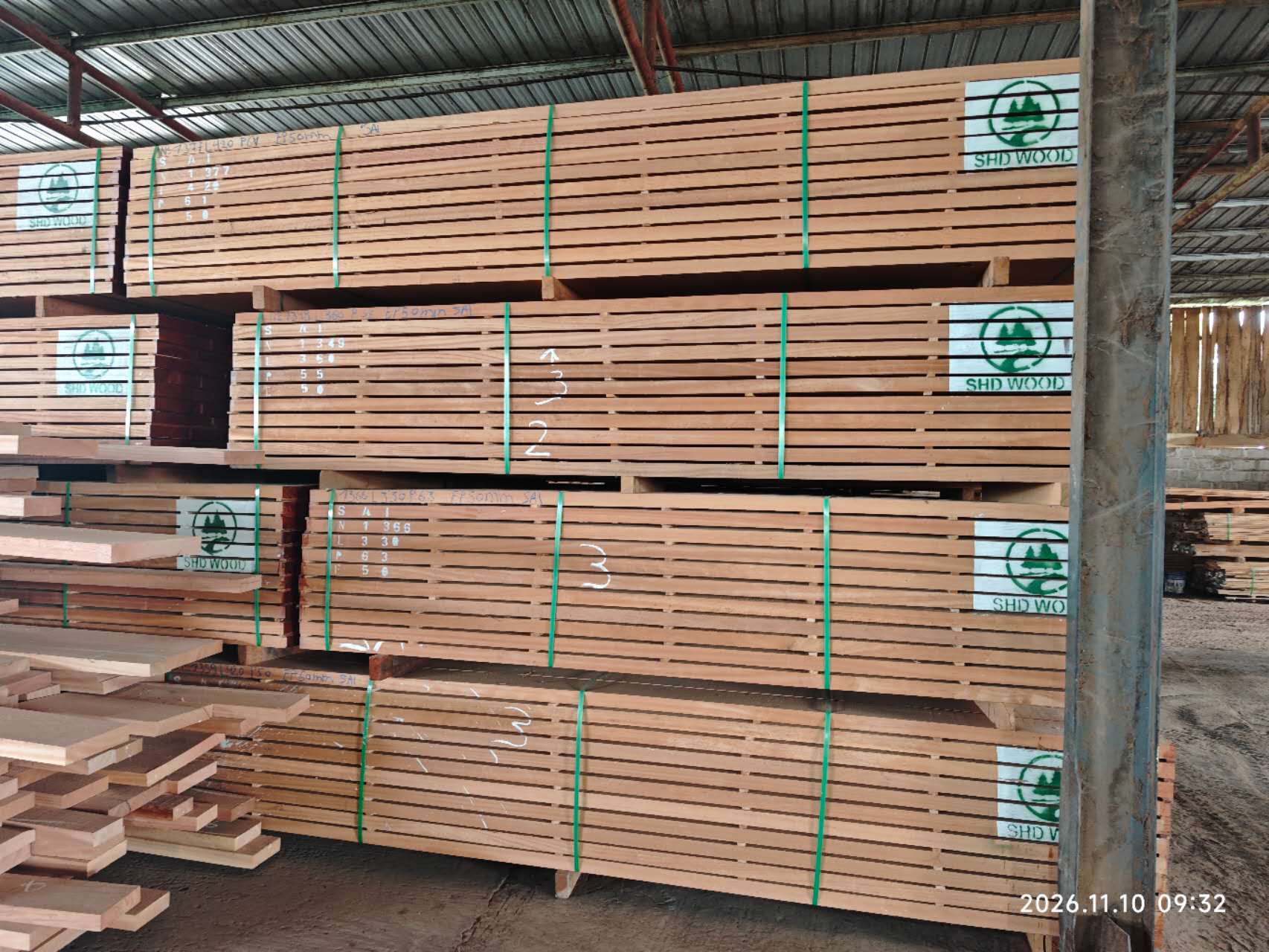
When receiving price quotes for 50mm-thick Sapelli, Iroko, or other African hardwoods, you will often encounter two letters: "AD" or "KD." While these designations can influence subsequent production stages, they do not tell the whole story. The more critical question is quite simple: how does the buyer intend to use the timber once it arrives?
Two methods, two different kinds of control
AD | Air-dried Over time, air circulates between stacked pieces of timber. The outcome depends on the local climate, the wood species, the thickness of the timber, the stacking method, and the exposure conditions. Air drying (AD) often serves as a beneficial stage prior to further processing or final drying. | KD | Kiln-dried Controlled drying kilns enable timber to reach a target moisture content through the regulation of heat, humidity, and airflow; however, the final outcome still depends on well-planned processing, proper inspection, and subsequent storage. |
Why end use matters more than the initials
For rough-sawn timber intended for further processing—such as resawing, machining, and re-drying—an air-drying (AD) process may be suitable. In contrast, for wood destined for use in climate-controlled indoor environments—such as in joinery, flooring, or cabinetry—buyers typically require stricter control over the final moisture content. When making a selection, one should not rely solely on the information provided on a label; factors such as timber thickness, wood species, and the climatic conditions of the intended end-use environment must also be taken into account.
WHAT BUYERS SHOULD VERIFY
Moisture is a moving target
Wood exchanges moisture with the air around it. A board that has been dried can absorb moisture again during storage, sea transport or at the destination. That is why the measured moisture content, its variation between boards and how the timber is packed are more useful than the words “kiln-dried” on their own.
| Ask for a reading, not just a label. A moisture meter check, made with an appropriate method for the species and thickness, helps buyers understand actual delivery condition. Measurements should be sampled across the lot—not taken from one convenient board. |
Three Questions to Consider Before Placing an Order
1 What is the end use?
Specify whether the timber is intended for furniture, flooring, outdoor structural components, or construction projects, or if it requires further kiln-drying at a factory. The final condition of the timber should align with its intended application and the climatic conditions of its destination.
2 What is the moisture content of the timber being supplied?
Clearly define the agreed-upon target value or range, as well as the measurement method; request representative inspection records if necessary. Never assume that all "air-dried" (AD) or "kiln-dried" (KD) batches have identical moisture content levels.
3 What has the timber been exposed to before reaching your facility?
Inquire about how the boards were stacked, protected, packaged, and stored. Even timber that has been thoroughly dried can change in condition if it is re-exposed to moisture.
Clearer Inquiries Lead to Better Deliveries
Instead of simply specifying "50mm kiln-dried (KD) hardwood," try a more detailed approach: "Specify the wood species and request 50mm rough-sawn boards for interior woodwork; ask for confirmation of the achievable moisture content range, grade, dimensions (length and width), and packaging method." Providing this context allows suppliers to recommend the most appropriate production processes, helping you avoid costly losses resulting from non-compliant specifications.
At SHD Wood, we evaluate the wood species, dimensions, and end-use requirements to collaboratively determine the optimal drying strategy. For every specific supply source and batch, we verify the origin, the achievable moisture content levels, and all relevant documentation.


