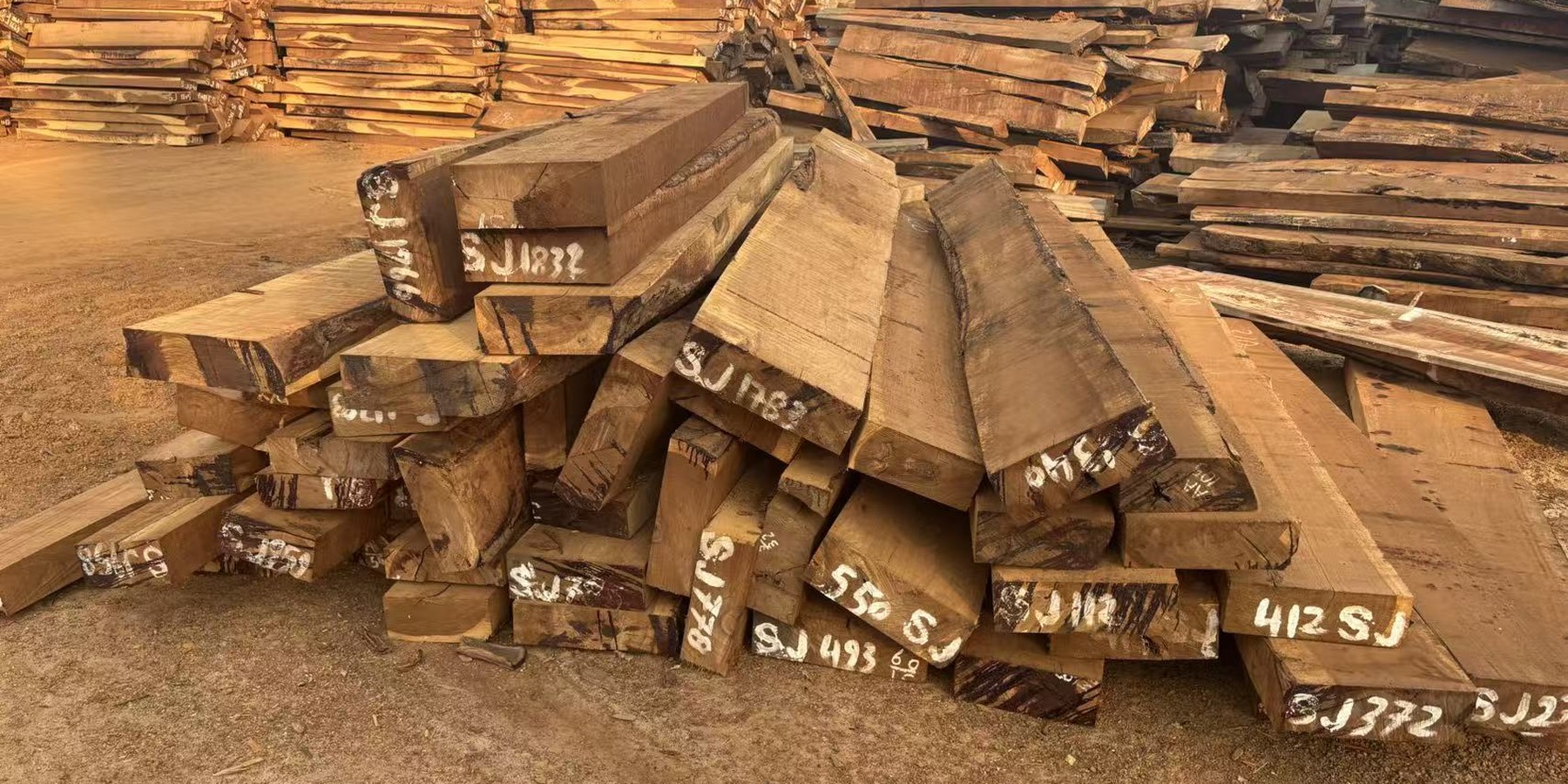
There is a difference between reading a timber description and standing in front of an actual pile of sawn boards. The photographs in this article were taken in our Mozambique yard. They show Umbila timber as buyers usually see it before planing and final sizing: rough-sawn, mixed in width, marked piece by piece, and carrying the natural variation of the log.
Umbila, also written Ambila in Portuguese-speaking trade, is Pterocarpus angolensis. The Royal Botanic Gardens, Kew records the species as native to Mozambique and other parts of southern tropical Africa. Because the same timber is also traded under names such as kiaat, mukwa, muninga, and African bloodwood, the botanical name is the safest reference on a contract or specification.
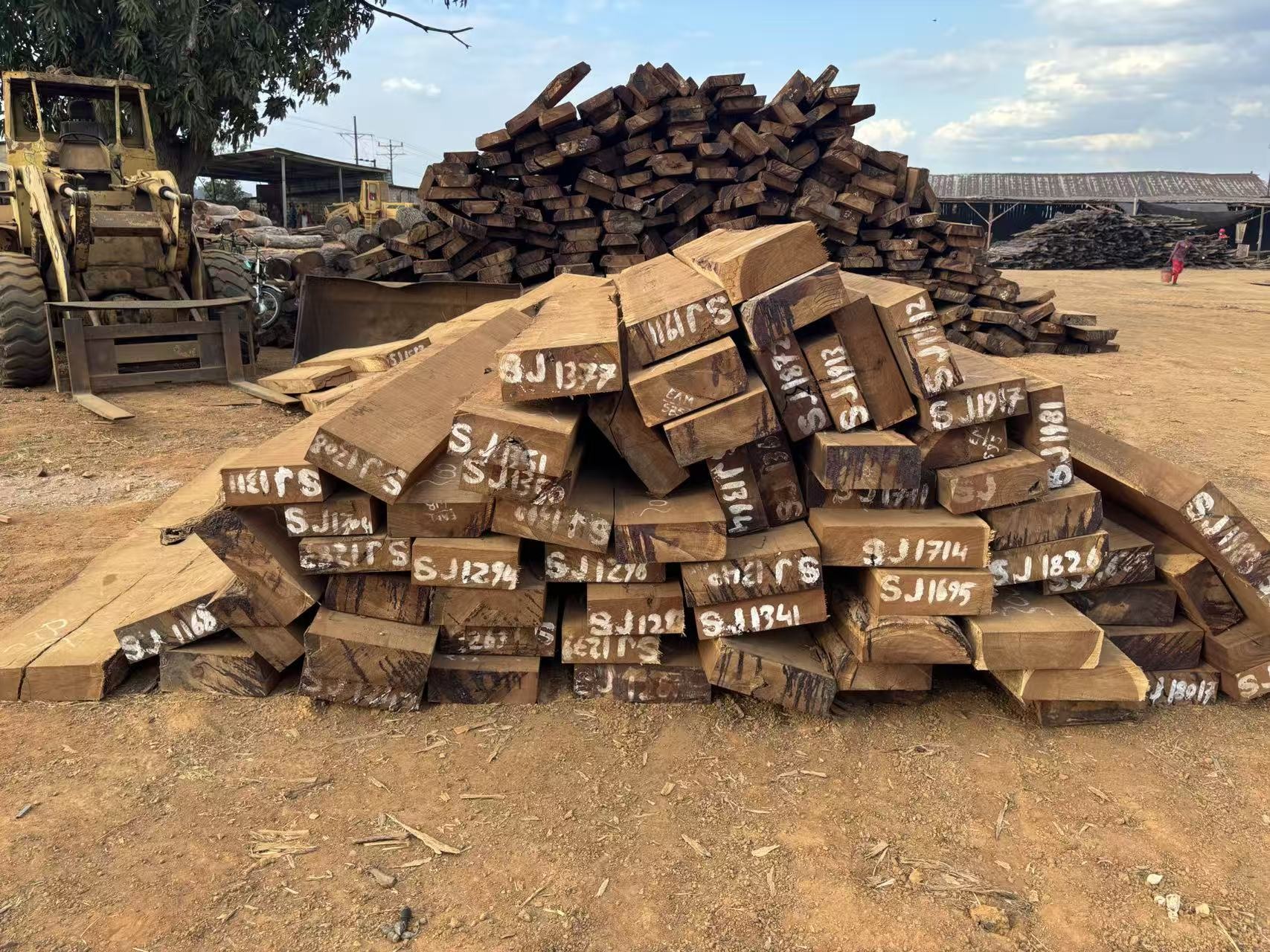
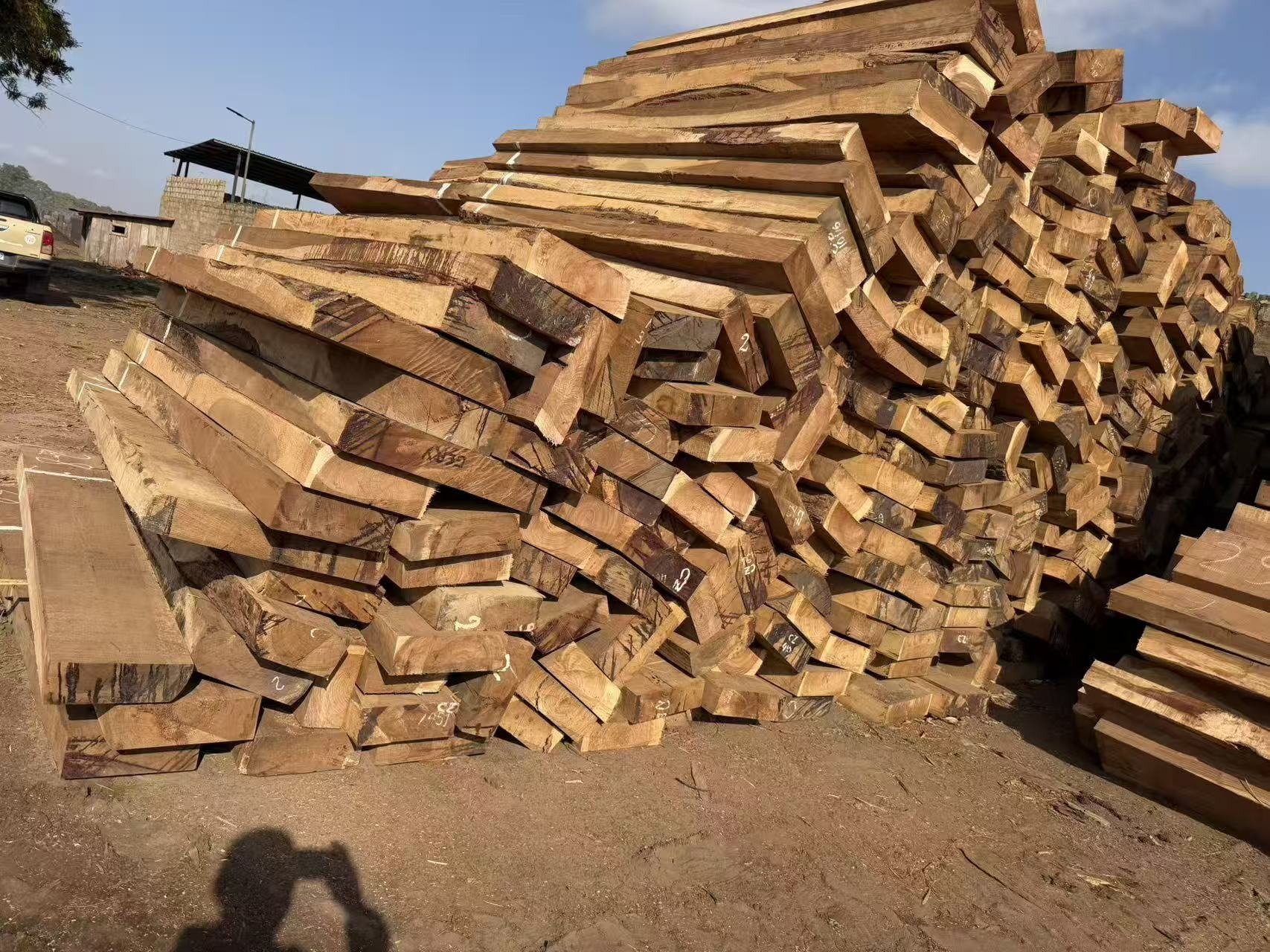
The stock shown here consists of rough-sawn boards and slabs with natural edges. Some pieces are broad and fairly straight; others follow the taper and shape of the original log. That is normal at this stage. For a furniture maker who wants live-edge tables or counters, the irregular outline can be part of the value. For a factory buying square-edged components, the same outline affects recoverable width and yield.
The surface color in a yard photo is not the finished color. Sunlight, dust, saw marks, surface moisture, and oxidation all change what the camera records. Umbila heartwood can range from brown to reddish brown, sometimes with darker, golden, or purplish streaks. Pale sapwood is usually more clearly visible near the outer edge. Planing, sanding, and finishing normally reveal a cleaner grain and a deeper tone, but every board will not finish to exactly the same shade.
Buyer note: A photograph can show board form, surface condition, color range, and visible defects. It cannot by itself confirm moisture content, exact thickness tolerance, internal soundness, or final recovery after edging.
Rough-sawn Umbila boards beside the yard's handling equipment; widths and edge shapes vary naturally.
Published timber references describe Umbila as straight- to interlocked-grained, with a medium to coarse texture. Plant Resources of Tropical Africa (PROTA) gives a broad density range of 400-700 kg/m3 at 12% moisture content. That range is useful because it reminds buyers not to assume that every piece, every diameter, or every origin will feel identical.
The wood generally works well with hand and machine tools, and it is known for good gluing, turning, carving, and finishing performance. It also has relatively low shrinkage and is stable once properly dried. These are valuable qualities for furniture and joinery, but they are species-level guidance, not a guarantee for an uninspected lot. Grain direction, current moisture, sawing quality, and storage all still matter.
The best purchase is not always the cleanest-looking board. It is the board that gives the right recovery for the intended product. Wider natural-edge pieces may suit dining tables, console tops, counters, shelves, or other one-piece features. More regular boards can be selected for furniture frames, doors, window components, stair parts, flooring, and interior joinery. Shorter or narrower pieces may still work well for panels, turning, and carved items.
Umbila is sometimes marketed as African teak or compared with rosewood. Those comparisons can help a buyer understand its market position, but Umbila is a separate species and should be judged on its own specification. Technical references generally describe its heartwood as moderately durable rather than maintenance-free. For exterior work, buyers should consider heartwood percentage, sapwood exclusion or treatment, drying, construction detail, finish, drainage, exposure, and future maintenance.
Long natural-edge boards show why usable width and final recovery should be agreed before purchase.
A simple request for “one container of Umbila” leaves too much open. Before pricing a lot, we prefer to understand how the buyer will process the wood and which characteristics are essential. The most useful information is:
• Product form: live-edge slabs, unedged boards, square-edged lumber, or components
• Dimensions: target thickness, length range, minimum width, and allowed tolerance
• Width basis: minimum, average, or a defined width distribution rather than only “wide boards”
• Quality tolerance: sapwood, wane, end splits, surface checks, knots, pinholes or borer marks, discoloration, and decay
• Moisture condition: fresh, air-dried, kiln-dried, or a stated moisture target measured by an agreed method
• Quantity and packing: trial or regular volume, bundle method, piece marking, container type, and shipment timing
• Commercial details: destination port, required documents, and whether the buyer needs current stock photos or video before confirmation
When natural-edge material is bought by volume, recovery deserves special attention. Two loads can have the same cubic volume yet produce different quantities of finished components. Minimum usable width, taper, edging allowance, and defect tolerance may matter more to a factory than the gross volume alone.
SENHEDA WOOD has 17 years of experience in African timber trading. We use actual yard and inspection images because buyers should see the material in the form in which it is being offered. For an Umbila inquiry, our team can check current availability, discuss sorting against your specification, share recent photos or video, and coordinate packing and loading information for the confirmed order.
Stock changes as material is selected and loaded, so the photographs in this article should be treated as a real view of the current yard, not a permanent promise that every future board will have the same size or appearance. Final dimensions, quality, moisture condition, quantity, price, and shipment schedule must be confirmed for the specific lot.
In Mozambique and Portuguese-speaking trade, both spellings are used for Pterocarpus angolensis. Other regional trade names exist, so the botanical name should appear in the purchase specification.
Rough saw marks, dust, direct sun, surface moisture, and early oxidation affect the visible color. Planing and finishing usually reveal a clearer brown to reddish-brown tone, but natural variation remains.
No. It may be marketed as African teak or compared with rosewood, but it is a distinct species with its own appearance and performance.
Umbila heartwood is generally described as moderately durable. Outdoor suitability depends on heartwood selection, sapwood control, moisture, detailing, finish, exposure, and maintenance; it should not be presented as maintenance-free.
Send the product form, thickness, length, minimum or average width, grade tolerance, moisture requirement, quantity, destination port, intended use, and any photos showing the quality you expect.
If the boards in these photographs are close to what you buy, send us your target thickness, minimum width, length range, quantity, end use, and destination port. We will check the current Mozambique stock against your requirements instead of sending a generic price that may not match the timber you need.
Contact SENHEDA WOOD by WhatsApp at +86 17727554471 or email at VIRAT@SHDWOOD.COM. You can also review our African Timber Yard and Quality Inspection pages.