Views: 213 Author: SENHEDA WOOD Publish Time: 2026-08-17 Origin: Site


For plywood mills, furniture manufacturers, door producers, and timber importers, veneer quality is measured in more than appearance. Buyers also need sheets that are consistent, practical to handle, suitable for bonding, and matched to the final product. African okoume veneer offers a valuable balance of low weight, attractive color, good processing performance, and versatile end use.
At SENHEDA WOOD, we source okoume through established African supply networks and work with buyers to define grade, dimensions, moisture condition, packing, and inspection requirements before shipment. This guide explains what okoume veneer is, why African origin matters, and what purchasing teams should check before placing an order.
Okoume is the commercial name for Aucoumea klaineana, a tropical hardwood native to West-Central Africa. The Royal Botanic Gardens, Kew lists its native range as Gabon, Congo, Cameroon, Equatorial Guinea, and Cabinda. In trade, Gabon and the Republic of the Congo are especially important origins.
The wood typically ranges from pale salmon-pink to light pinkish brown, with a medium, generally even texture and straight to lightly interlocked grain. According to the USDA Forest Products Laboratory, okoume is light in weight, glues well, and is easy to peel into veneer. Its established uses include plywood, blockboard, furniture components, joinery, and paneling. These are typical species characteristics; the performance of any shipment still depends on log quality, processing, moisture, and grading.
Okoume is naturally an African species, so African sourcing connects buyers directly to its established production base. By contrast, quotations for veneer from Indonesia often refer to different lightweight tropical species used for similar plywood or furniture applications. A fair comparison therefore needs to consider the actual species, grade, thickness, moisture, and intended use - not origin alone.
Based on our sourcing and production experience, the selected African okoume veneer supplied by SENHEDA WOOD generally has a firmer, harder material feel than some lightweight veneer alternatives commonly sourced from Indonesia. For manufacturers, this can support better sheet integrity during handling and lay-up, reduce edge damage, and give the finished panel a more substantial face. Natural variation remains important, so we recommend confirming the required grade and approving representative photos or samples before bulk production.
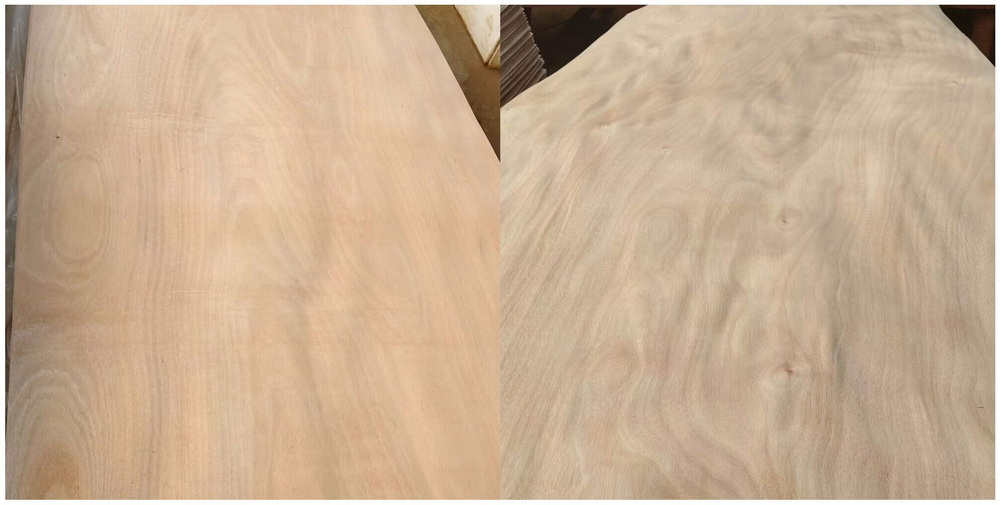
Selected African okoume veneer: light natural color, broad sheets, and visible grain continuity.
• Attractive, versatile appearance. The pale pink to light brown tone works well for clear finishing, staining, painting, or use beneath another decorative surface.
• Low weight. Okoume helps manufacturers control panel weight, which is useful for furniture, doors, interior fit-out, and products that must be transported or installed efficiently.
• Good peeling and slicing potential. Properly selected logs can produce broad veneer sheets with useful continuity and yield.
• Good bonding and finishing performance. Correctly prepared okoume veneer accepts common manufacturing processes well; adhesive choice and pressing parameters should still follow the panel specification.
• Flexible grade use. Higher visual grades can be selected for faces, while suitable industrial grades can be used for backs, cores, blockboard, and other concealed layers.
Okoume veneer can be matched to a wide range of interior and panel products, including:
• Face and back veneer for plywood
• Core veneer and crossband layers
• Furniture panels, cabinet components, and doors
• Interior wall paneling and decorative surfaces
• Blockboard, boxes, crates, and lightweight industrial panels
Okoume itself should not be treated as naturally waterproof or as a highly durable exterior timber. When a panel is intended for humid, exterior, or marine-related service, performance depends on the complete panel system - including adhesive class, lay-up, treatment, edge sealing, manufacturing quality, and the standard specified by the buyer.
A clear purchase specification protects both the buyer and the supplier. Before requesting a quotation, provide the following information:
• Intended application: face, back, core, decorative panel, furniture component, door, or packaging
• Veneer type: rotary cut, sliced, or another required production method
• Thickness, sheet width and length, and permitted dimensional tolerance
• Visual grade: acceptable knots, splits, pinholes, discoloration, repairs, and edge defects
• Moisture condition and any drying or conditioning requirement
• Packing method, bundle identification, order volume, delivery schedule, and destination port
For a repeat program, it is also useful to agree on an approval sample or photo standard. This gives production and inspection teams a shared reference when natural color and grain vary from log to log.
SENHEDA WOOD has 17 years of experience in the African timber trade. Our work covers sourcing coordination, quality communication, export documentation, container loading, and international shipment support. For okoume veneer inquiries, our process can include:
• Confirming origin, species, target grade, and end-use requirements
• Checking dimensions, surface condition, color range, and visible defects
• Coordinating moisture and packing requirements with the processing source
• Providing available stock photos, inspection images, and loading updates
• Preparing shipment documentation such as the packing list, bill of lading, certificate of origin, phytosanitary certificate, and any permit required for the relevant species or destination
Buyers can review our Okoume product page and quality inspection information for more details about our African timber supply and export support.
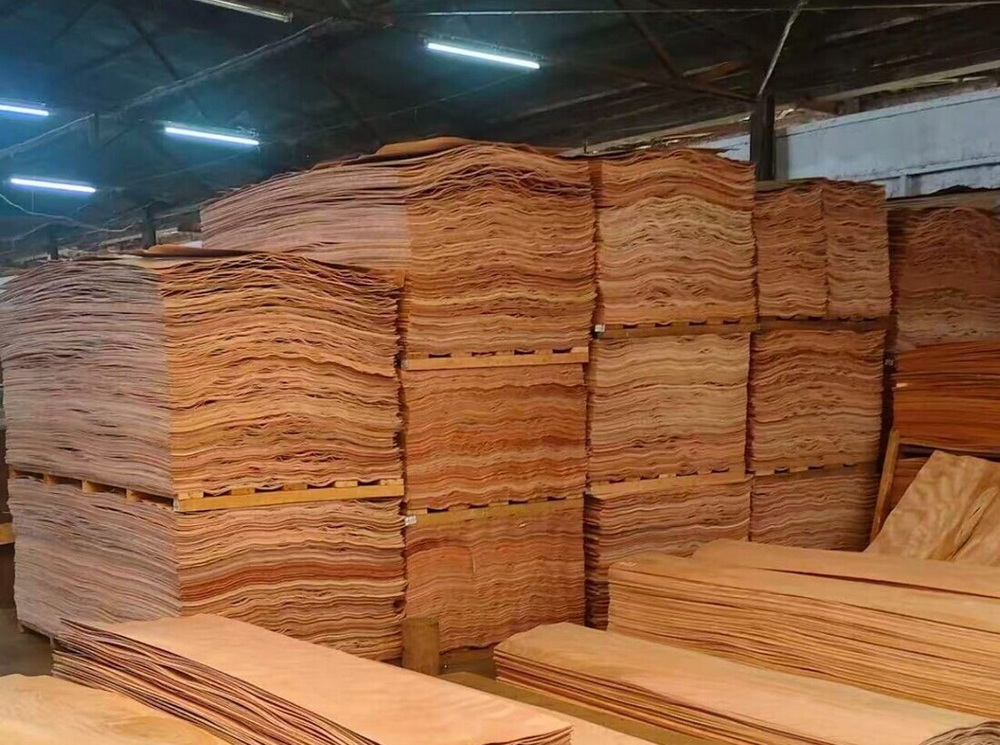
Organized veneer inventory supports sorting, packing, and shipment planning.
Yes. Okoume is botanically a hardwood, but it is lighter and softer than many dense African hardwoods. Its commercial strength is the balance of low weight, peelability, appearance, and processing performance.
Okoume is native to West-Central Africa. Important commercial origins include Gabon and the Republic of the Congo, with the natural range also extending into nearby countries.
The answer depends on the species and specification. In SENHEDA WOOD's experience, selected African okoume generally feels firmer and harder than some lightweight veneers commonly sourced from Indonesia. However, buyers should compare botanical species, grade, thickness, moisture, and approved samples rather than treating all material from one region as identical.
Yes. Better visual grades can be selected for faces and backs, while appropriate industrial grades can be used for core layers and blockboard. The agreed defect standard should match the position of the veneer in the panel.
Custom requirements can be discussed according to log recovery, processing capability, volume, and delivery schedule. Send the required thickness, width, length, tolerance, grade, and quantity for confirmation.
Okoume can be used in lightweight marine plywood constructions, but the veneer alone does not make a panel marine grade. The adhesive system, panel construction, manufacturing controls, and applicable certification or standard determine the final performance.
Please provide the application, veneer type, thickness, sheet size, grade, monthly or trial quantity, packing requirement, destination port, and any documentation requirement. Photos of the target quality are also helpful.
Whether you are testing a new face veneer, securing core material for regular plywood production, or comparing African okoume with another lightweight veneer, our team can help you define a practical specification and review available supply.
Send us your required size, grade, quantity, and destination port. Contact SENHEDA WOOD or reach us by WhatsApp: +86 17727554471 and email at VIRAT@SHDWOOD.COM.