


Content Menu
● Physical Characteristics of Olive Wood
● Is Olive Wood Truly a Hardwood?
● Olive Wood in Woodworking: Tips and Challenges
>> Working Tips
>> Drying and Storing Olive Wood
● Durability, Sustainability, and Care
>> Durability
● The Allure of Olive Wood Grain
● Advantages and Disadvantages of Olive Wood
>> Challenges and Disadvantages
● Frequently Asked Questions (FAQ)
>> 1. Is olive wood harder than oak?
>> 2. Can olive wood be used outdoors?
>> 3. Why is olive wood so expensive?
>> 4. How do you care for olive wood kitchenware?
>> 5. Is olive wood safe for cooking and eating utensils?
Olive wood, harvested from the venerable Olea europaea tree, is cherished worldwide not just for its fruit but for its striking, sturdy lumber. This material's reputation for beauty and strength has made it a favorite among artisans, woodworkers, and interior designers searching for materials that create a lasting impression in tables, utensils, and decorative objects. But many people wonder: Is olive wood truly a hardwood?[1][2][3]
This comprehensive article explores the classification, properties, and uses of olive wood, comparing it to other well-known hardwoods. Key topics include its sustainability, care demands, woodworking tips, and frequently asked questions—equipping anyone interested in furniture, crafts, or eco-conscious manufacturing with essential insights about olive wood.

Hardwoods come from angiosperm trees—species with broad leaves and, usually, flowers—unlike conifers that produce softwood. Classic examples include oak, walnut, cherry, and maple. The hardwood label isn't always about literal hardness, but olive wood earns the title both botanically and in terms of physical durability.[3][4][1]
Olive wood is obtained from two primary sources: *Olea europaea* (native to Mediterranean Europe) and *O. capensis* (primarily found in Eastern Africa). These trees grow slowly, live for centuries, and produce trunks packed with dense, twisted grains.
- Typical size: 10–40 meters tall, 1–1.5 meters in diameter (though most are smaller)
- Longevity: Some trees live over 1,000 years[4][1]
Olive trees are both economically and culturally significant, grown mainly for their fruit and oil. Lumber is typically harvested from older trees past peak fruit production or from pruned branches, supporting sustainable forestry.[5][6]
Olive wood stands out for several reasons:
- Density and strength: It's one of the densest, strongest commercially available hardwoods, more so than oak or walnut, and is highly scratch-resistant.[1][3][4]
- Grain: Wild, swirling patterns with contrasting lines and streaks in golden and brown hues—every piece is unique.[7]
- Texture: Fine, uniform texture; can be polished to a smooth sheen.[1]
- Scent: Known for a sweet, fruity aroma that lingers for years after the wood is cut and treated.[3][4]
- Workability: Can be challenging to saw and carve due to its hardness and irregular grain, but takes finishes exceptionally well.[8][4]
Fresh olive wood features yellowish to golden hues, interlaced with darker veins that create dramatic patterns. Over time and with exposure to sunlight and oxygen, this color tends to deepen, acquiring warmer, honeyed tones.[9]
Each olive wood item is truly “one of a kind.” The unpredictable grain, knots, and swirls mean no two pieces are identical, making the material especially desirable for bespoke projects such as high-end furniture, decor, or art.[7]
Yes, olive wood is botanically classified as a hardwood, and it exhibits physical characteristics that surpass many other hardwoods.
- Olive wood: Denser, stronger, more resistant to surface damage.[1]
- Oak: Widely used but less dense; often straight, predictable grain.[10][1]
- Olive wood: Harder, more resistant to scratches and dents.[4][1]
- Walnut: Softer, slightly easier to work with but less robust.[4]
- Olive wood: Excellent density and highly sustainable due to harvesting byproduct status.[6][1]
- Mahogany: Softer, often associated with unsustainable harvesting practices.[1]
- Olive wood: More resistant to wear and showcases a richer, more dramatic color palette.[4][1]
- Maple: Pale, consistent in appearance but less characterful.[10][1]
- Olive wood: Denser, more visually dynamic.[4]
- Teak: Best for outdoor projects due to natural oils, whereas olive wood thrives indoors.[11][10]
Because of its density and intricate grain, olive wood is best suited for smaller objects and detailed work:
- Kitchenware: Spoons, cutting boards, bowls, and utensils.[12][1][4]
- Furniture: Tabletops, accents, and inlays rather than large planks due to size limitations.[2][3][4]
- Artisan crafts: Buttons, jewelry, beads, and sculptural forms.[2][4]
- Decorative accents: Veneers, cabinetry, pipe making, knife handles.[13][14][4]
Large, straight boards are rare, so most uses rely on smaller, unusually shaped pieces with sensational patterns.[7][4]
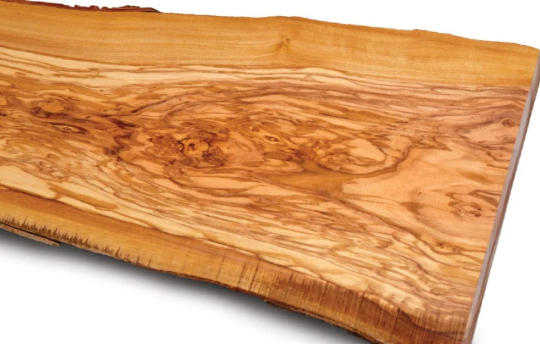
Working with olive wood offers distinct rewards but presents notable challenges. Its density and grain make it tough on tools and susceptible to cracking if not handled properly.
- Sharp tools required: Due to olive's density and irregular grain, saws, chisels, and planes dull quickly; use carbide blades if possible.[8]
- Stepwise sanding: Olive wood holds scratches stubbornly; sand with progressively finer grits for best results, and avoid overheating the surface to prevent checking (surface splits).[8]
- Glue performance: Despite its oily feel, olive wood glues reliably and accepts common adhesives.[8]
- Finishing: Takes oils, waxes, and varnishes beautifully, allowing natural luster and grain to shine.[8][4]
Fresh (green) olive wood is highly prone to cracking. Experts recommend:
- Coating ends and faces with green wood sealer immediately after cutting.[15]
- Slowly air-drying, storing in a cool, dark place away from sunlight and wind to minimize internal stresses.[15]
- For turning projects: Rough turning the piece, then treating it with alcohol to displace moisture, before further sealing and very gradual drying to reduce cracks.[15]
- For filling any cracks that do emerge, mixing olive sawdust with slow-curing epoxy creates a seamless patch.[15]
Olive wood is known for high durability, acquiring a rich patina with age rather than deteriorating. Its inherent hardness resists wear, making olive wood kitchenware and furniture long-lasting and capable of becoming heirlooms.[1][4]
The ecological impact of olive wood is generally positive:
- Harvest source: Wood is mostly a byproduct from pruning, storm fall, or from aging trees that no longer produce fruit.[5][6]
- Minimal waste: Nearly every part of the tree is used.[5]
- Carbon storage: Long-lived trees store carbon for centuries, acting as natural carbon sinks.[5]
- Global impact: Prudent olive wood harvesting is seen as supporting local economies, reducing waste, and encouraging responsible land stewardship.[6][5]
Olive wood products, although durable, require basic care:
- Cleaning: Wipe gently with a damp cloth, never soak in water.[16][17]
- Oiling: Treat kitchenware occasionally with food-safe mineral oil to maintain luster and resist drying or cracking.[17]
- Avoid heat and sunlight: Prolonged exposure can promote color fading and increase the risk of cracks.[9]
- Storage: Store in a dry, well-ventilated area, but away from direct sources of heat or sunlight.[16][15]
What truly sets olive wood apart from other hardwoods is its dramatic, unpredictable grain.
- Color: Ranges from pale golden hues to deep brown, with dark brown, almost black, streaks and whorls.[7]
- Patterns: Wild figures, knots, and swirls create mesmerizing visuals that look spectacular in both modern minimalist and rustic decor contexts.[7]
- Natural defects: Cracks, knots, and holes frequently appear, providing unique character but requiring skilled filling and finishing in high-end projects.[15][7]
- Aesthetic appeal: Striking grain patterns and color contrasts elevate home goods and luxury items.[7]
- Hardness and density: Offers excellent resistance to wear and blunt force; ideal for utensils and surfaces that see frequent use.[1]
- Sustainability: Sourced as a responsible byproduct of agriculture that would otherwise be wasted.[6][5]
- Limited availability: Few large, defect-free boards due to tree shape and slow growth.[3][4]
- Workability: Requires sharp tools and patience; challenging grain may frustrate novices.[8]
- Prone to checking and cracking: Special drying and finishing skills necessary to avoid defects.[15]
- Not suited for outdoor use: Lacks natural oils of teak; susceptible to weathering.[11][10]
If seeking a hardwood that combines unique beauty, supreme durability, and environmental responsibility, olive wood stands out among global species. Its unmatched density, dramatic grain, and rich backstory supply artisans and designers a material capable of creating luxurious, lasting products. With thoughtful care and strategic drying and finishing, olive wood goods become both practical tools and works of art.
Olive wood is unequivocally a hardwood, both in botanical classification and physical performance. With its rich density, dramatic swirling patterns, and sustainable harvesting methods, it ranks as one of the world's most desired specialty woods. Its stunning appearance, strength, and eco-friendliness make it the material of choice for artisan kitchenware, furniture, and décor. Though olive wood requires diligent care and skilled craftsmanship, those efforts yield unique, heirloom-quality pieces that tell a story and endure for generations.[6][5][4][15][7][1]
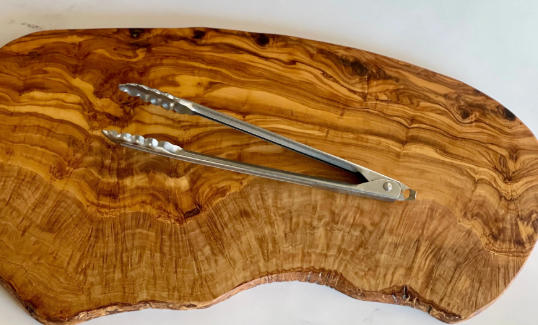
Answer: Yes, olive wood is denser and harder than oak, delivering superior resilience against scratches and impacts.[10][1]
Answer: Olive wood is best suited for indoor applications, as it lacks the natural oils found in woods like teak that protect against rot and insects. For outdoor environments, teak or other naturally oily hardwoods are recommended.[11][10]
Answer: Olive wood's cost arises from the slow growth of olive trees, the difficulty in sourcing large, defect-free boards, and the wood's intricate grain, which is prized in high-end markets.[2][3]
Answer: Clean gently with a damp cloth, avoid soaking, oil regularly with food-grade mineral oil, and store in a dry, shaded place to minimize cracking and deformation.[17][16]
Answer: Yes, olive wood is a safe, chemical-free, and naturally antibacterial option for utensils and kitchenware when properly maintained and periodically oiled.[12][1]
[1](https://www.wood-database.com/olive/)
[2](https://www.arpiwoodworking.com/blog/olive-wood-vs-other-woods-what-makes-it-unique)
[3](https://www.wlwest.co.uk/news/what-is-olive-wood-properties-and-uses)
[4](https://ocoochhardwoods.com/olivewood/)
[5](https://impactful.ninja/how-sustainable-is-olive-wood/)
[6](https://www.kindredearth.co.uk/blogs/news/the-sustainability-of-olive-wood-a-natural-choice-for-eco-friendly-living)
[7](https://stockcake.com/i/unique-wood-patterns_1152203_872237)
[8](https://www.woodcraft.com/blogs/wood/woodsense-spotlight-on-olivewood)
[9](https://www.wood-database.com/wood-articles/preventing-color-changes-in-exotic-woods/)
[10](https://www.housedigest.com/1690091/olive-wood-flooring-vs-oak-differences-better/)
[11](https://menwiththepot.com/blogs/news/why-olive-wood-is-the-ultimate-choice-for-outdoor-cooking)
[12](https://mabelleprovence.com/blogs/tips/olive-wood-and-its-many-uses)
[13](https://paykocpipes.com/blog/olive-wood-pipes-styles-advantages-and-how-they-compare/)
[14](https://exoticwoodzone.com/blogs/e/best-wood-for-crafting-knife-handles-a-comprehensive-guide)
[15](https://djmarks.com/drying-olive-wood-for-turning/)
[16](https://www.crystaliausa.com/blogs/blog/how-to-care-for-olive-wood-products-for-long-lasting-use)
[17](https://www.crystaliausa.com/blogs/blog/why-should-you-use-olive-wood-products-in-your-kitchen)
[18](https://lesboismilling.com/russian-olive-wood-slabs/)
[19](https://sawmillcreek.org/threads/olive-wood-tips-or-cautions.127253/)
[20](https://www.youtube.com/watch?v=R3Q9Ekzg2bE)
[21](https://www.shutterstock.com/search/olive-wood-texture)
[22](https://www.woodassistant.com/wood-database/olive-wood/)
[23](https://www.reddit.com/r/woodworking/comments/1vwaop/what_to_do_with_olive_wood/)
[24](https://dalstrong.com/blogs/news/olive-wood)
[25](https://www.youtube.com/watch?v=epp0Nk3YusA)
[26](https://www.penturners.org/threads/dying-olivewood.152384/)
[27](https://www.fullolive.com/collections/timber-olive-wood)
[28](https://www.woodworkingtalk.com/threads/carving-olive-wood.60446/)


