
Views: 222 Author: SENHEDA WOOD Publish Time: 2026-05-25 Origin: Site


When you are choosing between Iroko wood and Teak for outdoor projects, flooring, or marine use, you are not just picking a color—you are making a long‑term technical and financial decision. As a professional African timber supplier with over 16 years of experience and monthly handling volumes of 4,000–8,000 tons of African wood, we have seen how Iroko and Teak actually perform in real projects across Africa, Asia, Europe, and the Middle East. [seomonitor]

Most online comparisons say "Teak is best, Iroko is cheaper," but that oversimplifies the reality we see in the field. In practice, the better choice depends on application, climate, maintenance capacity, and budget—and Iroko often outperforms expectations, especially in large‑volume commercial and B2B projects. [fireandspark]
Use this section as a fast reference before diving into the details. It is especially useful for procurement managers, project consultants, and marine builders who need a high‑level view first. [shdtimber]
| Property | Iroko Wood (African Teak) | Teak Wood (Tectona grandis) |
|---|---|---|
| Botanical origin | Milicia excelsa / Milicia regia (Africa) shdtimber | Tectona grandis (Southeast Asia, plantations worldwide) studiohawk.com |
| Typical density (air‑dry) | Approx. 640–670 kg/m³ – very durable shdtimber | Approx. 650–750 kg/m³ – very durable studiohawk.com |
| Natural durability | High; resistant to fungi, termites, borers shdtimber | Very high; excellent decay and insect resistance studiohawk.com |
| Natural oils | Moderate; stable with proper finishing shdtimber | Very high; naturally oily and water‑repellent studiohawk.com |
| Color & appearance | Golden to medium brown, darkening with age shdtimber | Yellow‑brown to dark brown; color stable over time siteimprove |
| Grain & texture | Interlocked grain, coarse texture, ribbon figure siteimprove | Straight to wavy grain, more uniform texture siteimprove |
| Workability | Hard, can blunt tools; needs sharp carbide tooling siteimprove | Easier to machine; oils may affect gluing siteimprove |
| Typical cost | Generally 20–40% lower than Teak in many markets siteimprove | Premium hardwood pricing; higher per m³ studiohawk.com |
| Best use cases | Exterior joinery, windows, doors, decks, marine, flooring siteimprove | High‑end decks, yacht building, premium outdoor furniture siteimprove |
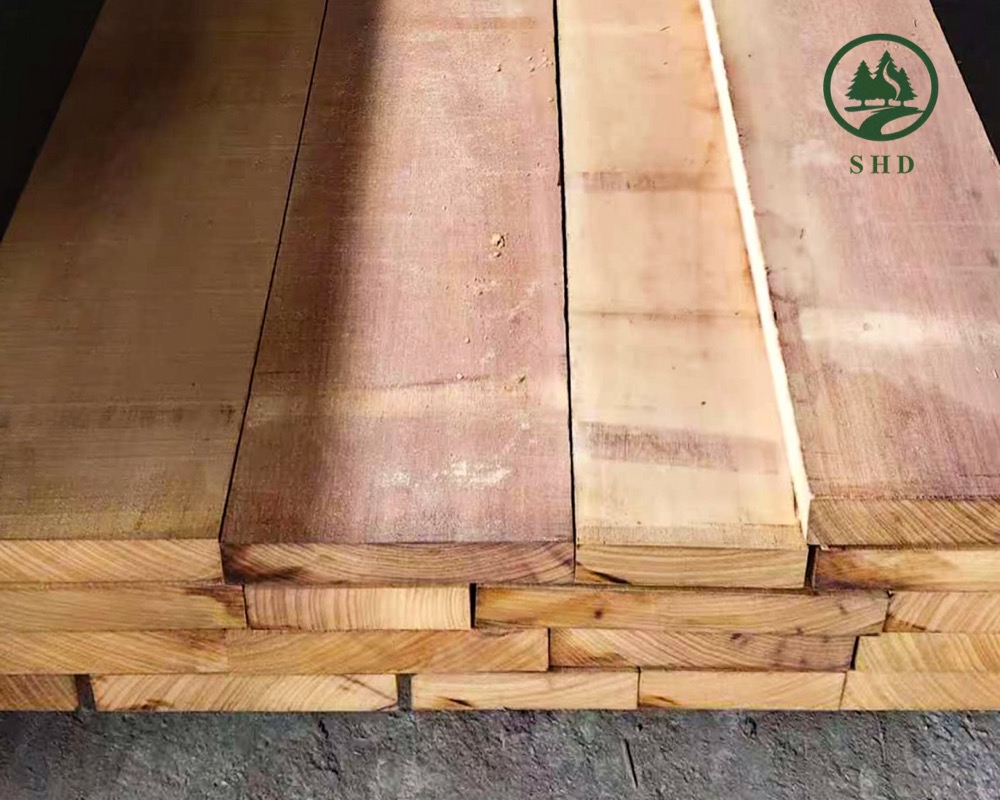
For visuals, this is an ideal place to insert a side‑by‑side image of Iroko and Teak boards in similar lighting, plus a close‑up of grain structure.
From a professional supplier's perspective, understanding the species, origin, and mechanics of Iroko is critical before positioning it as a Teak alternative in your projects. [semrush]
Iroko comes from Milicia excelsa and Milicia regia, two closely related species in the Moraceae family. It is widely known in the trade as African Teak because of its similar appearance and performance to true Teak in demanding outdoor and marine environments. [siteimprove]
Iroko is native to the humid tropical forests of West and Central Africa, with major sourcing regions including Nigeria, Ghana, and the Republic of Congo. As a long‑term African timber supplier, we see stable, scalable Iroko supply from these regions, making it suitable for large‑volume export orders to Vietnam and other Asian manufacturing hubs. [cn.linkedin]
Based on both lab data and project feedback, Iroko offers a high‑strength, high‑durability profile that suits structural and heavy‑duty outdoor use. [shdtimber]
Key performance indicators include: [siteimprove]
- Density: Around 640–670 kg/m³ (air‑dry), classified as very durable, suitable for long‑term outdoor exposure.
- Rot and insect resistance: Naturally resistant to fungi, termites, and powder‑post beetles, even without intensive chemical treatment.
- Dimensional stability: Once properly kiln‑dried to 10–12% moisture content, Iroko maintains good stability with limited warping and checking in service.
- Mechanical strength: High bending and crushing strength (MOR around 100 MPa) makes it reliable for structural, decking, and marine applications. [shdtimber]
In our export experience, properly dried Iroko used in external doors and window frames in Europe has shown multi‑year stability with minimal complaint rates, provided installation and finishing are done correctly. [shdtimber]
Teak has built a legendary reputation among yacht builders, luxury furniture makers, and architects. However, understanding what makes Teak special helps you decide when it is truly necessary—and when a high‑grade Iroko specification is more cost‑effective. [studiohawk.com]
Teak (Tectona grandis) is native to Southeast Asia but is now cultivated in plantations across Asia, Africa, and Latin America. It has a yellow‑brown to deep brown heartwood and a relatively uniform grain, with naturally high oil content that gives it exceptional water repellency and weather resistance. [studiohawk.com]
From a technical view: [studiohawk.com]
- Extremely durable in marine and coastal environments.
- High natural oil content reduces water uptake, cracking, and biological attack.
- Very good workability: despite being a hardwood, it machines and finishes smoothly.
From a commercial view, Teak benefits from decades of brand reputation, especially in the marine and high‑end outdoor furniture segments. This brand premium is one reason why Teak often commands significantly higher prices per cubic meter than Iroko in international markets. [fireandspark]

Here is where B2B buyers, project consultants, and contractors make their decision. Below we compare Iroko and Teak based on the factors that actually affect lifecycle cost, performance, and user satisfaction. [seomonitor]
Both Iroko and Teak belong to the top class for durability, but their behavior is slightly different. [siteimprove]
- Iroko: Very durable; performs extremely well in exterior joinery, decking, and marine use when kiln‑dried correctly and finished with high‑quality oils or coatings. [siteimprove]
- Teak: Exceptional durability; remains stable and attractive even with minimal maintenance due to its natural oils and silica content. [studiohawk.com]
In harsh coastal environments, Teak still sets the benchmark; however, Iroko offers 70–90% of Teak‑level performance at a much lower material cost, which is why many European window and door manufacturers specify Iroko in place of Teak. [shdtimber]
From the perspective of carpenters and factory production lines, workability directly influences tooling cost and production speed. [siteimprove]
- Iroko
- Hard and mineral‑rich, so it can blunt cutting edges faster than lighter species. [shdtimber]
- Interlocked grain can cause tear‑out during planing, requiring sharp carbide tools, correct feed direction, and fine passes. [siteimprove]
- Nails, screws, and adhesives hold well when proper pre‑drilling and clean surfaces are used. [shdtimber]
- Teak
- Generally easier to saw, plane, and sand compared with Iroko; produces a smooth finish with minimal tear‑out. [studiohawk.com]
- Natural oils may reduce adhesion; surfaces often require degreasing or light sanding before gluing or finishing. [studiohawk.com]
For large Vietnamese or Chinese factories processing hundreds of cubic meters per month, we typically recommend tooling setups specifically adapted to Iroko, including carbide knives and dust extraction, which significantly improves yield and surface quality. [siteimprove]
User perception and end‑customer acceptance are key, especially for visible components like decks, façades, and furniture. [seomonitor]
- Iroko: Starts as golden to medium brown, often with a warm, rich tone that deepens over time. Its interlocked grain can create attractive ribbon patterns, especially in quarter‑sawn boards. [shdtimber]
- Teak: Ranges from yellow‑brown to deep brown, with more uniform grain and color. It typically changes less over time, even with UV exposure, especially when maintained with Teak oils. [studiohawk.com]
From a design standpoint, architects who prefer a slightly more dynamic grain figure often choose Iroko, while clients seeking a classic, uniform, "yacht deck" look still favor Teak. [studiohawk.com]
From a procurement perspective, the real question is not only "what is the price per m³," but "what is the total cost of ownership per project over 10–20 years". [fireandspark]
- Raw material cost: In many export markets, Iroko can be 20–40% cheaper per cubic meter than Teak, depending on grade and certification. [siteimprove]
- Processing cost: Iroko can increase tool wear, but this is partially offset by lower raw material cost and the ability to obtain large wide planks from big logs, reducing jointing and off‑cut waste. [shdtimber]
- Maintenance: Both species benefit from regular oiling or coating in exterior use. Teak can tolerate slightly longer intervals between maintenance, but well‑finished Iroko also performs strongly in long‑term exposure. [studiohawk.com]
For many commercial, public, or residential projects, we see Iroko delivering excellent lifecycle value, especially where budgets do not allow full Teak specification for all components. [seomonitor]
Based on our export projects and global customer feedback, Iroko is widely used in the following ways: [siteimprove]
- Heavy construction and engineering: bridges, docks, piers, and other marine or freshwater structures.
- Exterior joinery: high‑performance windows, doors, façade cladding, and architectural elements across the EU and UK.
- Flooring and decking: commercial floors, luxury residential terraces, pool decks, and outdoor platforms.
- Furniture and interior design: indoor and outdoor furniture, kitchen countertops, laboratory benches, and decorative paneling.
- Boatbuilding: decks, planking, and interior fit‑out where durability and cost control both matter.
These use cases are particularly strong in Europe, the UK, North America, the Middle East, and Asia, where we ship Iroko to manufacturers and project contractors regularly. [shdtimber]
Teak remains dominant in highly visible, premium segments. Typical applications include: [studiohawk.com]
- Yacht and superyacht decks
- Luxury outdoor furniture for resorts, villas, and hotels
- Premium flooring and cladding in high‑end residential and commercial projects
In these niche markets, the Teak brand itself often becomes part of the marketing story, justifying the higher price point. [fireandspark]
From an importer and project owner's perspective, decision‑making should be structured, not emotional. Here is a practical, step‑by‑step framework we use when advising clients on species selection. [purewrite]
1. Define environment and exposure
- Coastal, fully exposed, and marine projects may justify Teak in critical zones; many other outdoor uses can be specified with Iroko plus proper finishing. [siteimprove]
2. Clarify performance expectations
- If the client expects decades of service with minimal maintenance and has a high budget, Teak can be considered.
- If the client seeks high durability at controlled cost, Iroko is often the balanced choice. [seomonitor]
3. Examine cross‑section and dimensions
- For large, wide, long planks (e.g., tables, long façade boards), Iroko's large log size simplifies sourcing and reduces lamination joints. [shdtimber]
4. Check available grades and certification
- For public projects and export contracts, verify grade (e.g., FAS, Select & Better) and compliance with regulations (FSC, PEFC, or equivalent legal documentation). [semrush]
5. Calculate total project budget
- Compare not just wood prices but also tooling, finishing, and expected maintenance cycles. In many real cases, an Iroko‑based solution maintains performance while making the project commercially viable. [fireandspark]
Real‑world experience has taught us that correct handling of Iroko during processing significantly improves worker comfort and final surface quality. [siteimprove]
- Dust management: Iroko dust can irritate skin, eyes, and the respiratory system; always use dust extraction and personal protective equipment in workshops. [shdtimber]
- Tool selection: Because of silica content and grain, use carbide‑tipped cutters and blades for longer tool life and better finishes. [siteimprove]
- Finishing: Iroko takes oils, paints, and stains well; for exterior use, apply high‑quality exterior oil or preservative to stabilize color and extend service life. [shdtimber]
- Gluing: Ensure surfaces are clean and use adhesives suitable for dense hardwoods to achieve strong, durable joints. [shdtimber]
From the perspective of global B2B buyers, importers, and large manufacturers, the shift toward Iroko is not accidental; it is driven by a combination of performance, reliability, and economics. [seomonitor]
In long‑term field use, many of our clients report that properly selected and finished Iroko delivers performance close to Teak in exterior applications. When you factor in procurement budget constraints, Iroko frequently becomes the optimized solution for: [seomonitor]
- Large‑scale decking projects
- Multi‑building residential developments
- Public and commercial outdoor spaces
- Export furniture production in Vietnam and Asia
With our monthly handling capacity of approximately 4,000–8,000 tons (or cubic meters) of African timber and exports of over 200 containers of wood to Vietnam, Iroko can be supplied consistently at the volumes required by industrial clients. This is particularly important for factories that need unified specifications across multiple production batches. [cn.linkedin]
Modern buyers and regulators increasingly demand legal and sustainable sourcing. We work with established partners who follow responsible forest management and can provide legal harvest and chain‑of‑custody documentation, in line with frameworks such as FSC and PEFC where available. For global brands, this combination of performance + compliance is crucial for risk management and brand reputation. [momenticmarketing]
As an experienced African timber supplier, we do not just sell wood; we provide a technical and logistical solution to your project or production line. [cn.linkedin]
With 16+ years of dedicated experience in African hardwoods, we specialize in species such as Iroko, Okoume, Tali, Okan, Padouk, Sapelli, Mussivi, Bosse, Doussie, Pachyloba, Dabema, Bilinga, Movingui, Kossipo, Zebrawood, Azobe, and more. This allows us to advise you not only on Iroko vs Teak, but also on alternative species where appropriate. [cn.linkedin]
Our quality assurance starts at the forest and continues through milling and export: [shdtimber]
- Direct cooperation with trusted African partners to select large‑diameter, defect‑controlled logs.
- Controlled kiln‑drying to target 10–12% moisture content, reducing movement and surface defects in service. [shdtimber]
- Grading according to international standards (e.g., FAS, Select & Better) to ensure high yield of usable material with minimal waste in your factory. [siteimprove]
We provide end‑to‑end support, from sourcing and milling to customized sizing and shipment coordination for global clients. Our experience in shipping to markets like Vietnam, the EU, the UK, the Middle East, and North America helps reduce delays, documentation issues, and communication gaps. [cn.linkedin]
Choosing between Iroko and Teak should be based on clear technical criteria, real‑world performance data, and reliable supply capacity. If you are planning a decking project, marine application, façade system, or furniture line and are comparing Iroko and Teak, our technical sales team can help you specify the right grade, dimension, and treatment for your needs. [seomonitor]
For detailed quotations, technical data sheets, or sample requests, you can contact us via our official website or WhatsApp (as listed on our corporate pages) to discuss project‑specific solutions for Iroko and other African hardwoods. [cn.linkedin]
Yes, Iroko is widely recognized as a durable, high‑performance alternative to Teak for many outdoor applications, including decking, external joinery, and marine structures. With proper kiln‑drying and finishing, it offers excellent resistance to decay, insects, and weathering at a significantly lower cost. [siteimprove]
Iroko is harder and more mineral‑rich than many temperate species, so it can dull cutting tools more quickly, especially in continuous production. We recommend using carbide‑tipped tooling, sharp knives, and effective dust extraction to achieve smooth surfaces and maintain productivity. [siteimprove]
When correctly dried, machined, and finished, Iroko performs very well in marine and coastal environments, and is used in docks, piers, and boatbuilding worldwide. While Teak remains the benchmark for high‑end yachts, Iroko is a proven, cost‑effective choice for many commercial marine and waterfront applications. [studiohawk.com]
For high‑end doors, windows, and visible decking, we typically recommend FAS or Select & Better grades of Iroko to ensure a high yield of defect‑free boards with consistent color and grain. For structural or non‑visible components, slightly lower grades may be acceptable depending on your design and cost targets. [seomonitor]
Yes, we work with suppliers who comply with sustainable forest management and legal harvest requirements, and we can provide documentation supporting legal origin and chain of custody. Where available, we align with recognized frameworks such as FSC and PEFC, which is increasingly required in public tenders and for global brands. [semrush]
1. K‑Timber. "Iroko Wood vs Teak Wood: What's the Difference?" (accessed 2026). [https://k‑timbers.com/iroko‑wood‑vs‑teak‑wood‑compared]
2. Hong Kong Senheda Wood Limited. "Un guide professionnel du bois IROKO." (2025). [https://www.shdtimber.com/fr/a‑professional‑guide‑to‑iroko‑wood‑by‑hong‑kong‑senheda‑wood‑limited.html] [siteimprove]
3. Hong Kong Senheda Wood Limited – Company profile and activity information. LinkedIn. [https://cn.linkedin.com/company/hong‑kong‑senheda‑trade‑limited] [cn.linkedin]
4. Siteimprove. "A creator's guide to SEO content strategy." (2025). Guidance on structure, headings, and keyword integration. [siteimprove]
5. SEOmonitor & related resources on integrating SEO and content marketing, topic depth, and user intent. [seomonitor]
6. Momentic & Semrush. Guides on E‑E‑A‑T, content quality, and editorial standards for authoritative pages. [momenticmarketing]
7. K‑Timber and other timber resources for general Teak performance and application patterns. [studiohawk.com]


