Views: 229 Author: SENHEDA WOOD Publish Time: 2026-07-08 Origin: Site
Content Menu
● Redwood Properties: Color, Texture, and Appearance
● Technical Performance and Mechanical Data
● Durability, Resilience, and Environmental Benefits
● Main Types of Redwood and Their Uses
>> Dawn Redwood
● Workability and Processing Advantages
● Industrial Applications: Where Redwood Performs Best
>> Construction and Outdoor Structures
>> Furniture and Interior Design
>> Veneers, Paneling, and Decorative Elements
● African Hardwood Alternatives to Redwood
>> Sapele: African Mahogany for High-End Projects
>> Padauk: The "Redwood of Africa"
● Redwood vs. Sapele vs. Padauk: Practical Comparison
● Expert Insights: Choosing the Right Species for Your Project
● Practical Steps for Specifiers and Buyers
● Why Experienced African Timber Suppliers Matter
● Call to Action: Plan Your Next Timber Project
● FAQs About Redwood and African Hardwood Alternatives
Redwood is a highly durable, dimensionally stable softwood prized for its warm color, natural decay resistance, and versatility in both structural and decorative applications, and it is increasingly evaluated alongside sustainable African hardwoods such as sapele and padauk for modern projects. As a China-based timber supplier with 16 years of experience and deep specialization in African wood species, HONG KONG SENHEDA WOOD LIMITED can help global buyers source redwood alternatives and complementary species efficiently at scale. [woodu]

Redwood refers to several species in the Sequoioideae family, most notably coast redwood, giant sequoia, and dawn redwood. These trees are native primarily to the Pacific coast of North America, especially California and Oregon, where they form some of the tallest forests on Earth.
Coast redwoods can exceed 300 feet in height, while giant sequoias develop massive trunks that may reach 25–30 feet in diameter. Dawn redwood, once thought extinct and later rediscovered in China in 1941, offers a faster growth rate and more slender profile, making it interesting for plantation and landscaping uses.
Redwood is known for its rich russet to amber color, often deepening to reddish-brown as it ages or is finished with oils and stains. The grain is typically straight with a uniform, fine texture, which contributes to a clean, contemporary aesthetic in finished products.
Because of the contrast between heartwood and sapwood and the subtle figure in some boards, redwood suits visible applications such as cladding, decking, facades, and furniture components where natural beauty is a priority. When properly machined, the surface is smooth and accepts finishes evenly, allowing specifiers to choose between natural, stained, or clear-coated looks depending on design requirements.
From a technical standpoint, redwood combines relatively low density with solid mechanical strength, which makes it easy to handle while still performing well structurally. Typical average dried weight is around 28 lbs/ft³ (450 kg/m³), and basic specific gravity ranges approximately 0.35–0.40, placing redwood among the lighter structural timbers.
Key mechanical values include:
- Janka hardness: about 450 lbf (2,000 N), indicating a softwood that is gentle on tools yet sufficiently tough for many exterior uses.
- Modulus of rupture: around 7,900 lbf/in² (54.5 MPa), suitable for light to moderate structural elements.
- Elastic modulus: roughly 1,220,000 lbf/in² (8.41 GPa), giving good stiffness for beams and joists.
- Crushing strength: approximately 4,910 lbf/in² (33.9 MPa), supporting its use in posts and framing.
Shrinkage values are low—about 2.6% radial, 5.0% tangential, and 7.2% volumetric—resulting in a T/R ratio of 1.9, which underpins excellent dimensional stability in service.
One of the most notable characteristics of redwood is its natural resistance to decay, insects, and even fire thanks to high levels of tannins and protective extractives in the heartwood. This chemistry makes redwood an attractive option for outdoor decks, fences, pergolas, and cladding without relying solely on chemical preservatives.
In forest ecosystems, mature redwoods provide habitat for diverse plant and animal species and help stabilize slopes with their deep root systems. Their biomass stores large amounts of carbon dioxide over long lifespans, contributing to climate mitigation when forests are responsibly managed and certified under modern sustainability frameworks. [searchengineland]
Giant redwood, also known as sequoia, is famous for monumental size and longevity, with individual trees reaching 2,000 years of age. Historically, its durable wood has been used in robust building applications and heritage structures, although contemporary forestry regulations often prioritize conservation over wide-scale harvesting.
Coast redwoods combine exceptional height with long service life and thick, fire-resistant bark. Their foliage helps maintain a moist forest microclimate, supporting high biodiversity and protecting stands from severe fire damage.
In commercial use, coast redwood lumber is common in exterior building and landscaping, offering a good balance between workability, weight, and durability for decks, fences, siding, and outdoor furniture.
Dawn redwood is a deciduous conifer that drops its needles in autumn after they turn reddish-brown, providing a distinctive seasonal character. Rediscovered in China in the mid‑20th century, it can grow up to about six feet per year, reaching heights beyond 100 feet under favorable conditions.
While dawn redwood is more widely known as an ornamental and landscape tree, its growth rate makes it of interest for future plantation and engineered timber applications when combined with sustainable management. [searchengineland]
For manufacturers, one of the key benefits of redwood is excellent workability. It machines easily with standard woodworking equipment, responds well to planing and profiling, and glues and nails with minimal splitting issues when appropriate fasteners are selected.
Redwood's dimensional stability means the material is less prone to warping, shrinking, or excessive swelling under normal variations in temperature and humidity. This stability is especially valuable in outdoor installations such as decking, pergolas, and screened facades, where uncontrolled movement can lead to aesthetic and structural problems.
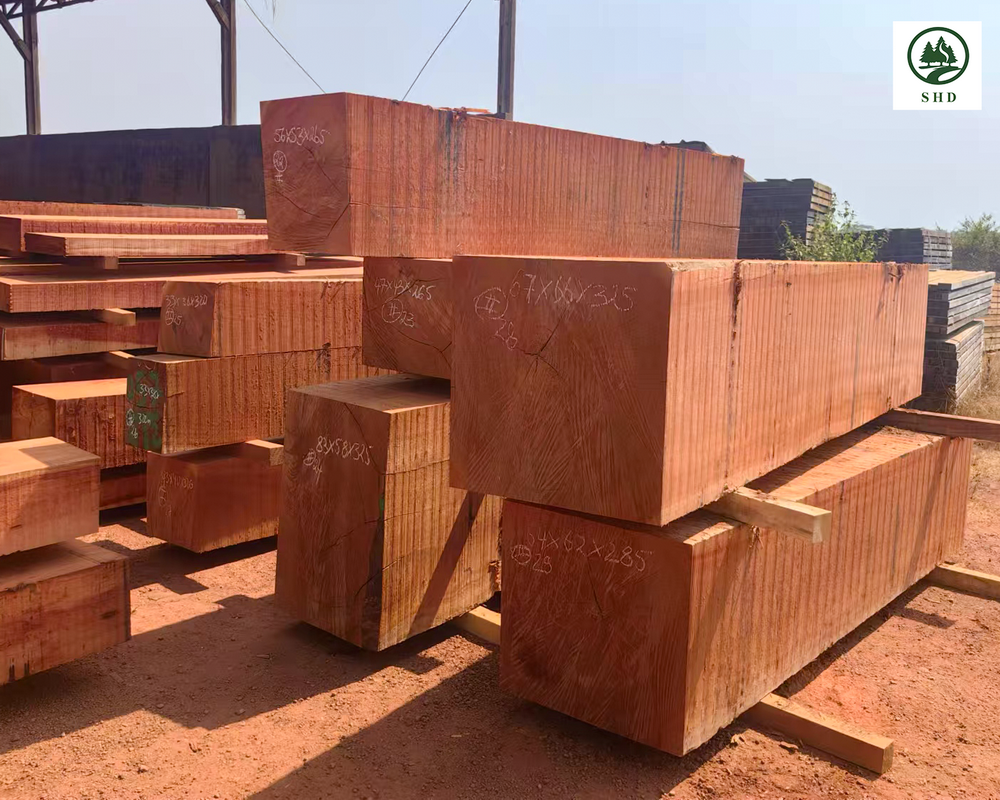
Redwood is widely specified for:
- Decking and terraces
- Fencing and privacy screens
- Exterior cladding and soffits
- Pergolas, gazebos, and garden structures
In these applications, its natural decay and insect resistance reduces maintenance cycles and can extend service life when combined with proper detailing and finishing.
Redwood's warm color and fine grain make it attractive for indoor and outdoor furniture such as tables, benches, chairs, and built‑ins. Designers appreciate its ability to deliver a refined appearance even in simple forms, allowing redwood to fit rustic, contemporary, and minimalist aesthetics alike.
Because of its visual character, redwood is also used for:
- Architectural paneling and wall systems
- Veneered surfaces and doors
- Decorative trim and feature pieces
These applications leverage the material's appearance and moderate weight, enabling installation without heavy structural requirements while still maintaining an impression of quality.
As sustainability and supply chain diversification gain importance, many buyers are exploring African hardwoods that can match or exceed redwood's performance in specific applications. Here, HONG KONG SENHEDA WOOD LIMITED and K‑TIMBER often recommend sapele and padauk as practical redwood substitutes for a range of projects.
Sapele (often called African mahogany) is a tropical hardwood with strong reddish-brown tones and decorative grain patterns. It is frequently chosen as a substitute for genuine mahogany due to its similar appearance, higher durability, and more accessible supply.
In practice, sapele offers:
- High stability and strength suitable for doors, windows, exterior joinery, and furniture.
- A luxurious aesthetic with ribbon or figured grain that works well in veneers and interior design.
Padauk (African padauk or Vermilion Wood) is a vibrant reddish-orange hardwood sometimes described as the "Redwood of Africa." Its color can range from bright orange to deep red, delivering a strong visual impact in feature pieces and furniture.
Padauk is valued for:
- High durability and good resistance to wear, making it ideal for flooring, tabletops, and exterior elements.
- Distinctive color that can be maintained with UV-protective finishes or allowed to mellow into deeper tones over time.
At present, padauk and sapele are both readily available and can be processed into live‑edge slabs, beams, and custom dimensions using top‑quality sawing technology. Expert teams at suppliers like K‑TIMBER and SENHEDA help match specific project requirements—such as color, grain, mechanical performance, and budget—to the most appropriate species. [woodu]
Below is a high‑level comparison for specifiers evaluating redwood and its African hardwood alternatives.
| Property / Aspect | Redwood (Softwood) | Sapele (African mahogany) | Padauk (African padauk) |
|---|---|---|---|
| Typical color | Russet to amber, reddish-brown. | Deep reddish-brown, mahogany-like. | Vibrant reddish-orange to deep red. |
| Density | ~450 kg/m³, light and easy to handle. | Higher density, stronger and heavier. | High density, very robust. |
| Durability | Naturally decay- and insect-resistant. | Durable hardwood suitable for exterior joinery. | Very durable, good wear resistance. |
| Workability | Excellent; easy machining and finishing. | Good but requires sharp tooling. | Good; harder but manageable with quality tools. |
| Best use cases | Decking, fences, cladding, outdoor furniture. | Doors, windows, fine furniture, veneers. | Feature furniture, slabs, flooring, decorative elements. |
This comparison illustrates that while redwood excels in lightweight, exterior softwood applications, sapele and padauk often outperform it in high‑impact, premium hardwood roles.
From the perspective of a global supplier with long‑term experience in African timber flows, a structured approach to species selection delivers better technical and economic outcomes. [seoaucklandchap.co]
When advising clients on redwood versus African hardwoods, experienced timber specialists usually consider:
1. Functional requirements
- Load‑bearing vs. non‑structural elements
- Indoor vs. outdoor exposure
- Expected service life and maintenance cycles
2. Aesthetic expectations
- Color consistency or deliberate variation
- Grain visibility and pattern (straight, figured, ribbon)
- Surface finish (oiled, stained, painted, clear‑coated)
3. Supply chain and sustainability
- Origin documentation and legality of harvest
- Certification schemes and traceability
- Lead times and volume availability for large projects
Leveraging monthly volumes of 4,000–8,000 tons (or cubic meters) from Africa and more than 200 containers exported to markets like Vietnam, SENHEDA and its partners are able to consolidate, grade, and process diverse species efficiently. This scale helps buyers stabilize costs, coordinate multi‑species projects, and maintain consistent quality standards across multiple regions. [woodu]
To make redwood and its alternatives work effectively in your project, consider the following sequence:
1. Define the environment and exposure
Clearly specify whether components will face constant moisture, UV radiation, or mechanical wear; this informs whether redwood, sapele, padauk, or a combination is optimal.
2. Match properties to application
Use technical data such as density, modulus of rupture, and shrinkage values to ensure the species meets structural and dimensional requirements.
3. Clarify aesthetic targets early
Share preferred color ranges, grain types, and finishing systems with your supplier so logs and sawn timber can be selected and graded accordingly.
4. Plan for finishing and maintenance
Agree on protective coatings, surface preparation, and maintenance intervals to maximize service life and retain visual quality.
5. Work with an experienced supplier
Partner with a timber company that has long‑term experience in African timber sourcing and international logistics—such as HONG KONG SENHEDA WOOD LIMITED—to reduce risk and improve overall project outcomes. [woodu]
For many international buyers, the challenge is not just choosing a species but ensuring consistent quality and reliable delivery over the entire project duration. Companies with more than a decade of African timber specialization can: [seoaucklandchap.co]
- Maintain on‑the‑ground relationships with mills and forest operators, improving traceability and grading consistency.
- Optimize container loading, routing, and documentation processes to supply markets such as Vietnam and other global destinations efficiently.
- Provide technical consultation on species substitution—for example, recommending sapele or padauk instead of redwood in high‑impact applications—based on real‑world project data. [woodu]
When this operational expertise is combined with transparent communication and clear specifications, buyers gain more predictable performance and lower lifetime cost of ownership for their timber assets. [searchengineland]
If you are planning a new decking project, furniture line, or architectural application that involves redwood or African hardwoods, it is essential to engage with a specialized timber partner early in the design process. Sharing drawings, performance requirements, and aesthetic goals allows experts to recommend the most suitable combination of redwood, sapele, padauk, and other species, and to align sourcing, machining, and logistics around your schedule. [seoaucklandchap.co]
To explore redwood‑equivalent solutions or to secure stable volumes of African hardwood for global projects, contact your trusted timber supplier and request a tailored sourcing plan based on current availability, sustainability criteria, and long‑term project needs.
1. Is redwood suitable for high‑traffic decking?
Yes, redwood's natural decay resistance and dimensional stability make it suitable for residential and light commercial decking, especially when properly detailed and maintained, though harder species may be preferred for very high‑traffic areas.
2. Why choose sapele instead of redwood for doors and windows?
Sapele offers higher density, superior strength, and a more luxurious mahogany‑like appearance, which makes it better suited than redwood for premium exterior joinery and high‑end architectural doors.
3. Does padauk really behave like the "Redwood of Africa"?
Padauk is nicknamed the "Redwood of Africa" because of its striking red to orange color and strong durability, but technically it is a hardwood with higher density and mechanical strength than typical redwood softwood.
4. How important is supplier experience for African timber projects?
Supplier experience is critical for managing species selection, grading, logistics, and compliance with sustainability requirements, helping buyers avoid delays, quality issues, and regulatory risks. [seoaucklandchap.co]
5. Can dawn redwood be used commercially as lumber?
Dawn redwood is primarily planted as an ornamental species today, but its fast growth rate and long history suggest potential for future commercial use where plantations and processing infrastructure are developed.
1. K‑TIMBERS. "Redwood: Properties, Characteristics & Uses." https://k-timbers.com/redwood-properties-characteristics-uses/
2. WoodU. "10 Critical SEO Mistakes Marketing Agencies Must Avoid in 2024." https://woodu.co/articles/10-critical-seo-mistakes-marketing-agencies-must-avoid-in-2024/
3. Varn. "How to write and review E-E-A-T SEO content." https://varn.co.uk/insights/how-to-write-eeat-content/
4. Search Engine Land. "Levels of E-E-A-T." https://searchengineland.com/guide/google-e-e-a-t-for-seo
5. SEO Score Tools. "How to apply E-E-A-T to your content and boost on-page SEO." https://seositecheckup.com/articles/how-to-apply-e-e-a-t-to-your-content-and-boost-on-page-seo


