Views: 222 Author: SENHEDA WOOD Publish Time: 2026-06-05 Origin: Site
Content Menu
● Why Wood Choice Matters For Pallets
● Key Factors When Choosing The Best Wood For Pallets
>> 1. Load Capacity And Handling
>> 2. Moisture Content And Stability
>> 3. Cost Versus Lifecycle Value
>> 4. Compliance And Sustainability
● Main Types Of Wood For Pallets
● Comparing Popular Pallet Woods (Practical View)
● Industry Trends: What Is "Best" In 2026?
● Case Example: Export Pallets From African Timber To Vietnam
● Practical Steps To Choose The Best Wood For Your Pallets
>> Step 1: Define Your Load Classes
>> Step 2: Map Your Routes And Environments
>> Step 3: Check Compliance Requirements
>> Step 4: Model Total Cost, Not Just Price
● Where To Use African Hardwoods Versus Softwoods
● Why Work With HONG KONG SENHEDA WOOD LIMITED For Pallet Wood?
● Frequently Asked Questions (FAQ)
The best wood for pallets depends on your load requirements, budget, and logistics route, but in real-world export operations most companies balance hardwood strength with softwood cost-efficiency and availability. Drawing on our 16+ years sourcing African timber for global pallet and packaging buyers, this guide explains how to choose pallet wood that is durable, compliant, and profitable in 2026 and beyond. [instagram]

In this in‑depth guide, you will learn:
- How pallet wood choice affects cost, safety, and compliance.
- The real differences between hardwood, softwood, and engineered wood for pallets.
- When to choose species like Iroko, Sapele, Doussie, Padauk, Eucalyptus, Acajou d'Afrique, and when cheaper alternatives are enough.
- How a high‑volume African timber supplier like HONG KONG SENHEDA WOOD LIMITED supports stable pallet wood supply for exporters in Vietnam and worldwide. [cn.linkedin]
Choosing the right wood for pallets is not just a technical decision; it directly impacts load safety, shipping cost, export compliance, and your total packaging spend. As pallet buyers we work with in Africa and Asia often discover, saving a few dollars on the wrong material can lead to product damage, rejections at ports, or frequent pallet failures. [anythingresearch]
From my experience working with manufacturers exporting to Europe, the Middle East, and Southeast Asia, the most successful buyers treat pallet wood as a strategic supply‑chain asset, not a disposable commodity. They standardize a few optimized pallet specs per route and load type, and then lock in consistent wood supply from trusted partners. [palletmarketing]
When we help clients specify pallet wood, we always start with a simple framework: load → environment → compliance → total cost. [coherentmarketinsights]
- Static and dynamic load: Heavy machinery, bulk chemicals, and metal components demand dense hardwoods like Iroko, Doussie, or Padauk for safety and long service life.
- One‑way or returnable pallets:
- One‑way export pallets can often use softwood or mixed species to save cost.
- Returnable or in‑plant pallets justify stronger hardwood to reduce breakage over multiple cycles.
Moisture content is a frequent blind spot for new pallet buyers. Over‑wet wood warps and encourages mold; over‑dry boards crack under impact.
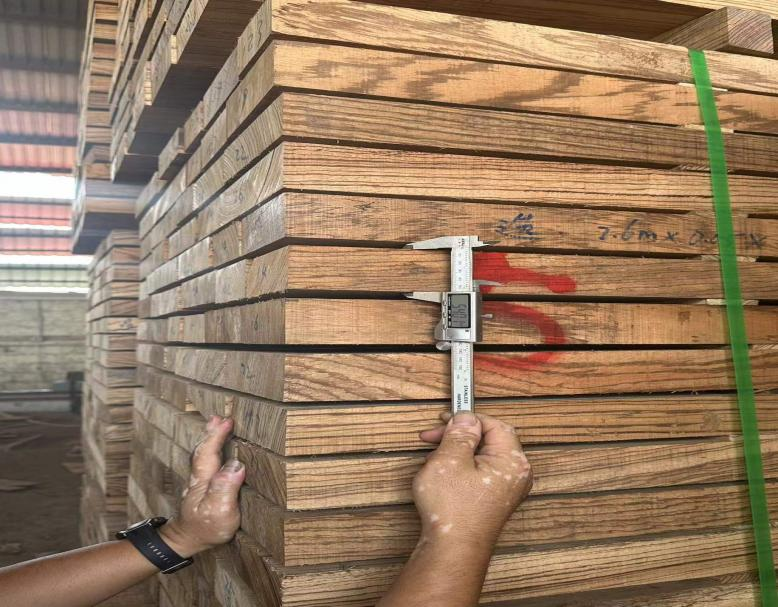
- Recommended moisture content for pallet wood is typically 9%–15%, achieved through seasoning or kiln drying.
- For export shipments traveling through tropical ports and temperate warehouses, stable moisture content helps the pallet maintain its geometry and nail‑holding capacity.
The cheapest pallet is not always the lowest‑cost pallet over its life. A slightly more expensive hardwood pallet that lasts twice as long can reduce:
- Replacement frequency.
- Labor for repairs.
- Risk of product damage and load failures. [anythingresearch]
We often calculate total lifecycle cost per trip, allowing clients to compare hardwood, softwood, and engineered options in a real financial model.
Export pallets must often comply with ISPM 15 heat‑treatment and other sanitary rules, especially for shipments into the EU, US, and many African and Asian ports. At the same time, large buyers increasingly ask for responsibly sourced timber and a clear chain of custody. [atelierstudios]
This is where long‑term African timber suppliers like HONG KONG SENHEDA WOOD LIMITED differentiate: we match species, treatment, and documentation to each market's regulatory and ESG requirements. [shdtimber]
Understanding the differences between softwood, hardwood, and engineered wood helps you shortlist the best wood for pallets in your operation. [coherentmarketinsights]
Softwoods are widely used for pallets because they are lighter, easier to process, and generally more affordable.
Common softwood species for pallets include:
- Eucalyptus – Lightweight, good strength‑to‑weight ratio, widely used in construction and industrial packaging.
- Acajou d'Afrique – Large tropical species from Angola, suitable for light‑to‑medium pallet applications when properly processed.
Pros of softwood pallets:
- Lower unit cost and faster growth cycle, improving sustainability metrics. [coherentmarketinsights]
- Easier nailing and machining, suitable for high‑volume pallet production.
- Lighter weight helps reduce freight cost, especially for air and long‑haul road shipments.
Cons of softwood pallets:
- Lower density and nail‑holding power compared to many hardwoods.
- Shorter lifespan under heavy or abusive handling.
Softwood is often the best wood for pallets where loads are moderate and price sensitivity is high—such as FMCG, textiles, and some electronics.
Hardwoods are the go‑to choice for high‑stress, heavy‑load, or long‑life pallets. In our African sourcing network, we regularly supply hardwood species such as: [tendata]
- Iroko – Highly durable and weather‑resistant, used in heavy‑duty pallets, construction, and outdoor structures.
- Sapele – Strong and stable, ideal for pallets that double as storage platforms in warehouses.
- Doussie – Extremely strong, suitable for high‑stress industrial uses and heavy equipment pallets.
- Padauk – Dense and abrasion‑resistant with a long service life, often used where pallets face rough handling and outdoor exposure.
Pros of hardwood pallets:
- Higher load capacity and better resistance to impact, wear, and insect damage. [coherentmarketinsights]
- Longer lifespan, especially in closed‑loop or multi‑trip systems.
- Better dimensional stability for racks and automated handling.
Cons of hardwood pallets:
- Higher upfront cost and heavier weight, slightly increasing transport cost. [coherentmarketinsights]
- Some tropical hardwoods require careful sustainable sourcing and documentation.
For heavy steel coils, stone products, large machinery, and industrial chemicals, hardwood is often the safest and most economical choice over time.
Engineered woods combine processed wood fibers with adhesives to deliver consistent strength and predictable performance.
Typical engineered wood options include: [linkedin]
- Plywood – Multiple veneer layers offer high bending strength and uniform performance.
- OSB (Oriented Strand Board) – Compressed strands designed for cost‑effective structural panels and some pallet decks.
Engineered wood pallets are useful where:
- Strict dimensional tolerances are required (automation, high‑bay racking).
- You need a smooth, closed deck to protect packaging.
They are less common for heavy export pallets from Africa but often appear in specialized applications and pooled pallet systems. [linkedin]
Below is a simplified comparison of commonly used pallet woods sourced from or comparable to African species. Values are qualitative, based on industry practice and published market research. [linkedin]
| Wood type | Typical use case | Durability | Weight | Relative cost | Notes |
|---|---|---|---|---|---|
| Iroko (hardwood) | Heavy machinery, outdoor storage pallets | Very high | Heavy | High | Excellent weather and insect resistance. |
| Doussie (hardwood) | High‑stress industrial pallets | Very high | Heavy | High | Withstands repeated forklift impact. |
| Sapele (hardwood) | Returnable pallets, racking applications | High | Medium | Medium‑high | Balanced strength and handling. |
| Padauk (hardwood) | Long‑life pallets, harsh environments | Very high | Heavy | High | Superior abrasion and decay resistance. |
| Eucalyptus (softwood) | Standard export pallets, FMCG | Medium | Light | Low‑medium | Good strength‑to‑weight, fast‑growing. (coherentmarketinsights) |
| Acajou d'Afrique (softwood‑like use) | Light/medium export pallets | Medium | Light‑medium | Medium | Versatile species from Angola forests. |
| Plywood (engineered) | Special pallets, closed‑deck, automation | High | Medium | Medium‑high | Very consistent, smooth surface. (linkedin) |
The "best wood for pallets" is evolving as cost, sustainability, and regulation reshape the market. Recent market research shows that softwood pallets hold the largest share of the global pallet market in 2026, driven by cost‑effectiveness and adequate durability for many industries. At the same time, engineered and recycled wood solutions are growing quickly, especially in developed markets focused on circular logistics. [linkedin]
For exporters in Africa and Asia, this translates into a hybrid strategy:
- Use softwood or mixed species pallets for standard, one‑way exports where cost is critical.
- Deploy African hardwood pallets for heavy loads, long routes, or high‑value cargo requiring extra protection. [coherentmarketinsights]
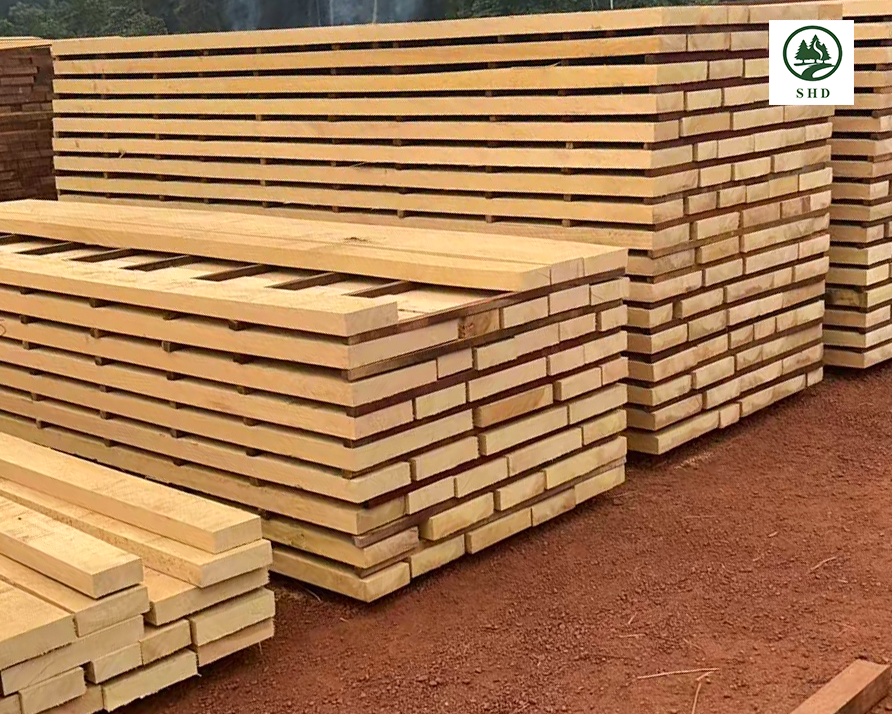
As a high‑volume African timber supplier, HONG KONG SENHEDA WOOD LIMITED (SHD WOOD) processes approximately 4,000–8,000 tons (or cubic meters) of African timber per month and ships over 200 containers of wood to Vietnam alone. In this corridor, most pallet and packaging clients face three recurring challenges: [instagram]
1. Balancing cost and performance for different export routes.
2. Securing consistent species and moisture quality despite seasonal variations.
3. Aligning with tightening environmental and compliance requirements from their international buyers. [anythingresearch]
By leveraging a stable supply of species such as Iroko, Sapele, Doussie, Padauk, Eucalyptus, and Acajou d'Afrique, we help pallet and box manufacturers segment their product lines by load class and customer requirements instead of using a one‑size‑fits‑all wood mix. This approach improves both technical performance and margin control. [cn.linkedin]
From an operator's point of view, you can simplify the decision into a few actionable steps.
- Light loads: under 500 kg, often suitable for Eucalyptus or similar softwoods.
- Medium loads: 500–1,000 kg, consider higher‑grade softwoods or mixed hardwood/softwood decks.
- Heavy loads: above 1,000 kg, prioritize dense hardwoods like Iroko, Doussie, or Padauk.
- Export routes with high humidity or outdoor storage benefit from decay‑resistant hardwoods.
- Short, domestic routes with quick turnaround can rely more on cost‑optimized softwood pallets. [anythingresearch]
- Identify whether shipments require ISPM 15‑compliant heat treatment or other phytosanitary measures.
- Work with suppliers who can provide consistent paperwork and traceability for each batch.
Create a simple comparison:
1. Pallet cost per unit.
2. Expected trips or lifespan.
3. Failure rate and repair cost.
4. Risk cost of load damage.
In many real projects we see, hardwood pallets show a lower cost per successful trip despite a higher purchase price. [coherentmarketinsights]
Based on our project portfolio across Africa, Southeast Asia, and the Middle East, here is a practical allocation strategy: [eximpedia]
- Choose hardwood pallets for:
- Steel, stone, heavy machinery, and construction materials.
- Long‑term warehouse storage and racked pallets.
- Harsh outdoor or coastal environments.
- Choose softwood pallets for:
- Consumer goods, textiles, packaged food and beverages.
- One‑way exports where pallets are not coming back.
- High‑volume shipments where pallet weight must be minimized.
- Choose engineered wood pallets for:
- Automated warehouses with strict dimensional tolerances.
- Products requiring a smooth deck to prevent packaging damage.
For pallet manufacturers and large exporters, the best wood for pallets is not only about species; it is about reliability of supply, technical support, and documentation. [palletmarketing]
As HONG KONG SENHEDA WOOD LIMITED (SHD WOOD), we:
- Bring over 15–17 years of experience in the African timber trade, focused on sustainable and high‑quality wood solutions. [instagram]
- Process 4,000–8,000 tons of African timber each month, ensuring consistent volume for pallet and packaging production. [eximpedia]
- Export more than 200 containers of timber to Vietnam and ship to multiple regions worldwide, supporting global supply chains. [eximpedia]
- Offer a wide range of pallet‑suitable species, including Okoume, Tali, Okan, Padouk, Sapelli (Sapele), Iroko, Mussivi, Bosse, Doussie, Pachyloba, Dabema, Bilinga, Movingui, Kossipo, Zebrawood, Azobe, and more, depending on project needs. [tendata]
For pallet buyers, this means you can standardize specifications, negotiate stable pricing, and count on a long‑term partner who understands both African forestry and international logistics.
If you are currently evaluating the best wood for pallets for your export or manufacturing operations, we recommend starting with a brief technical discussion. Share your:
- Target markets and routes.
- Typical load weights and product types.
- Current pallet failure rates and cost targets.
Our team at HONG KONG SENHEDA WOOD LIMITED can then propose a species mix, moisture specification, and supply plan tailored to your business.
Contact us today via our official channels to request a custom pallet wood recommendation and a quotation for African hardwood and softwood supply. [shdtimber]
1. What is the best wood for pallets in heavy industrial use?
For heavy industrial use, dense hardwoods such as Iroko, Doussie, Sapele, and Padauk are often the best wood for pallets due to their high load capacity and resistance to impact and decay. [coherentmarketinsights]
2. Are softwood pallets strong enough for export shipping?
Yes, Eucalyptus and similar softwoods can be strong enough for one‑way export pallets when loads are moderate and boards are properly dried and treated, offering a good balance of cost and performance. [coherentmarketinsights]
3. How important is moisture content in pallet wood?
Moisture content is critical: 9%–15% is generally recommended to avoid warping, mold, or cracking, especially for pallets traveling through different climate zones.
4. Can African hardwoods be used in automated warehouses?
Many African hardwoods are suitable for automation as long as pallets are produced to consistent dimensions and quality standards, offering excellent strength and long life in high‑throughput environments. [anythingresearch]
5. How can I make my pallet wood sourcing more sustainable?
Work with suppliers who prioritize responsible forest management, optimized species selection, and efficient transport, and who can document the origin and legal compliance of their African timber. [cn.linkedin]
1. K‑Timber. "What Is The Best Wood For Pallets?" (accessed 2026).
2. Coherent Market Insights. "Wood Pallets Market Trends, Share and Forecast, 2026–2033." [coherentmarketinsights]
3. AnythingResearch. "Wood Container and Pallet Manufacturing Industry Statistics and Trends." [anythingresearch]
4. LinkedIn. "HONG KONG SENHEDA WOOD LIMITED – Company Profile." [cn.linkedin]
5. Instagram. "Global Timber Index – Featuring Hong Kong Senheda Wood Limited." [instagram]
6. Eximpedia / Tendata. "Hong Kong Senheda Trade Limited Import Export Data." [tendata]
7. LinkedIn. "Engineered Pressed Wood Pallets Market Size and Key Trends 2026–2033." [linkedin]
8. PalletMarketing.co. "Boost Your Pallet Business' Online Presence." [palletmarketing]
9. SHD WOOD Official Site. "About Us – Hong Kong Senheda Wood Limited." [shdtimber]


