
Views: 0 Author: Site Editor Publish Time: 2026-09-22 Origin: Site


African Padouk is one of the most recognizable tropical hardwoods. When freshly sawn, its heartwood usually appears bright orange-red. After exposure to air and light, the surface gradually develops deeper reddish-brown or purplish-brown tones.
This natural color change is part of Padouk’s character, but it can also create confusion during purchasing. Freshly sawn timber, oxidized boards, rough-sawn material, and planed surfaces may look noticeably different—even when they come from the same species or production batch.

FROM PADAOUK LOGS TO SAWN TIMBER
The value of Padouk is not determined by log diameter alone.
Before sawing begins, the sawmill must consider log form, heartwood recovery, sapwood proportion, and the finished dimensions required by the customer. Different cutting plans directly influence how many wide boards, long pieces, standard-thickness boards, or smaller components can be recovered from each log.
Padouk logs are suitable for sawmills that want greater control over cutting patterns and finished dimensions. Padouk sawn timber is a more convenient option for importers and manufacturers that want to reduce primary processing and receive material closer to their production requirements.
For this reason, Padouk buyers should look beyond the price per cubic meter. Usable heartwood, dimensional distribution, and final recovery are equally important.
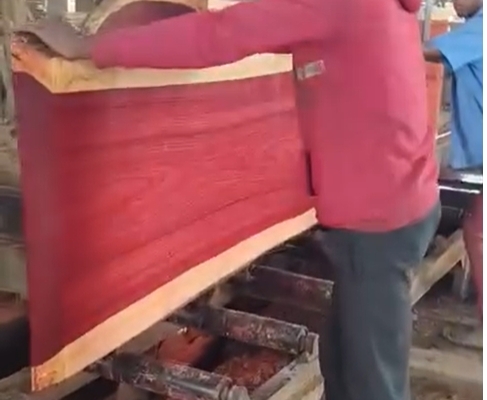

WHY DOES PADAOUK LOOK SO DIFFERENT IN PHOTOS?
Buyers often notice that some Padouk boards appear bright orange-red, while others look dark red or reddish-brown. This does not necessarily mean that the timber is a different species or quality. In many cases, the difference is simply caused by the stage of processing.
Freshly sawn or newly planed Padouk normally has a brighter color. As the surface is exposed to air and light, oxidation gradually darkens it. When an oxidized board is planed again, the brighter red color beneath the surface becomes visible before beginning another natural color-changing process.
Other factors can also affect how Padouk appears in photographs, including:
• Heartwood and sapwood proportion
• Grain variation
• Drying condition
• Storage time
• Lighting and camera settings
• Rough-sawn or planed surface condition
A professional assessment should therefore not rely on one photograph alone. Buyers should compare:
• Freshly cut and oxidized surfaces
• Board faces, ends, and overall stacking condition
• Actual heartwood and sapwood proportions
• Rough-sawn and planed surfaces
• Timber photographed under natural light
When consistent color is important for the finished product, manufacturers can sort the boards before production, plane them under similar conditions, and apply the finish within a similar period.
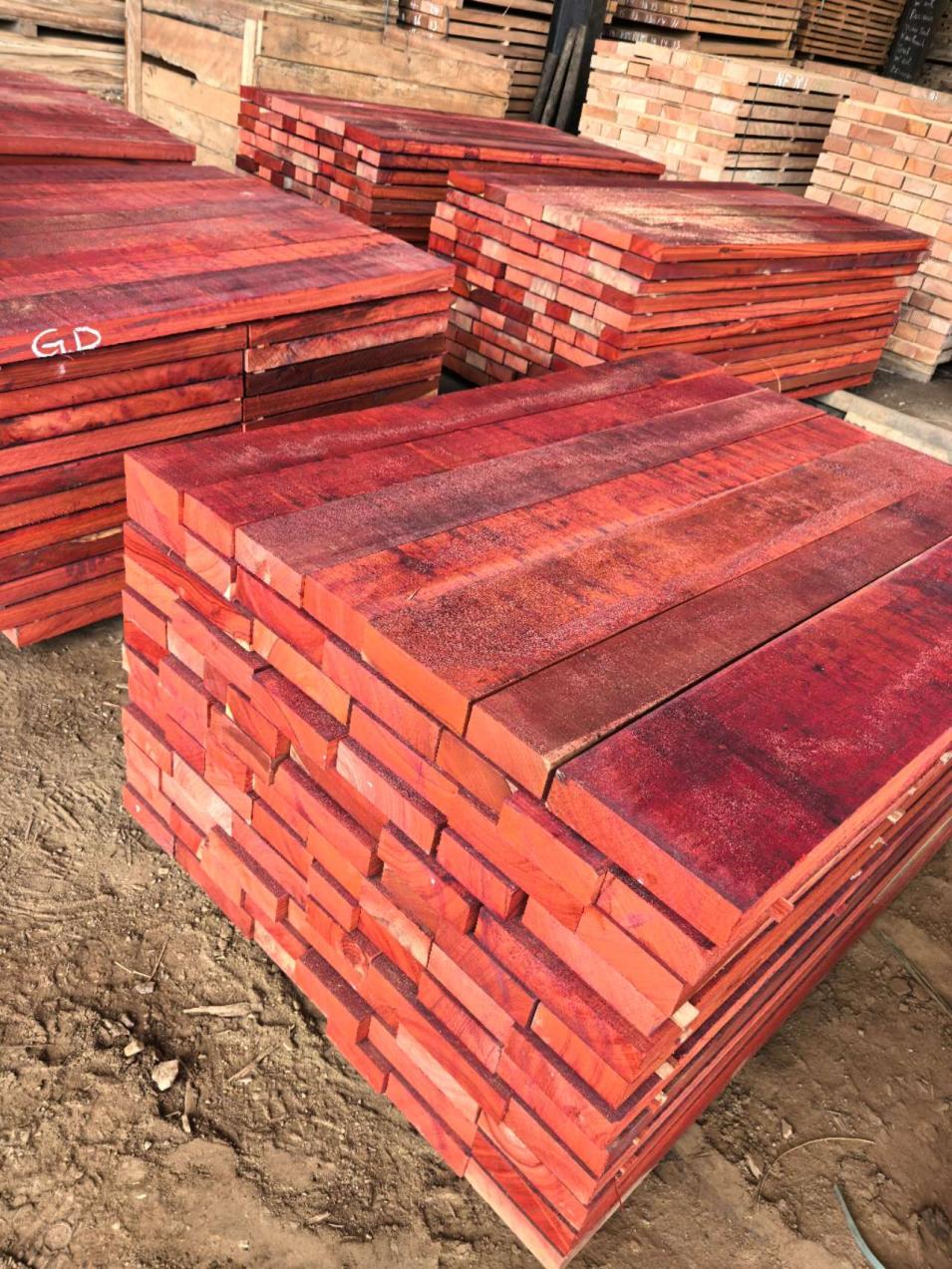
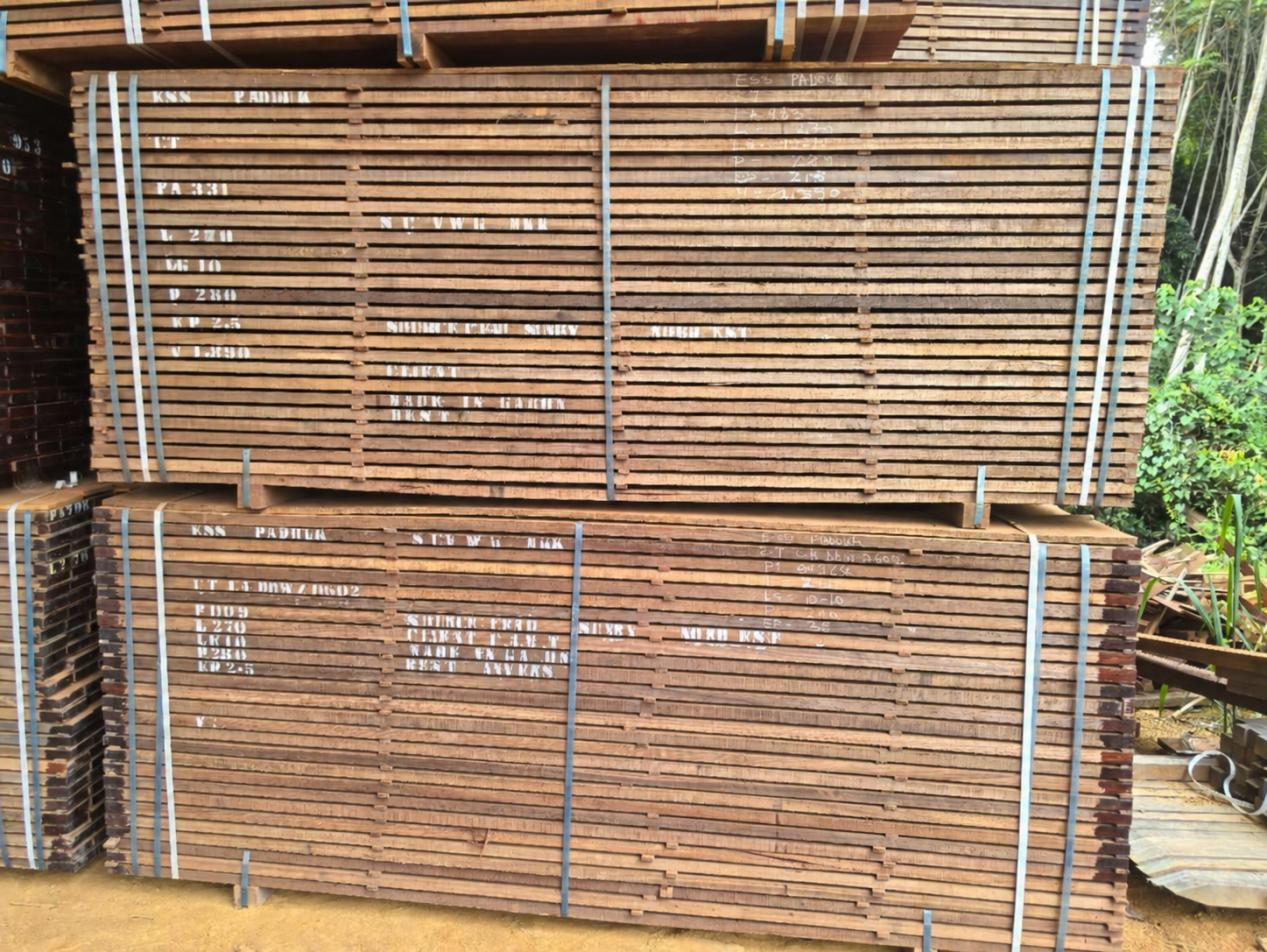

LONG AND SHORT LENGTHS FOLLOW DIFFERENT PRODUCTION LOGICS
Long boards are normally selected for products that require continuous pieces. Shorter lengths are more practical for small or fixed-length components.
However, long timber is not automatically the best option for every factory. If the finished products require shorter dimensions, purchasing unnecessarily long boards may increase cross-cutting waste. The closer the raw material length is to the component size, the greater the opportunity to improve material recovery.
Buyers should therefore focus on whether the length distribution matches their cutting list instead of simply requesting the longest available boards. A suitable combination of long and short lengths may provide better overall value than using long boards for every component.
SHD WOOD can supply air-dried African Padouk sawn timber in 25 mm and 50 mm thicknesses. Both long and short lengths can be arranged according to current availability and confirmed production requirements.
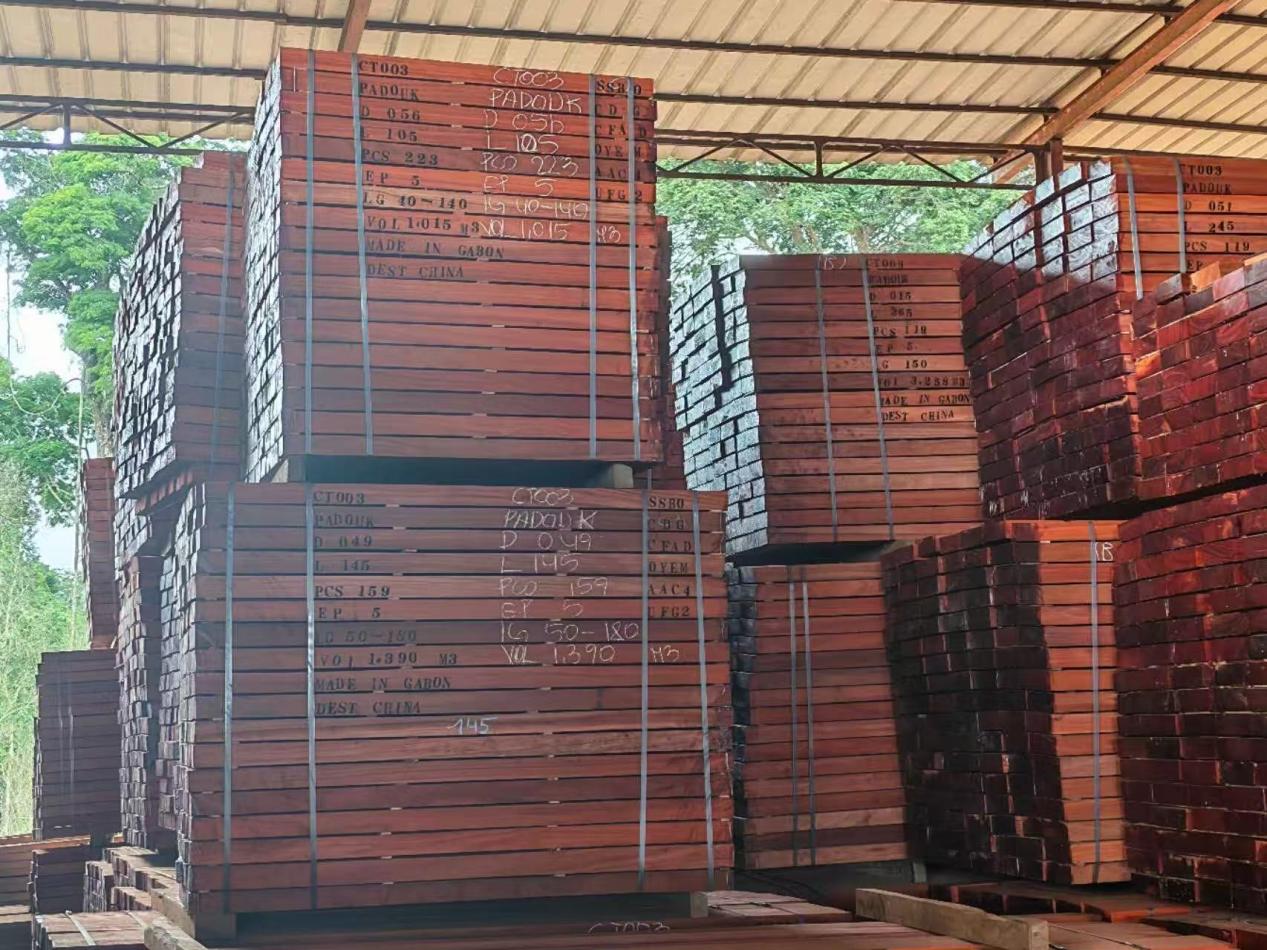

WHAT SHOULD BUYERS CONFIRM BEFORE ORDERING PADAOUK?
To help the sawmill prepare an appropriate cutting and drying plan, both parties should confirm:
• Logs or sawn timber
• Required thickness, width, and length
• Long- and short-length distribution
• Air-dried (AD) or kiln-dried (KD) condition
• Target moisture content
• Grade and permitted sapwood proportion
• Required quantity and destination port
• Export and import documentation
A clear specification helps control quality while reducing processing losses and potential disputes after arrival.
PADAOUK SUPPLY FROM SHD WOOD
With more than 17 years of international timber-trading experience, SHD WOOD supplies African Padouk logs and sawn timber to importers, sawmills, distributors, and wood-product manufacturers.

Tell us what you plan to manufacture, along with the required dimensions, quantity, and destination port. We can discuss a suitable Padouk supply plan based on your actual production requirements.
WhatsApp / WeChat / Call:
+86 13530895049 (Vivian)
Website: www.shdtimber.com


