
Views: 0 Author: Site Editor Publish Time: 2026-10-27 Origin: Site


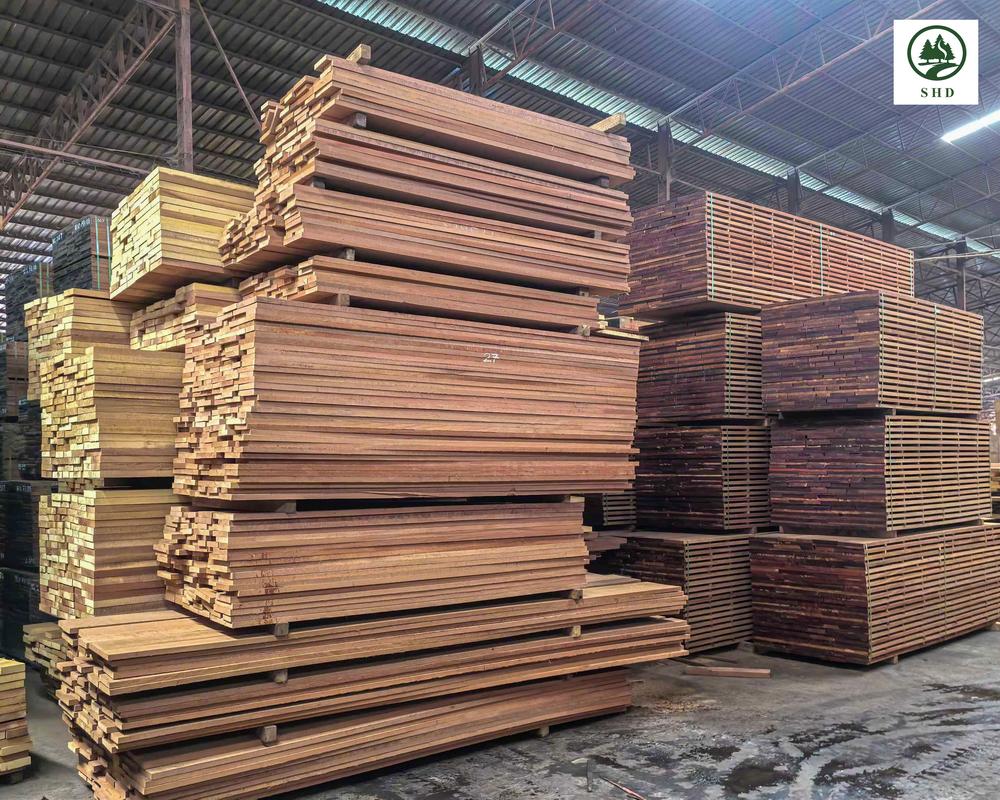
Some woods are chosen for their strength. Others for their color, texture, or the way they transform a finished product. African hardwoods offer all of these possibilities — and much more.
Walk through a furniture workshop, a flooring factory, or a timber warehouse, and you may find materials that look remarkably different yet originate from the same continent.
A golden-brown board of Iroko might be destined for an outdoor terrace. A reddish piece of Sapele could become an elegant interior door. A dark, richly textured Wenge board may eventually find its place in a luxury furniture collection.
These differences go far beyond appearance.
Every African timber species has its own characteristics, processing requirements, and ideal applications. Understanding those differences is what turns a good-looking piece of wood into the right material for a project.
Let's explore the diversity of African hardwoods through the qualities that make them stand out.
Not every timber is made for the same environment.
Some woods perform best in carefully controlled indoor spaces, while others are naturally better equipped to handle moisture, changing weather, and demanding conditions.
Among African hardwoods, a few species are particularly well known for their durability.
Iroko (Milicia excelsa and Milicia regia) has earned a strong reputation in international timber markets.
Often called African Teak, this golden-brown hardwood is valued for its natural durability and versatility.
Its appearance can range from yellowish-brown to deeper golden tones, gradually changing with exposure to light.
Iroko is commonly used for decking, flooring, furniture, doors, and exterior joinery.
What makes it particularly interesting is its ability to serve very different markets. A furniture manufacturer may value its warm appearance, while a decking producer may prioritize its durability.
The same species can answer two very different needs.
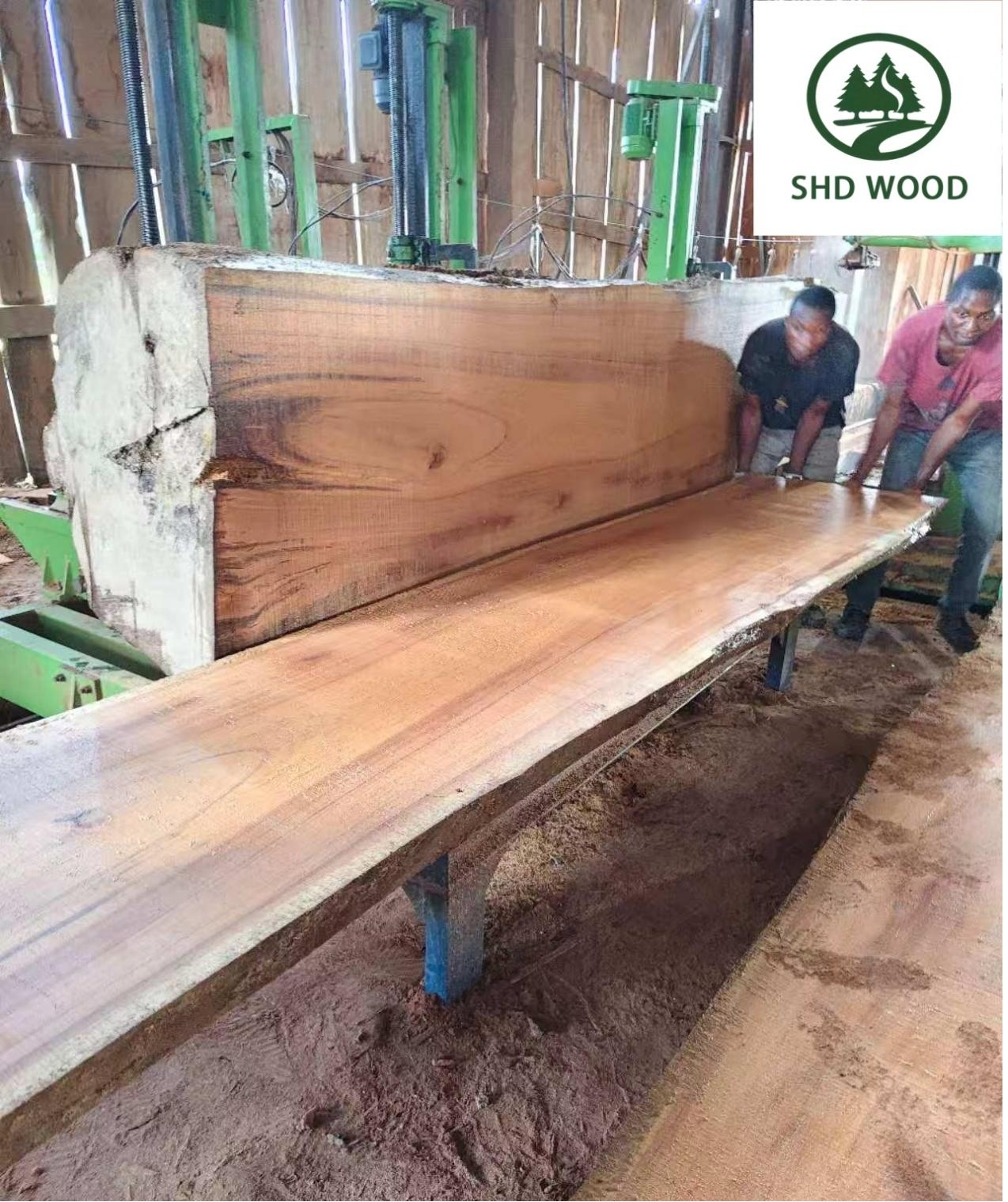
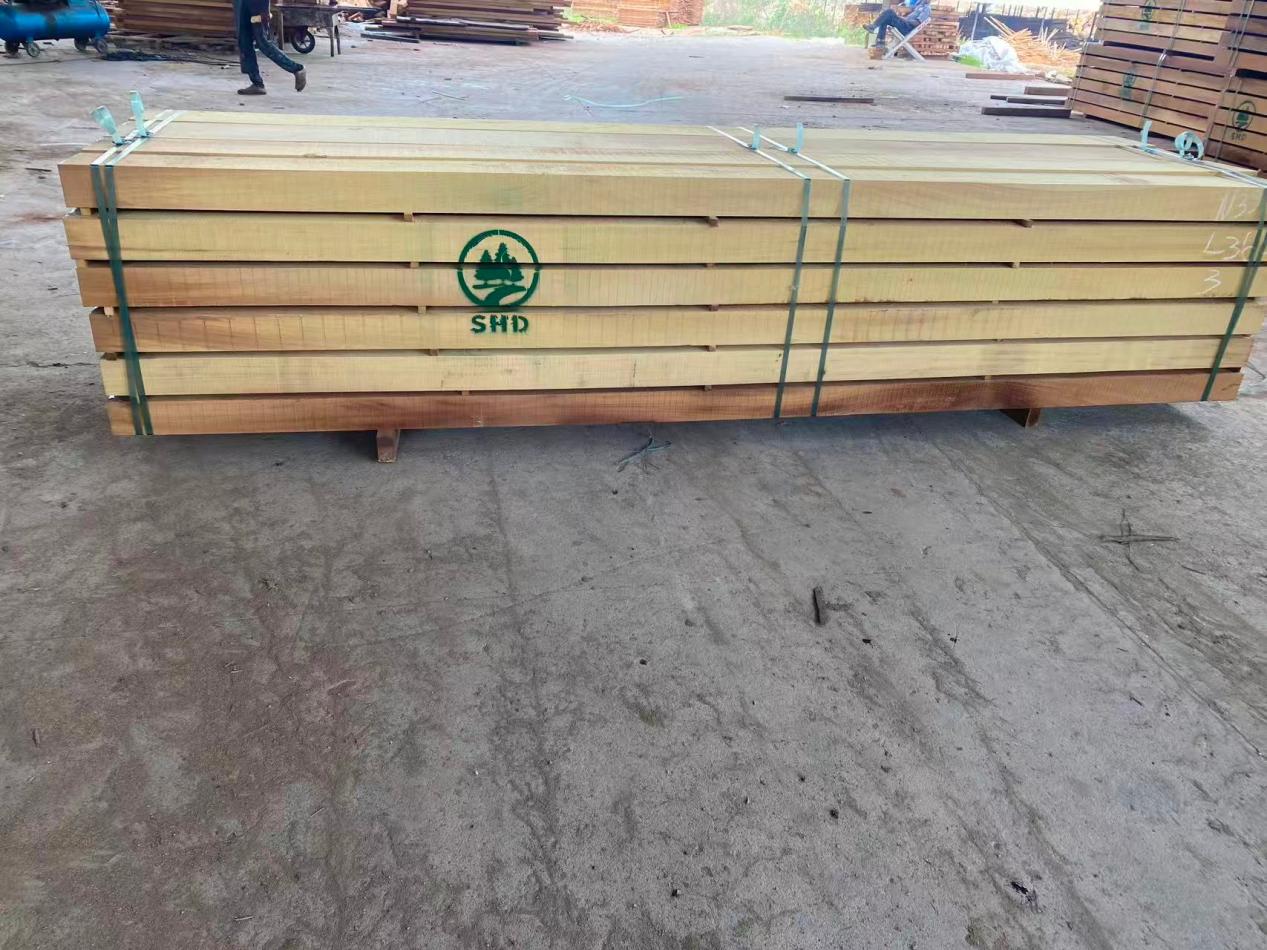

Bilinga (Nauclea diderrichii), also known as Opepe, offers another perspective on African hardwood durability.
With its distinctive yellow-orange color, high density, and strong natural resistance to decay, Bilinga is often selected for heavy-duty applications.
It has traditionally been used in bridges, structural components, industrial flooring, and certain marine construction projects.
Compared with lighter decorative woods, Bilinga requires more effort during machining and handling.
But for projects where strength and long-term performance are essential, its physical characteristics can make that extra effort worthwhile.
The takeaway: When selecting timber for exterior or demanding environments, natural durability and intended service conditions deserve as much attention as appearance.

For furniture makers and interior designers, wood is more than a structural material.
Its color, grain, and texture can define the personality of an entire product.
African forests provide some of the most visually distinctive commercial hardwoods available.
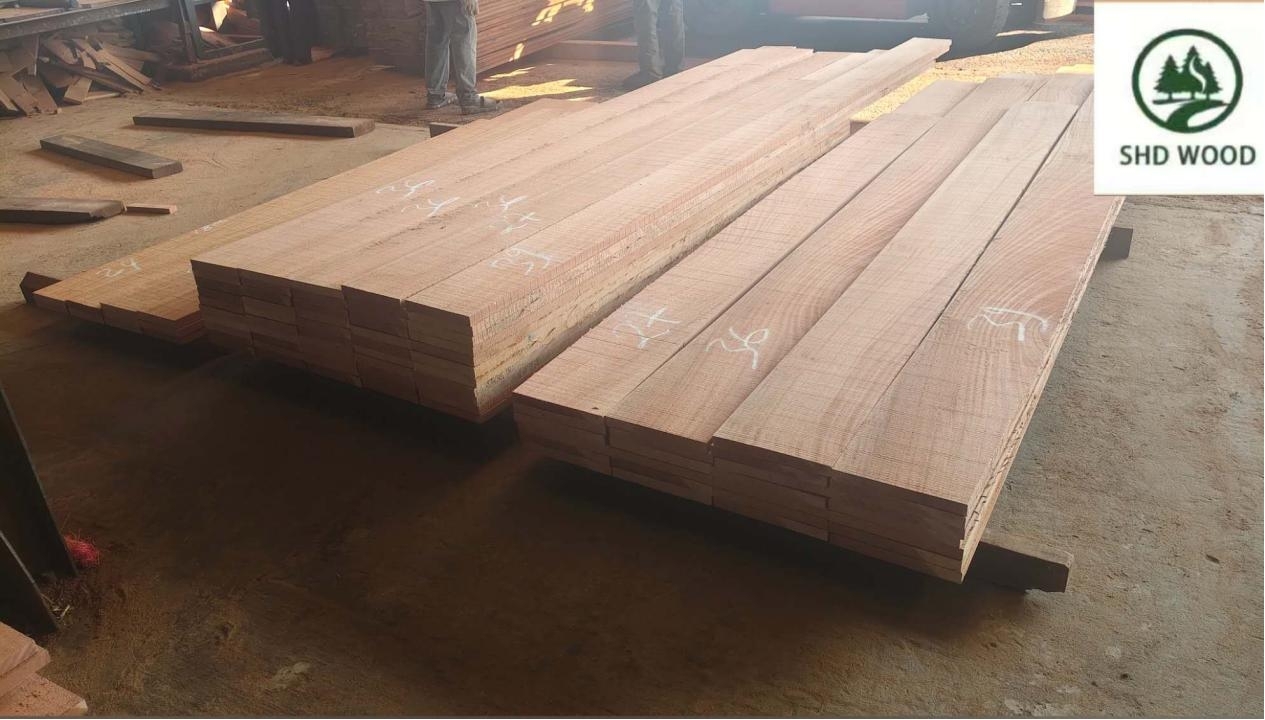
Sapele (Entandrophragma cylindricum) has a natural elegance that rarely needs much introduction.
Its reddish-brown heartwood and frequently interlocked grain create a distinctive appearance. When quarter-sawn, certain boards reveal beautiful ribbon-like patterns that change subtly depending on the viewing angle.
This makes Sapele especially attractive for decorative doors, furniture, cabinetry, veneer, and architectural interiors.
Unlike a plain, uniform surface, Sapele adds visual movement without requiring an artificial pattern.
For manufacturers, selecting the appropriate grain orientation can be just as important as choosing the species itself.
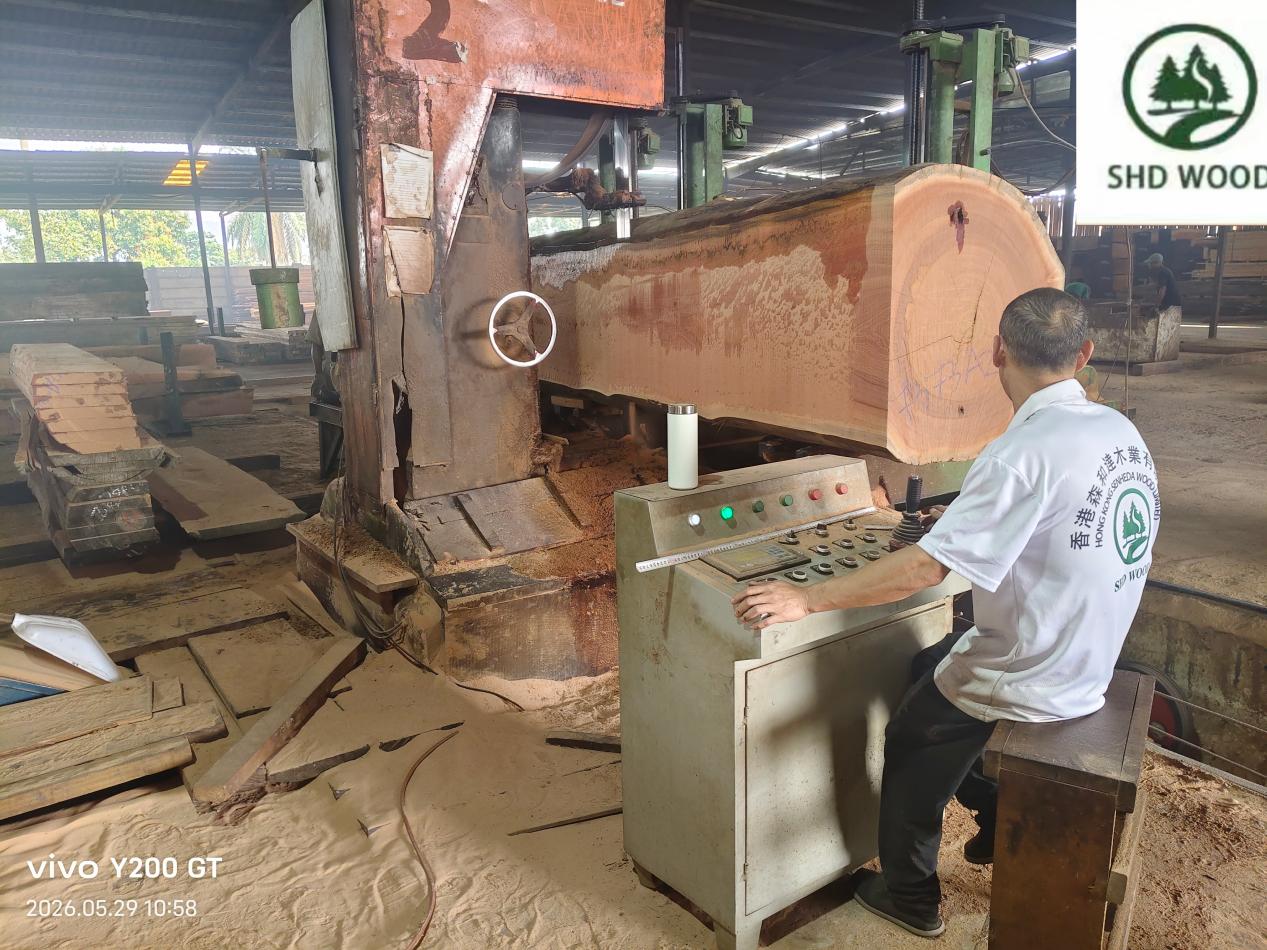

Not all luxury materials need bright colors.
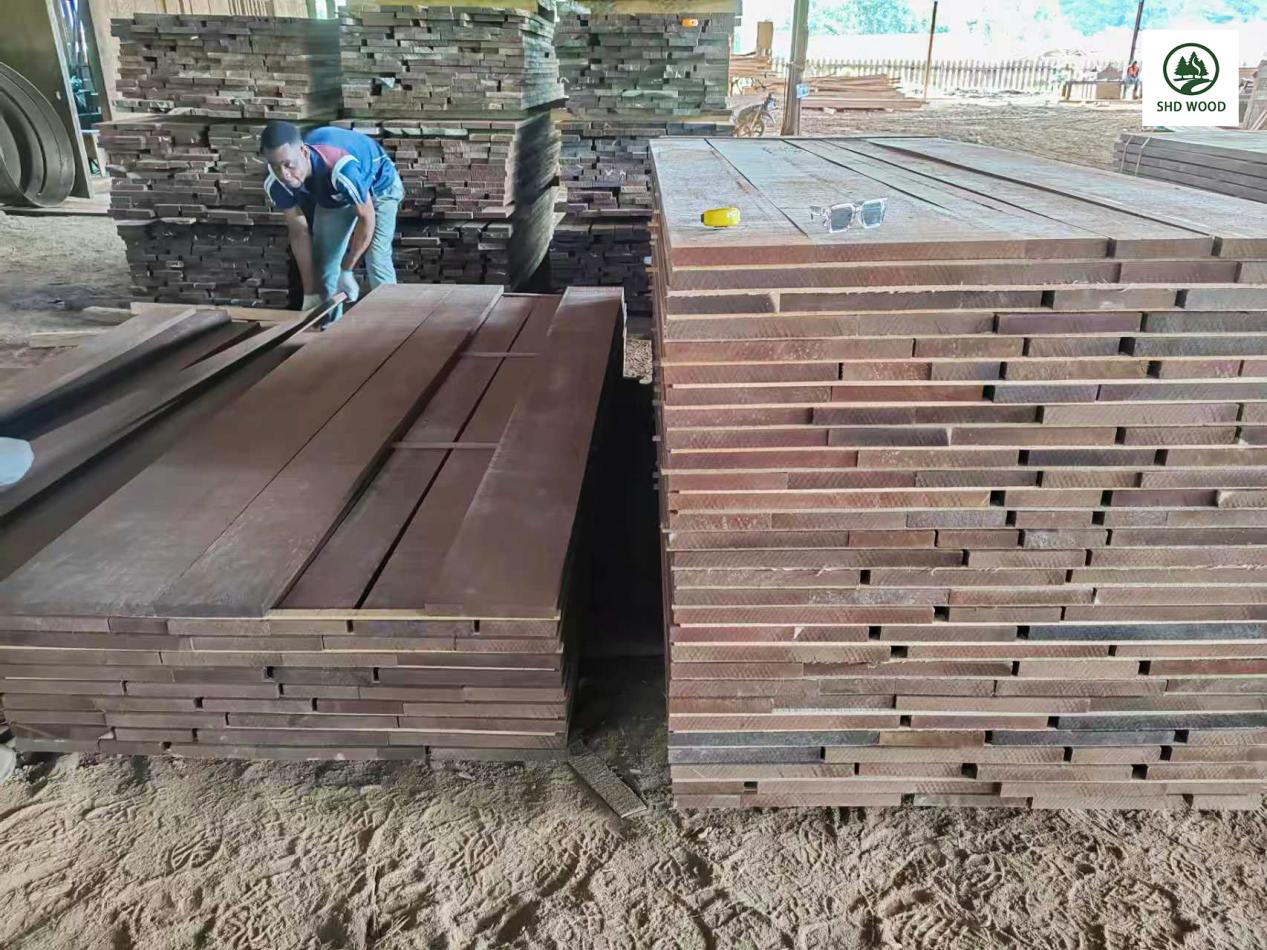
Wenge (Millettia laurentii) stands out through contrast.
Its dark brown heartwood, often marked by nearly black grain lines, creates a dramatic and unmistakable appearance.
Wenge is frequently used in premium furniture, flooring, decorative panels, and musical instruments.
Its density and coarse texture require careful machining, and splinters can be a concern during handling.
But when processed and finished appropriately, Wenge offers a visual character that few other commercial hardwoods can replicate.

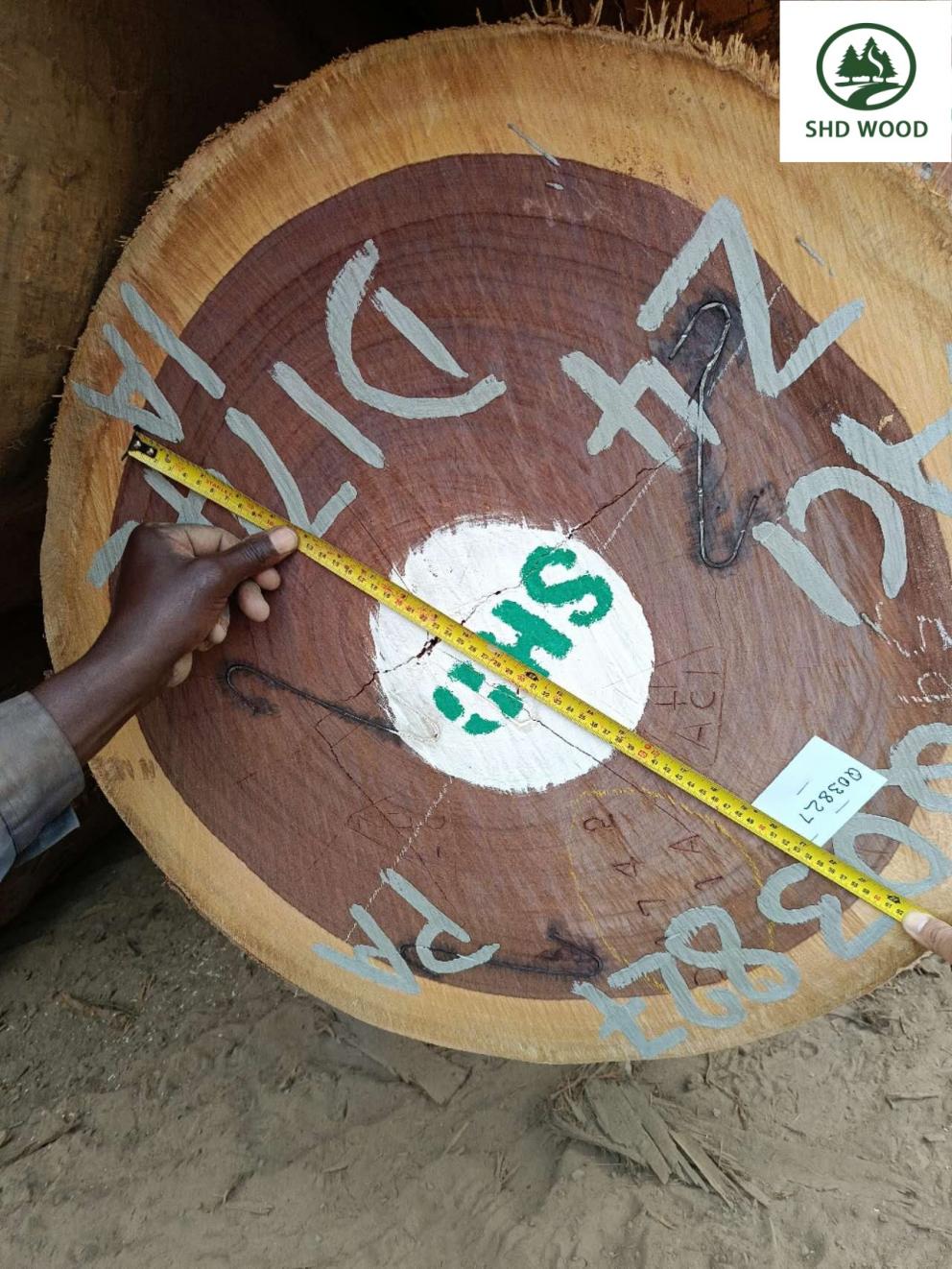
Freshly cut African Padouk (Pterocarpus soyauxii) can display striking orange-red tones.
This vivid appearance is one of the reasons Padouk is appreciated for decorative woodworking, furniture, and flooring.
But its color is not static.
Exposure to light and environmental conditions gradually changes the heartwood toward deeper reddish-brown tones.
For designers and manufacturers, this natural transformation is an important detail to consider when planning the finished appearance.

The takeaway: Decorative hardwood selection should consider not only how a board looks today, but also how its color, grain, and finish will appear over time.
Hardwood is often associated with heavy, dense timber.
Yet some of Africa's most commercially useful broadleaf woods are valued for exactly the opposite reason.
Their lower density makes them easier to process and suitable for products where weight matters.
Okoume (Aucoumea klaineana) is closely associated with Central Africa, particularly Gabon.
Its pale pink to light reddish-brown color gives it a soft, natural appearance.
Unlike dense hardwoods used for heavy construction, Okoume is lightweight and relatively easy to work with.
This has made it an important material for plywood, veneers, interior panels, and furniture components.
Its relatively uniform texture is another advantage for manufacturers seeking predictable processing characteristics.
However, untreated Okoume is not naturally durable in exposed outdoor conditions.
Choosing the right application is essential to making the most of its advantages.

Ayous (Triplochiton scleroxylon), also known as Obeche, Wawa, or Abachi, offers a different kind of flexibility.
Its creamy white to pale yellow appearance provides a neutral starting point for a wide variety of interior products.
Ayous is relatively lightweight, easy to machine, and suitable for moldings, furniture components, decorative panels, and other interior woodworking applications.
It can also be thermally modified for certain exterior cladding applications.
Sometimes, the most valuable feature of a wood is not dramatic color or exceptional hardness.
It is the ease with which manufacturers can turn it into a finished product.

The takeaway: Higher density does not automatically mean a better material. For many products, lightweight timber can offer real advantages in machining, handling, and design.
Iroko and Sapele are familiar names in many international timber markets.
But African timber diversity extends far beyond the most widely recognized species.
For importers looking to explore new products, lesser-known commercial woods can open the door to different applications and design possibilities.
Movingui (Distemonanthus benthamianus) is recognized for its yellow to golden-brown appearance.
Some boards display attractive figured grain, making the species particularly interesting for decorative furniture and interior joinery.
Its natural warmth can complement a wide range of interior styles.
Movingui is a reminder that a species does not have to be dark or vividly colored to create a distinctive finished product.

Dabema (Piptadeniastrum africanum), sometimes traded as Dahoma, is known for its relatively high density and useful mechanical properties.
Its color ranges from yellowish-brown to reddish-brown, often with interlocked grain.
Dabema is used for flooring, stairs, construction components, and other applications where strength is important.
It may not always be the first species associated with luxury interiors, but its practical characteristics make it relevant to many manufacturers.
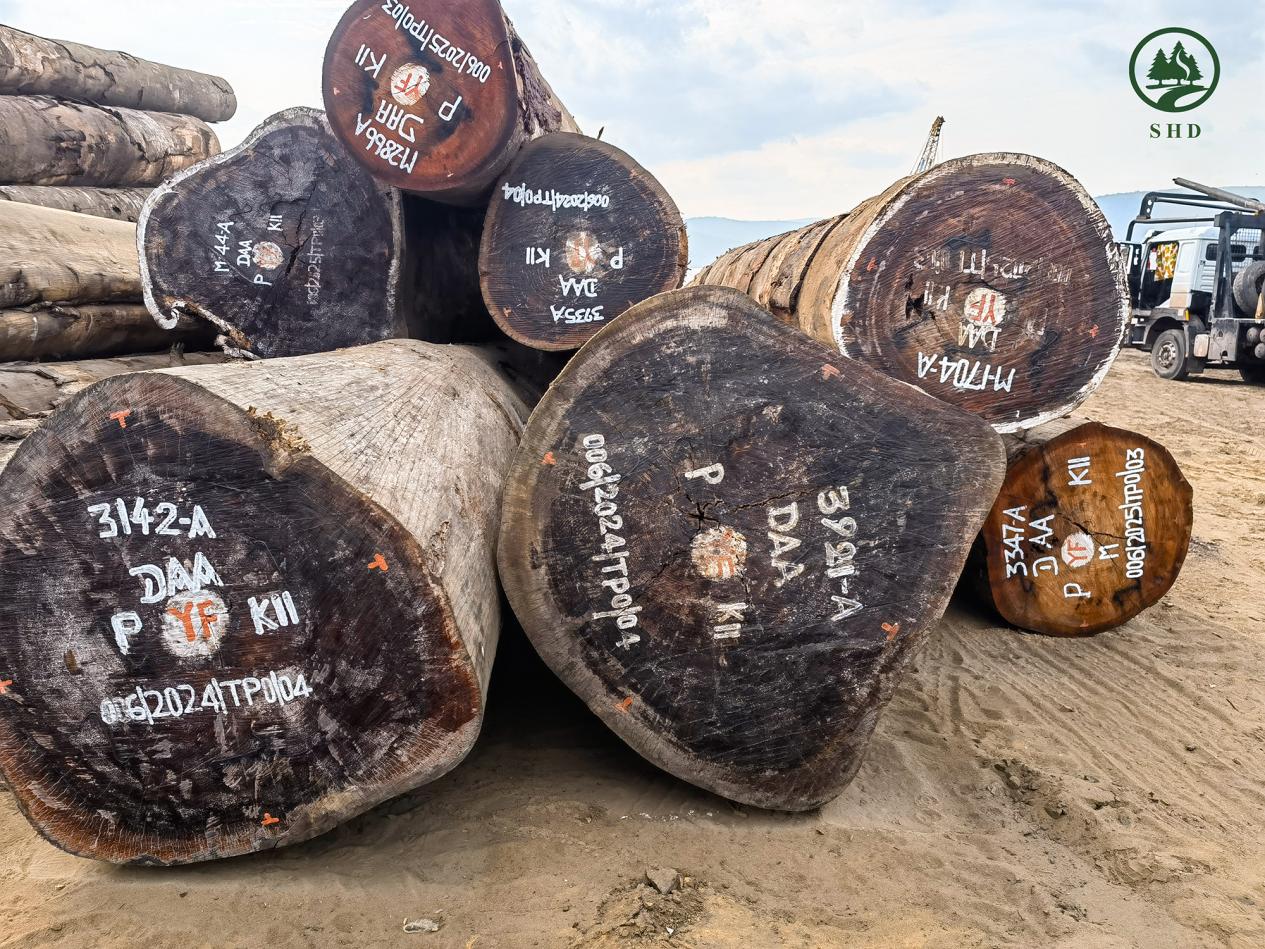

Afrormosia (Pericopsis elata) is prized for its golden-brown color, refined appearance, and natural durability.
Often compared visually with Teak, it is used for high-quality furniture, flooring, veneers, and architectural joinery.
Its relatively fine texture and attractive grain contribute to its premium reputation.
However, Afrormosia is listed under CITES Appendix II, so international trade must comply with applicable permit requirements.
Its appeal comes with an equally important responsibility: ensuring appropriate legal sourcing and documentation.

The takeaway: Exploring beyond the most familiar hardwood names may help buyers identify materials that better match specific design, performance, or procurement requirements.
Consider three different manufacturers.
A decking producer needs timber with suitable durability for outdoor use.
A cabinet manufacturer wants attractive grain, consistent appearance, and good machining performance.
A plywood producer prioritizes weight, processing characteristics, and a stable supply of suitable raw material.
All three are purchasing wood, but their definitions of the right timber are completely different.

This is why choosing African hardwood solely by price or appearance can be misleading.
For international timber buyers, a successful purchase starts with understanding the finished product.
The journey of African timber does not end when a tree is harvested.
Before reaching manufacturers around the world, timber may pass through several stages, including sawing, grading, drying, inspection, documentation, and international transportation.

The quality of each stage can influence the final result.
For example, even a visually attractive hardwood may create difficulties during manufacturing if its moisture content does not match the intended application.
Similarly, an unsuitable mix of lengths or widths can increase waste and reduce production efficiency.
For buyers purchasing African sawn timber in commercial quantities, clear specifications are essential.
Thickness, width, length, grade, drying condition, and destination port should be discussed before confirming an order.
Legal origin and traceability are equally important. Importers should verify applicable sourcing requirements, timber documentation, and any species-specific trade restrictions.
Ultimately, buying timber is not simply about finding the right species. It is about obtaining the right material, in the right condition, for the right purpose.
The appeal of African hardwoods lies in their diversity.
There is no single species that can meet every manufacturing requirement.
Iroko offers a balance of durability and versatility. Sapele and Wenge bring distinctive character to interior designs. Okoume and Ayous demonstrate the advantages of lightweight timber, while Bilinga and Dabema serve more demanding practical applications.
Every species has its own strengths, limitations, and possibilities.
At SHD WOOD, we believe that understanding these differences is an important part of helping international buyers source suitable timber.
With over 17 years of experience in the international wood trade, we supply a wide range of African logs, sawn timber, and square timber, with different specifications and drying options available according to species and production arrangements.

Whether you are exploring a new hardwood for furniture, looking for timber for construction, or sourcing materials for distribution, we welcome the opportunity to discuss your requirements.
Explore the possibilities of African timber with SHD WOOD.
+86 13534205619 (Anna Liu)
+86 13530895049 (Vivian Jiang)
www.shdtimber.com
#AfricanHardwood #AfricanTimberSupplier #HardwoodLogs #SawnTimber #TimberImporter #SHDWOOD


