
Views: 0 Author: Site Editor Publish Time: 2026-10-30 Origin: Site


Discover the beauty, diversity, and remarkable characteristics of African timber.
When we think of Africa, images of vast savannas, magnificent wildlife, and lush tropical rainforests often come to mind.
But deep within these forests lies another remarkable natural treasure: African hardwoods.
From the warm golden-brown tones of Iroko to the vibrant reds of Padouk, from the rich, dark grain of Wenge to the striking stripes of Zebrano, every species has its own distinctive appearance, characteristics, and story.
After decades, and sometimes much longer, of natural growth, these trees eventually become part of our everyday lives in the form of furniture, flooring, doors, architectural elements, and decorative creations.
Yet the beauty of African hardwoods goes far beyond their appearance.
No two trees share exactly the same growth history, and no two pieces of natural wood have completely identical grain patterns.
Sunlight, rainfall, soil conditions, and the way a tree grows all contribute to the unique colors, textures, and structures found in timber.
Take Sapele, for example.
One of its most remarkable features is the ribbon-like figure that can appear when the wood is quartersawn.
As light moves across its surface, alternating bands of light and dark grain create a beautiful shimmering effect, almost as if silky ribbons were flowing through the wood.

Wenge, on the other hand, tells a very different visual story.
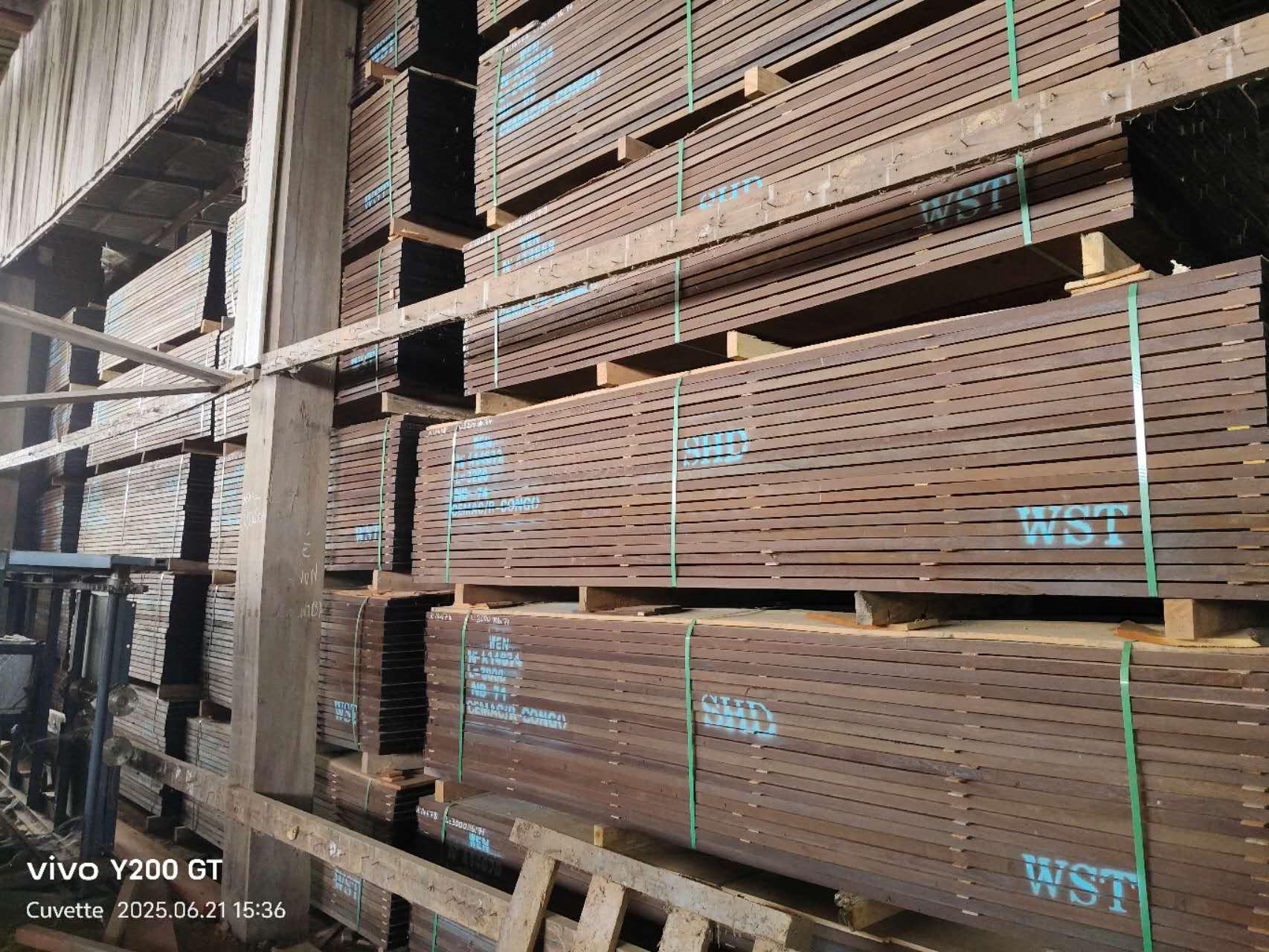
Its deep brown to nearly black heartwood, combined with distinctive contrasting grain lines, creates a bold and sophisticated appearance.
This natural elegance makes Wenge a distinctive choice for luxury furniture, decorative veneers, and high-end interior woodwork.
The beauty of wood is not simply about color. It is a reflection of nature's craftsmanship, shaped over years of growth.

Place several African hardwood species side by side, and you will discover a natural palette of remarkable colors.
Each species has its own character, shaped by its unique biological structure and natural chemical compounds.
Freshly processed Iroko typically displays yellowish-brown to golden-brown tones, which may gradually deepen with age and exposure to light.
Its attractive appearance and natural durability make it a popular choice for decking, doors, windows, furniture, and other woodworking applications.

African Padouk is famous for its striking orange-red heartwood when freshly cut.
However, this brilliant color does not remain unchanged forever.
With exposure to light and oxygen, Padouk generally develops deeper reddish-brown or brown tones over time.
This natural transformation is part of the character of the wood.

Movingui is known for its yellow to golden-brown appearance, sometimes displaying an attractive figured grain and natural luster.
It is used in furniture manufacturing, decorative veneers, and interior joinery.

With its dark color and striking grain contrast, Wenge creates a distinctive visual effect.
It is frequently selected for furniture, decorative panels, and architectural details where a bold appearance is desired.
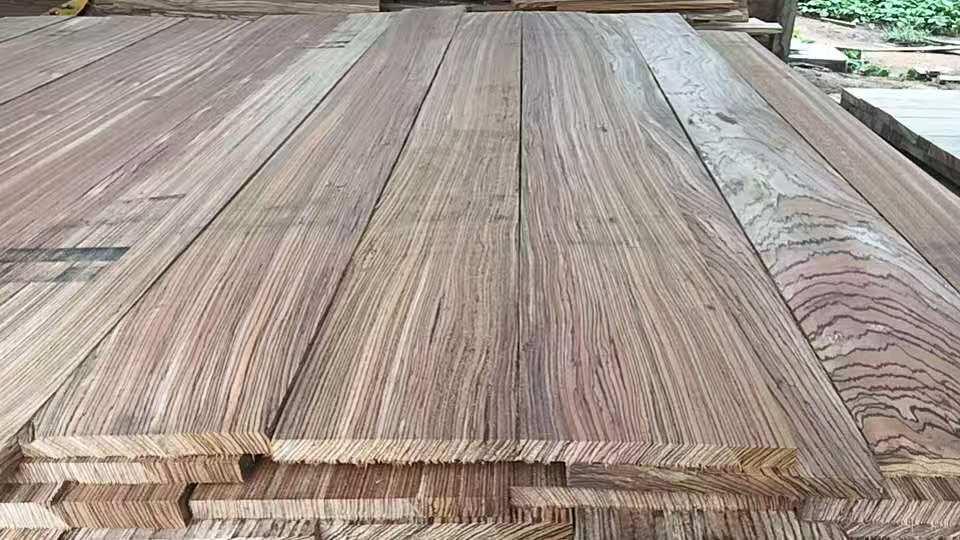
Zebrano is immediately recognizable for its dramatic dark brown stripes against a lighter background.
Its unusual appearance makes it a popular choice for decorative veneers, specialty furniture, and distinctive interior designs.
What makes these colors especially fascinating is that they are created by nature rather than artificial pigments.
Of course, wood color can also change due to oxidation, sunlight, drying, and surface finishing.
This is why natural color variation does not necessarily indicate a quality problem. In many cases, it is simply part of what makes real wood unique.
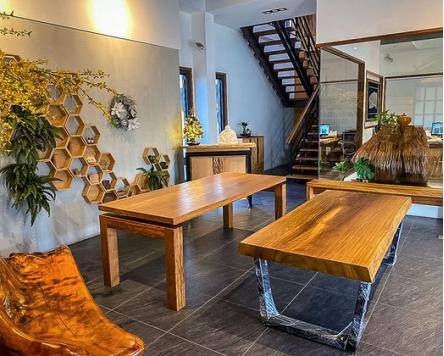
In the international timber market, Iroko is often referred to as African Teak.
But despite the name, Iroko and genuine Teak are not the same species, nor do they belong to the same botanical genus.
So why are they so often compared?
The answer lies in certain similarities in appearance, applications, and suitability for outdoor use.
Iroko offers good natural durability and is widely used for outdoor decking, doors, windows, furniture, and selected architectural applications.
For this reason, many timber buyers consider it an alternative to Teak.
However, an alternative does not mean an identical replacement.
The two species differ in density, grain structure, machining characteristics, dimensional stability, and performance under different conditions.
For timber importers, manufacturers, and project developers, the real question is not necessarily:
Which wood is better?
It is:
Which wood is more suitable for the intended application, project budget, and manufacturing requirements?
Sometimes, understanding the characteristics of different timber species is more valuable than choosing the most familiar name on the market.
When people discuss African hardwoods, familiar names such as Iroko, Sapele, Okoume, and Wenge often dominate the conversation.
Yet African forests are home to many other commercially valuable timber species that remain relatively unfamiliar to international markets.
Consider a few examples.
Beli features attractive natural grain patterns and color variations, making it suitable for furniture, decorative veneers, and interior woodworking.
Dabema, also known as Dahoma, is a commercially important hardwood used in flooring, structural components, and other applications where its properties are appropriate.
Okan is a dense and strong hardwood that may be considered for demanding applications requiring good mechanical properties and durability.
Bilinga is recognized for its strength and natural durability, making it relevant to certain heavy-duty structural and outdoor applications.
These species may not be suitable for every project, but each offers characteristics that can be valuable for specific applications.
For international timber buyers, exploring lesser-known hardwoods can open the door to additional material choices and potential sourcing opportunities.
However, selecting an alternative species should never be based on appearance alone.
Density, mechanical strength, natural durability, drying behavior, machining properties, and intended use should all be carefully considered.
Sometimes, the right material is not the most famous species, but the one that best meets the requirements of the project.

A piece of African hardwood may look simple when it arrives at a furniture workshop or timber warehouse.
But before reaching its destination, it has usually passed through several important stages.
The journey begins with legal timber harvesting and log transportation.
Once the logs arrive at a sawmill, they are processed into sawn timber according to the required dimensions, grades, and intended applications.
The next important stage is drying.
Depending on the species, thickness, and end-use requirements, timber may be processed through Air Drying (AD) or Kiln Drying (KD).
These methods serve different production needs.
For example, timber intended for furniture and interior joinery often requires controlled moisture levels, while thicker structural timber may involve different drying considerations.
Once drying is complete, timber may undergo further inspection, grading, measurement, bundling, and preparation for shipment.
For international orders, careful packing and container loading are also essential parts of the process.
Each stage can influence the final appearance, processing efficiency, transportation risks, and performance of the timber.
For importers, understanding how timber is produced and prepared is an important part of evaluating product quality and supplier reliability.

Africa's tropical forests are home to extraordinary biodiversity and provide valuable resources for the global timber industry.
However, forest resources are not unlimited.
Balancing commercial demand with responsible forest management remains an important challenge for the industry.
Responsible timber trade involves more than product quality and competitive pricing.
It also requires attention to legal harvesting, traceability, environmental considerations, and the import requirements of different markets.
At the same time, improving timber recovery rates, reducing processing waste, and identifying appropriate uses for different species can help make better use of available resources.
Lesser-known timber species may also offer new opportunities when their properties and applications are carefully evaluated.
However, their commercial development must be supported by legal sourcing and responsible forest management.
The long-term value of the timber industry should not be measured only by how much wood moves across international borders.
It should also be reflected in how efficiently resources are used and how well the resulting products serve their intended purposes.
From a tree growing deep within an African tropical forest to a beautifully crafted piece of furniture, a wooden door, a welcoming interior, or a durable outdoor deck, timber represents a fascinating connection between nature and human craftsmanship.
The warm tones of Iroko, the shimmering grain of Sapele, the vibrant colors of Padouk, the dramatic appearance of Wenge, and the unique qualities of lesser-known African hardwoods all contribute to the remarkable diversity of natural timber.
These species are not interchangeable in every application.
Each has its own characteristics, advantages, and suitable uses.
For those who appreciate natural materials, every species offers something new to discover.
For the timber industry, understanding wood properties, sourcing conditions, and practical applications is essential to creating long-term value.
Every piece of wood carries a story written by nature. Its next chapter is shaped by how we choose, process, and use it.

At SHD WOOD (Hong Kong Senheda Wood Limited), we specialize in the international supply of African hardwoods, bringing more than 16 years of experience in the timber industry.
We work closely with sawmills and timber suppliers in Africa to provide a wide selection of hardwood species for importers, wholesalers, furniture manufacturers, and woodworking businesses worldwide.
Our product range includes Iroko, Sapele, Okoume, Wenge, Padouk, Movingui, Dabema, Bilinga, Okan, Zebrano, Limba, and many other African timber species.
We supply:
·
Logs, Sawn Timber, and Square Timber
·
·
Kiln-Dried (KD) and Air-Dried (AD) Timber
·
·
Customized Dimensions and Specifications
·
·
Container-Based International Shipments
·
Beyond supplying timber, we believe that sharing knowledge about wood species, manufacturing processes, and practical applications helps buyers make more informed sourcing decisions.
Whether you are exploring a new African hardwood species or sourcing timber for your next project, we welcome the opportunity to discuss your requirements.
SHD WOOD | Hong Kong Senheda Wood Limited
African Hardwood Supplier & International Timber Trading
Website: www.shdtimber.com
WhatsApp:
+86 13534205619 (Anna Liu)
+86 13530895049 (Vivian Jiang)
Explore African Hardwoods. Discover More Possibilities with SHD WOOD.


