
Views: 218 Author: Li Publish Time: 2026-01-16 Origin: Site


Release Date: January 16, 2026
Author: Li, Industry Analyst at SHD WOOD
Content Menu
● Intensive Core Policy Adjustments Reshape Export Market Rules
>> Cameroon: Log Export Ban Intensified with Fee Reductions as Relief Measure
>> Nigeria: Comprehensive Timber Export Ban Takes Immediate Effect
>> Gabon: Tariff Hike Expectations Stir Market Volatility
>> Ghana: A Benchmark for FLEGT Compliance in African Hardwood Trade
Recently, the core shift in the African hardwood export market has centered on intensive forestry policy adjustments across key producing nations. Countries including Cameroon, Nigeria, Gabon, and Ghana have rolled out new regulations, reshaping global hardwood trade norms with sustainable development as the cornerstone and industrial upgrading as the overarching goal. As a seasoned player in African timber trade, SHD WOOD has meticulously collated policy developments and their practical impacts this week (January 9-16, 2026) to offer actionable insights for industry partners and clients.

This week, policies in major African hardwood-producing countries have continued to tighten, anchored by three core directions: restricting raw material exports, encouraging local processing, and enhancing compliance traceability. The accelerated rollout and stricter enforcement of these policies have exerted a far-reaching impact on the global hardwood supply chain, particularly reshaping trade layouts in key import markets like China and the European Union.
In Cameroon, the drive to enforce the log export ban has been further ramped up. Coupled with logging and transportation disruptions caused by extreme rainfall, as well as sluggish global hardwood demand, log exports to China have collapsed dramatically. Latest data reveals that Cameroon’s log shipments to China in November 2025 plummeted to a mere 1,411 cubic meters, a year-on-year drop of 92.1%, while total monthly timber exports also fell by 74.6% year-on-year—hitting a multi-year low for a single month. To balance industrial development with policy goals and alleviate operational pressures on local forestry enterprises, the Cameroonian government officially reduced annual forestry fees starting January 2026, with discounts ranging from 25% to 35%. Enterprises holding sustainable forest management certifications (e.g., FSC certification) qualify for the maximum 35% reduction, a measure designed to steer the industry toward compliant and sustainable logging and processing. Notably, Cameroon has simultaneously revised corporate income tax pre-deduction rules, strictly capping the deductibility of cross-border accounting, tax service fees, commissions, and other payments by forestry enterprises—further regulating industry financial operations and strengthening tax oversight.

Nigeria has undergone a pivotal shift in its timber export policy. The "Executive Order on the Ban on Export of Timber and Related Products 2025," signed by the president, took full effect this week, formally freezing all logging and export licenses for all timber categories (including rough lumber and sawn timber) with no grace period. Currently, no legally cleared timber is pending shipment at major Nigerian ports. This policy is not a temporary adjustment but a continuation of the country’s forestry protection and industrial upgrading strategy. Nigeria first imposed an export ban in 2016 amid the sharp decline of rare species such as Chlorophora excelsa and mahogany due to over-logging, and temporarily lifted it in 2023 to ease foreign exchange strains. The renewed ban aims to eradicate illegal logging, restore forest ecosystems, and drive the local timber processing industry—transitioning from a raw material exporter to a supplier of high-value-added processed goods. Anticipating the policy shift, the market has already adjusted its layout: Nigeria’s timber exports to China dropped by 56.7% year-on-year in the first ten months of 2025, with its market share gradually being filled by countries like the Republic of the Congo and the Central African Republic.

Expectations of tariff adjustments in Gabon have continued to fuel market volatility. The draft 2026 Finance Law explicitly proposes raising the export tariff on processed timber from the current 8.6% to 12.5%. While the bill is yet to be formally enacted, the market has already priced in the change: the average price of Chinese timber imports from Gabon rose by 17.2% year-on-year in November 2025, a yearly high. Local exporters have issued successive price increase alerts to partners, with some suspending short-term quotations to revise their pricing frameworks post-policy implementation. In fact, Gabon has long adopted a policy focus on "restricting log exports and prioritizing deep processing." It imposed a full ban on log exports in 2010, established a 25-year forest logging cycle, and built a full-industry-chain timber traceability system—enabling GPS positioning and barcode tracking from logging to export. This system gained EU recognition in 2021, fully complying with the EU Timber Regulation (EUTR). The tariff hike essentially aims to optimize the timber industry’s revenue structure and attract more enterprises to set up deep processing operations in local economic zones. The Nkok Economic Zone in Libreville, Africa’s first low-carbon economic zone, has attracted nearly 150 enterprises—including over 30 Chinese firms engaged in plywood and veneer production. In 2024, processed timber exports surged by 2.6 times compared to 2018, highlighting the strong synergy between policy and industrial development.

Ghana has emerged as a benchmark for African forestry policy transformation, thanks to its mature compliance system. As the first African country and the second globally to issue FLEGT (Forest Law Enforcement, Governance and Trade) licenses, Ghana now operates a fully mature FLEGT licensing regime covering mainstream hardwood species such as Okoume and Sapele. Timber products bearing this license are exempt from additional due diligence, enabling direct access to the EU market—significantly reducing trade compliance costs and customs clearance lead times. The system’s implementation has not only bolstered international trust in Ghanaian timber but also spearheaded the transformation of African hardwood trade toward "legalization and traceability." For global timber traders, this sets a clear compliance roadmap: amid tightening policies worldwide, compliance certification has become an indispensable prerequisite for hardwood trade.
In summary, policy adjustments across African hardwood-producing countries are not isolated moves but a collective transition amid the global push for sustainable forestry. Their core logic lies in balancing ecological protection and industrial growth through policy intervention, shifting timber trade from a "resource-driven" model to one that is "compliance-driven and value-focused." For trade enterprises, accurately interpreting national policy details and proactively building compliant supply chains are critical to navigating market volatility.
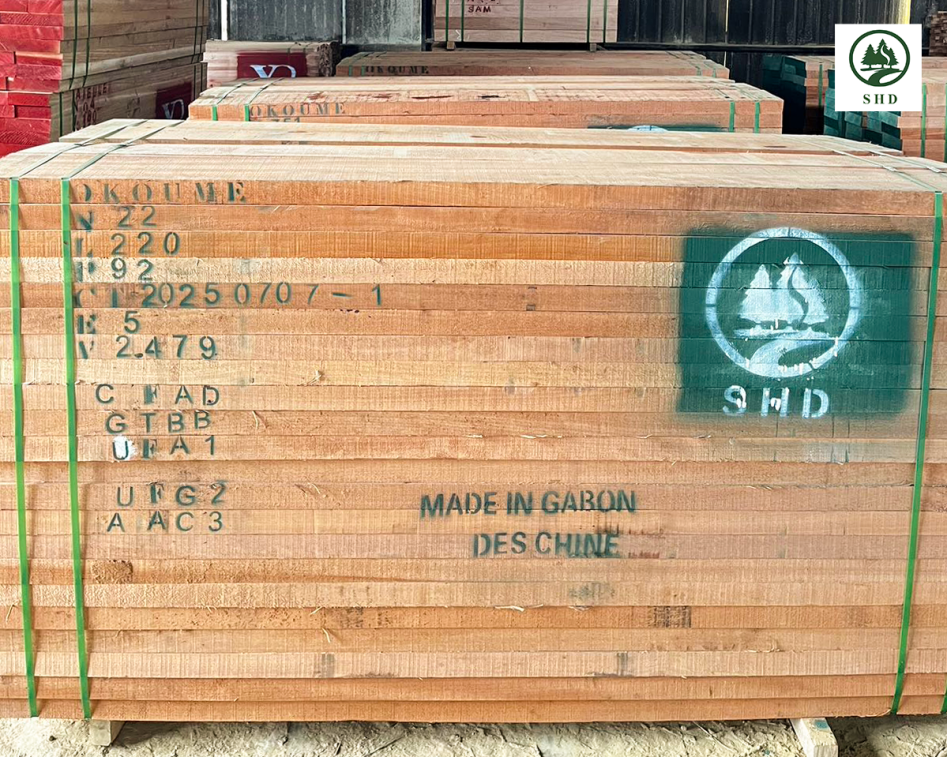
SHD WOOD remains committed to closely monitoring African forestry policy developments. Leveraging its robust resource networks and proven expertise in compliant operations across the African market, we provide policy interpretations and supply chain optimization recommendations to global partners, fostering collective resilience amid market changes.


