
Views: 222 Author: Loretta Publish Time: 2026-02-06 Origin: Site


Content Menu
● Overview of the 6 Main Wood Manufacturing Methods
>> Quick Reference Table: 6 Methods and Their Uses
● Step-by-Step Wood Manufacturing Process at the Mill
>> 4. Drying and Moisture Control
>> 5. Planing and Surface Preparation
>> Typical Uses of Drilling in Wood
>> Shaping Techniques and Tools
● Advanced and Modern Wood Manufacturing Technologies
>> Robotics, 3D Scanning, and Smart Manufacturing
>> Engineered and Modified Wood Products
● How HONG KONG SENHEDA WOOD LIMITED Supports High-Quality Manufacturing
>> Professional Timber Sourcing and Logistics
>> Matching Species to Manufacturing Methods
● Practical Tips for Choosing the Right Wood Manufacturing Method
● When to Combine Multiple Methods
● Partner With a Reliable Timber Supplier
● Frequently Asked Questions (FAQ)
>> 1. What is the most important step in wood manufacturing?
>> 2. Which wood manufacturing methods are best for furniture?
>> 3. How do I choose the right species for structural applications?
>> 4. Why is automation becoming more common in wood manufacturing?
>> 5. How can a trading company help improve manufacturing quality?
Wood manufacturing is the backbone of any successful timber business, transforming raw logs into stable, beautiful, and durable products for construction, furniture, and interior design. This guide explains 6 core wood manufacturing methods, expands their practical applications, and shows how a professional supplier like HONG KONG SENHEDA WOOD LIMITED supports each stage of the process with reliable African hardwoods.

Wood manufacturing is the step-by-step process of converting logs into finished products through sawing, drilling, jointing, shaping, wood turning, and finishing, supported by drying, grading, and quality control. It links forests, sawmills, and global markets, ensuring wood meets strict standards for dimensions, strength, and appearance.
The six primary methods in modern wood manufacturing are sawing, drilling, jointing, shaping, wood turning, and finishing. Each method contributes differently to the final product's structure, stability, and aesthetics.
Method | Main Purpose | Typical Applications |
Sawing | Convert logs into boards and planks | Construction lumber, furniture stock, panel making |
Drilling | Create holes, channels, and openings | Fasteners, dowels, cable routing, hardware fitting |
Jointing | Connect pieces into stable assemblies | Furniture frames, doors, windows, structural elements |
Shaping | Form profiles, curves, and complex geometry | Moldings, decorative edges, ergonomic parts |
Wood Turning | Produce round and cylindrical components | Stair balusters, table legs, columns, handles |
Finishing | Protect and enhance appearance | Flooring, cabinetry, exterior joinery, décor |
Before exploring each method, it helps to understand the full journey of timber from log to finished product.
At the sawmill, logs are first broken down by a head rig, which cuts them into cants, boards, or slabs according to the target dimensions. This early decision directly affects yield, grain orientation, and waste levels for the entire batch.
Key considerations:
- Log orientation to optimize grain and minimize defects.
- Saw pattern (plain-sawn, quarter-sawn, rift-sawn) to balance yield and stability.
- Target thickness for downstream planing and finishing.
Suggested visual: cross-section diagrams comparing plain-sawn vs. quarter-sawn patterns for stability and appearance.
After primary sawing, boards undergo edging to remove bark and irregular edges and trimming to standard lengths. This produces clean, rectangular pieces that can be accurately graded and processed.
Benefits of effective edging and trimming:
- More usable wood and less reject material.
- Better surface for automated grading and machining.
- Improved yield per log, reducing overall cost and waste.
Boards are then sorted by thickness, length, species, and quality for their intended use, such as structural lumber, joinery timber, or high-grade interior finishes. Visual and mechanical grading consider knots, grain deviations, moisture, and defects.
Typical grading factors:
- Structural performance (bending strength, stiffness).
- Surface quality for visible applications like flooring or furniture.
- Species-specific traits, such as density and durability.
Controlling moisture content is critical to prevent warping, cracking, and dimensional movement in service. Wood can be air-dried or kiln-dried, depending on the species, thickness, and final application.
Typical moisture targets:
- Interior furniture and joinery: around 8–12 percent.
- Structural timber in many climates: around 12–18 percent, depending on standards.
Modern mills increasingly use digital, sensor-based kilns to monitor temperature, humidity, and airflow for consistent results.
Once dried, boards are planed to achieve uniform thickness, flatness, and a smoother surface. This step removes drying defects and prepares the wood for high-precision machining and finishing.
Outcomes of good planing:
- Reduced sanding time and better coating adhesion.
- Dimensional accuracy for jointing and assembly.
- Enhanced visual appeal for high-end projects.
Sawing remains the foundation of wood manufacturing, turning irregular logs into consistent, usable timber.
- Band saws for efficient cutting of thick logs with minimal kerf waste.
- Circular saws for fast, straight cuts in dimensioned timber.
- Chainsaws for initial breakdown and on-site log preparation.
High-quality sawing ensures:
- Better mechanical properties by respecting the grain direction.
- More predictable shrinkage and fewer distortions during drying.
- Uniform boards that simplify all downstream operations.
Drilling creates holes, slots, and channels that allow fasteners, dowels, and hardware to connect and function correctly.
- Pre-drilling for screws and bolts to prevent splitting.
- Creating dowel holes for concealed joints in furniture.
- Running electrical or plumbing services through timber elements.
Many manufacturers now integrate CNC drilling centers for high-volume, precise patterns, especially in cabinetry and panel production.
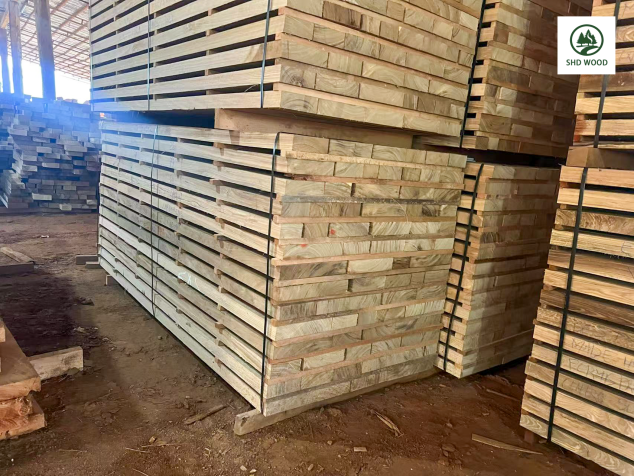
Jointing is the process of connecting two or more pieces of wood using mechanical or adhesive methods so they act as one stable unit.
- Mechanical joints: screws, bolts, metal plates, brackets.
- Traditional joints: mortise and tenon, dovetail, tongue-and-groove.
- Glued joints: edge-joining boards into panels or laminating beams.
High-quality jointing is essential for long-span beams, frames, doors, and furniture, where joint failure can compromise safety and lifespan.
Shaping gives wood its profiles, contours, and ergonomic forms, strongly influencing design and user comfort.
- Router profiling for moldings, edges, and decorative details.
- CNC machining for complex 3D shapes and repeated parts.
- Steam bending for smooth curves in chairs, arches, and handrails.
Steam bending softens wood fibers with steam and fixes them into a new shape as the material dries, preserving strength while enabling curves.
Wood turning uses a lathe to rotate timber while cutting tools shape it into circular or cylindrical forms.
- Stair balusters and handrail posts.
- Table legs, chair legs, and decorative columns.
- Handles, knobs, and custom interior elements.
Turning requires skilled operators or precise CNC lathes for repeatable, high-volume output in architectural and furniture projects.
Finishing is the final protective and decorative step, applying coatings that enhance grain, color, and durability.
- Clear varnishes and lacquers for high-gloss or satin surfaces.
- Oils and waxes for a natural look and easy maintenance.
- Stains and pigments to adjust color while showing the grain.
Modern customers increasingly prefer eco-friendly, low-VOC finishes that meet environmental and indoor air quality standards.
Beyond traditional methods, many mills now adopt automation and digital tools to increase precision, traceability, and sustainability.
- Robotics and automation handle repetitive cutting, sanding, and handling, reducing labor costs and errors.
- 3D scanning systems detect internal defects like knots and splits before final cutting, optimizing yield.
- Smart manufacturing uses sensors and IoT devices in kilns and saw lines to maintain consistent quality.
Engineered wood products such as plywood, MDF, laminated veneer lumber, glued laminated timber, and cross-laminated timber offer high strength-to-weight ratios and efficient use of raw material. Modified woods, including thermally treated and chemically stabilized products, improve durability and dimensional stability for demanding environments.
HONG KONG SENHEDA WOOD LIMITED focuses on supplying consistent, high-grade African hardwoods that perform reliably across all six manufacturing methods.
- Over 10 years of experience in the timber trading industry and African markets.
- Stable supply of African species such as Okume, Tali, Okan, Padouk, Sapelli, Iroko, Mussivi, Bosse, Doussie, Pachyloba, and others.
- Monthly handling of roughly 4,000–8,000 tons (CBM) of goods and around 200 containers to Vietnam, supporting large-scale production.
These capabilities allow manufacturers to plan production confidently, minimizing disruption from raw-material shortages.
Different hardwoods behave differently in sawing, drying, jointing, and finishing. Dense species like Tali or Doussie offer high strength for structural elements, while species like Okume are favored for veneer and panel applications.
By understanding each species' density, stability, and machinability, HONG KONG SENHEDA WOOD LIMITED helps customers choose the right wood for their specific processes and products.
When planning a project, consider end-use, budget, and performance requirements before selecting manufacturing methods.
Key decision points:
- For structural beams and frames, prioritize precise sawing, controlled drying, and strong jointing, possibly with engineered or laminated products.
- For high-end furniture, invest in accurate drilling, jointing, shaping, and fine finishing to achieve premium aesthetics.
- For large-scale production, use automation, CNC machining, and smart kilns to maintain consistency across high volumes.
In real-world manufacturing, most products rely on several methods together rather than one isolated process.
Example: a solid wood door may involve:
- Sawing and planing for frame and panel stock.
- Jointing for stiles, rails, and panel assembly.
- Shaping for decorative panel profiles and edges.
- Drilling for hinges, locks, and handle hardware.
- Finishing for color consistency and protection.
Understanding how these methods intersect helps manufacturers optimize cost, quality, and lead times across the full workflow.
If you need high-quality African hardwoods and a stable supply chain for your wood manufacturing projects, HONG KONG SENHEDA WOOD LIMITED is ready to support you with professional sourcing and logistics. Get in touch with our team today to discuss your target products, manufacturing methods, and volume needs so we can recommend the most suitable species and specifications for your business and help you build a stronger, more competitive production line.
Contact us to get more information!
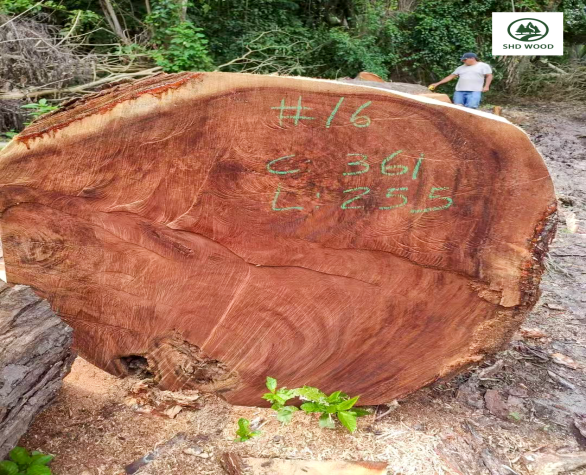
Each step is important, but drying is critical because incorrect moisture content leads to warping, cracking, and reduced lifespan of the final product. Proper drying ensures greater dimensional stability and long-term performance in service.
Furniture production usually combines sawing, drilling, jointing, shaping, and high-quality finishing, sometimes supported by CNC machining and steam bending for advanced designs. This combination delivers both structural strength and refined appearance.
Look for species with high strength, good dimensional stability, and proven performance in structural standards, including engineered products where needed. Working with a specialist supplier can help you match species to climate, load requirements, and service life.
Automation improves consistency, reduces waste, and lowers labor costs, while digital monitoring enables better process control and quality assurance. As volumes grow, automated lines make it easier to maintain stable quality across large batches.
A reliable timber trading company ensures consistent species, grading, and moisture levels, which stabilizes machining performance and reduces defects and rework in the factory. It also streamlines logistics so manufacturers can focus on production instead of raw-material risk.
1. https://k-timbers.com/6-types-of-wood-manufacturing-methods/
2. https://www.wagnermeters.com/forest-products/industry-info/wood-manufacturing-processes/
3. https://www.quantumautomation.com/success-stories-indepth/turning-logs-into-lumber-at-a-sawmill
4. https://www.fao.org/4/t0269e/t0269e03.htm
5. https://oa.upm.es/92609/1/10090526.pdf
6. https://www.ipcc-nggip.iges.or.jp/public/2019rf/pdf/4_Volume4/19R_V4_Ch12_HarvestedWoodProducts.pdf
7. https://www.sciencedirect.com/science/article/pii/S221499372300163X
8. https://vb.nweurope.eu/media/14468/aftb-mech-props.pdf
9. https://www.theseus.fi/bitstream/10024/799896/2/Schneele_Nadine.pdf
10. http://irepo.futminna.edu.ng:8080/jspui/bitstream/123456789/29645/1/TYPES,%20STRUCTURES%20OF%20WOOD%20AND%20PROCESSES%20FULL%20T
11. https://www.wagnermeters.com/forest-products/industry-info/wood-manufacturing-processes/
12. https://www.bbc.co.uk/bitesize/guides/zktmtv4/revision/10
13. http://www.senhedawood.com/about.html
14. http://www.senhedawood.com
15. https://cn.linkedin.com/company/hong-kong-senheda-trade-limited


