
Views: 222 Author: SENHEDA WOOD Publish Time: 2026-05-21 Origin: Site


Choosing the right wood for boat building is not just a technical decision—it is the difference between a vessel that performs reliably for decades and one that fails prematurely in harsh marine conditions. Drawing on over 16 years of African timber supply experience at HONG KONG SENHEDA WOOD LIMITED and established marine industry best practices, this guide explains the 6 best types of wood for boat building, how to use them, and how to source them efficiently and sustainably. [sandypointboatworks]

When you build a boat, you should focus on woods that offer a balanced combination of strength, durability, rot resistance, workability, and cost-efficiency. In practice, modern wooden boats often rely on a mix of African hardwoods (like Iroko, Acajou and Mukulungu) and trusted marine species (Cedar, Douglas Fir and Marine Plywood) to cover different structural needs. [smallboatschool]
Boat builders face constant trade‑offs: weight versus strength, cost versus lifespan, and workability versus durability. The wrong wood can lead to issues such as rot, movement (shrinkage or swelling), fastener failures, and excessive maintenance costs, especially in saltwater environments. [sandypointboatworks]
From an industry perspective, successful boat projects usually consider:
- Service environment: Freshwater vs. saltwater, tropical vs. temperate climates
- Boat size and design: Small canoes vs. large fishing boats or workboats
- Lifecycle costs: Upfront material price vs. long‑term maintenance
- Supply chain reliability: Consistent sourcing of graded, traceable timber
African hardwoods like Iroko and Mukulungu have become increasingly popular because they deliver "teak‑like" performance at a more accessible cost, especially for hulls, decks, and structural frameworks. [slideshare]
This article focuses on six proven wood types for boat building:
1. Iroko (African Teak)
2. Acajou (African Mahogany)
3. Mukulungu
4. Cedar
5. Douglas Fir
6. Marine Plywood
Each wood has distinct advantages, ideal uses, and practical drawbacks that boat builders need to understand before committing to a design. [smallboatschool]
Iroko, often called "African Teak", is a dense hardwood native to West and Central Africa, known for excellent durability, rot resistance, and resistance to marine borers. It shares many physical properties with traditional Teak but is typically more cost‑effective, which makes it highly attractive for commercial and custom boat projects. [slideshare]
Key properties of Iroko
- Medium to high density with good wear resistance
- Natural oils that protect against rot and marine pests
- Color from yellow to medium brown, darkening over time
- Interlocked grain that adds strength but requires careful machining
Ideal applications in boat building
- Decking and exterior walkways: Iroko's hardness and oil content make it ideal for high‑traffic areas exposed to sun and salt spray. [smallboatschool]
- Hull structures and planking: High durability and rot resistance support long service life in water. [smallboatschool]
- Interior joinery: Attractive grain and stable color (once aged) deliver a warm, premium look suitable for cabins and trims. [smallboatschool]
Expert insight: For boat owners seeking a "teak feel" without the teak price, Iroko is one of the strongest candidates, especially when sourced as FAS‑grade African hardwood from reliable exporters. [shdtimber]

Acajou, also known as African Mahogany, is highly valued for its stability, workability, and rich reddish‑brown color. It is a medium‑density hardwood with an excellent balance between strength and weight, making it ideal for both structural and decorative boat components. [slideshare]
Key properties of Acajou
- Straight to interlocked grain, medium to coarse texture
- Heartwood from light pink to deep reddish brown, darkening with age
- Good dimensional stability and machining performance
Ideal applications in boat building
- Hull panels and topsides: Provides a durable yet visually appealing finish for classic‑style boats. [smallboatschool]
- Interior panels and cabinetry: Easy to machine and finish, allowing clean joinery and fine detailing. [smallboatschool]
- Decorative trims and mouldings: Offers a "luxury" visual with manageable weight for performance‑oriented vessels. [smallboatschool]
Mukulungu (Central African hardwood) is known for its exceptional density, hardness, and resistance to decay and termites, making it a top choice for high‑stress structural parts in marine environments. A notable characteristic is that Mukulungu becomes harder the longer it stays in water, which is rare among structural woods. [smallboatschool]
Key properties of Mukulungu
- Dense, heavy wood with fine to medium texture
- Straight to interlocked grain
- Heartwood color from reddish brown to purple brown, darkening over time
Ideal applications in boat building
- Keels: High density and strength provide a solid "backbone" for larger vessels. [smallboatschool]
- Frames and ribs: Withstand high loads and repeated wave impact over the vessel's lifetime. [smallboatschool]
- Heavily loaded structural elements: Areas where long‑term mechanical stability is critical, such as workboats and commercial fishing vessels.
Industry practice: Many professional shipyards mix Mukulungu in structural cores and pair it with lighter woods like Cedar or Douglas Fir for planking and superstructures, optimizing both strength and weight. [sandypointboatworks]

Cedar—especially Western Red Cedar and Yellow Cedar—is widely used in boat building for its lightweight nature, natural rot resistance, and ease of shaping. It offers good thermal insulation and pleasant aesthetics, making it a favorite for canoe and kayak builders. [sandypointboatworks]
Key properties of Cedar
- Straight grain with uniform texture
- Color from pale yellow to deep reddish brown
- Naturally rot‑resistant with insect‑repellent aroma
- Excellent workability and buoyancy
Ideal applications in boat building
- Hull planking for small boats: Ideal for strip‑planked canoes, kayaks and dinghies. [sandypointboatworks]
- Decking and coamings: Provides comfortable, cooler surfaces under direct sunlight while resisting rot. [sandypointboatworks]
- Lightweight superstructures: Great for cabin tops and upper works where weight reduction matters.
Trade‑off: Cedar is not as hard as Iroko or Mukulungu, so it may require more frequent maintenance (finishes, coatings) in high‑wear areas like commercial decks. [sandypointboatworks]
Douglas Fir is a widely used softwood in marine construction because of its excellent strength‑to‑weight ratio, good availability, and affordability. When properly treated and sealed, it provides reliable performance for many structural elements. [sandypointboatworks]
Key properties of Douglas Fir
- Straight grain, medium to coarse texture
- Color from light yellow to reddish brown
- Strong yet relatively light for structural members
- Good resistance to decay when treated correctly
Ideal applications in boat building
- Masts and spars: The combination of stiffness and lightweight makes Douglas Fir a classic choice for sailing rigs. [sandypointboatworks]
- Frames and stringers: Supports hull structure in medium‑sized boats. [smallboatschool]
- Beams and bulkheads: Used where long spans and robust load carrying are required.
When paired with African hardwoods in the hull and deck, Douglas Fir can help control overall boat weight while maintaining structural integrity. [slideshare]
Marine plywood is an engineered wood product specifically designed for constant water exposure. It uses high‑quality veneers and waterproof adhesives to prevent delamination, making it essential for modern boat designs. [sandypointboatworks]
Key properties of Marine Plywood
- Multiple layers of hardwood veneers
- Bonded with waterproof glue to resist delamination
- Smooth, uniform surface ideal for painting or laminating
- Consistent strength and stiffness across large panels
Ideal applications in boat building
- Hull construction for smaller boats: Common in DIY projects and production dinghies. [sandypointboatworks]
- Decks and cabin roofs: Smooth surfaces that accept anti‑slip coatings, paints, and laminates easily. [sandypointboatworks]
- Interior cabinetry: Lightweight panels with good dimensional stability.
Caution: Low‑quality plywood is one of the main failure points in budget builds; professional builders rely on certified marine‑grade panels for long‑term performance. [indexbox]
To improve user experience and practical decision‑making, the following table maps boat parts to recommended woods, combining African hardwoods with widely used marine species. [slideshare]
| Boat part | Recommended wood options (primary) | Notes |
|---|---|---|
| Keel | Mukulungu, Iroko, Oak | High strength and rot resistance needed. smallboatschool |
| Frames & ribs | Mukulungu, Douglas Fir, Acajou | Mix dense hardwood cores with lighter supports. smallboatschool |
| Hull planking | Iroko, Cedar, Acajou | Choose based on target weight and budget. smallboatschool |
| Decking | Iroko, Cedar, Marine Plywood | Iroko for heavy duty, Cedar for small craft. smallboatschool |
| Masts & spars | Douglas Fir | Classic mast wood with strong stiffness. sandypointboatworks |
| Interior joinery | Acajou, Iroko, Marine Plywood | Combine aesthetics with stability. smallboatschool |
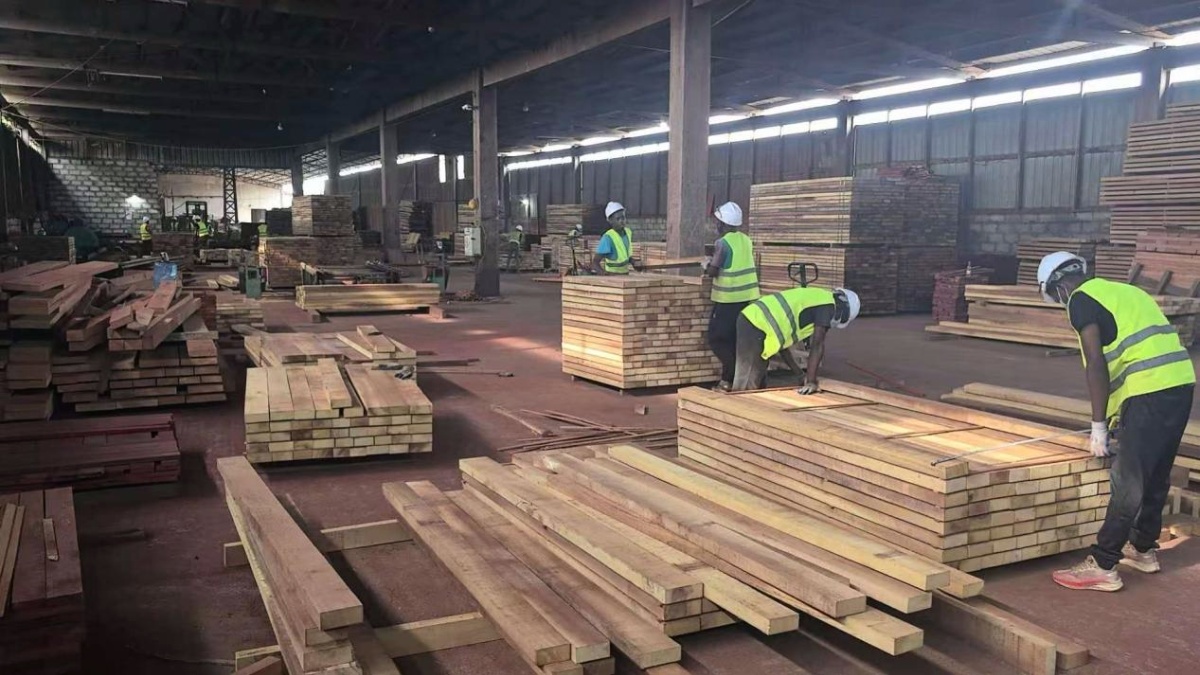
From a supply perspective, African hardwoods have become essential in boat building due to their combination of durability, availability, and competitive pricing. Exporters like HONG KONG SENHEDA WOOD LIMITED handle 4,000–8,000 tons (CBM) of wood from Africa every month and ship over 200 containers to Vietnam, supporting shipyards and timber distributors across Asia and the Middle East. [cn.linkedin]
Key advantages of partnering with a specialized African timber supplier:
- Stable sourcing of Iroko, Acajou, Mukulungu and other exotics like Tali, Okan, Padouk, Sapelli and Azobe for marine and structural use. [cn.linkedin]
- Professional grading and quality control, ensuring FAS‑grade or equivalent material with minimal defects and better yield. [shdtimber]
- Global logistics expertise, enabling reliable delivery to major boat building hubs in China, Vietnam, India and the Middle East. [shdtimber]
From an expert standpoint, selecting the best wood for boat building should follow a step‑by‑step process rather than relying solely on species reputation. [sandypointboatworks]
1. Define your boat type and usage
- Small DIY canoe or kayak
- Mid‑size fishing or workboat
- Larger commercial or offshore vessel
2. Prioritize performance factors
- For maximum durability: Favor Iroko, Mukulungu, Acajou and certified marine plywood for critical structures. [smallboatschool]
- For weight reduction: Combine Cedar and Douglas Fir in non‑critical areas. [sandypointboatworks]
3. Assess budget and supply
- Teak‑level performance can often be achieved with African hardwoods at more competitive prices, especially when sourced directly from experienced exporters. [shdtimber]
4. Consult with a supplier
- Share your design, dimensions, and intended environment with a timber supplier who understands both African wood species and marine applications. [cn.linkedin]
Practical example:
- A 9–10 ft DIY canoe: Cedar or marine plywood for hull, Douglas Fir for ribs, and simple hardwood trim.
- A 30–40 ft coastal workboat: Mukulungu keel and frames, Iroko planking and deck, Acajou interiors, marine plywood cabinetry.
No matter which wood you choose, maintenance determines lifespan. Wooden boats face challenges such as rot, shrinkage, cracking and swelling if left unprotected in harsh conditions. [sandypointboatworks]
Key maintenance practices:
- Regular inspections of hull planking, fasteners and joints for early signs of rot or movement.
- Protective coatings (epoxy, varnish, paint) appropriate to the wood type and expected exposure.
- Prompt repairs to damaged areas to avoid moisture ingress and structural weakening.
While fiberglass or aluminum hulls can be easier to clean, a properly maintained wooden boat offers unique aesthetics, repairability and a traditional feel that many owners consider irreplaceable. [sandypointboatworks]
Modern builders increasingly use hybrid construction, blending wood with fiberglass, epoxy systems or metal reinforcements. [indexbox]
Situations where hybrid approaches make sense:
- Marine plywood and fiberglass skins for small boats, combining stiffness and durability.
- Wood‑epoxy laminates for strip‑planked hulls, using Cedar cores and epoxy outer skins. [sandypointboatworks]
- Wood and steel elements in heavy workboats, where steel is used for critical reinforcements and wood for superstructures.
Hybrid solutions allow designers to leverage the warmth, workability and renewability of wood, while gaining additional strength and durability from modern materials. [indexbox]
If you are planning a new boat building project or need to maintain an existing fleet, working with a specialized African timber supplier can dramatically reduce risk and cost over the lifetime of your vessel. [cn.linkedin]
At HONG KONG SENHEDA WOOD LIMITED, we:
- Handle 4,000–8,000 tons (CBM) of African wood monthly and export over 200 containers to Vietnam and other markets. [shdtimber]
- Supply core marine species such as Iroko (African Teak), Acajou (African Mahogany) and Mukulungu, along with a wide range of other African hardwoods suitable for structural and decorative boat applications. [cn.linkedin]
- Support clients with end‑to‑end logistics, quality control and custom specifications, ensuring every shipment aligns with your boat yard's technical requirements. [shdtimber]
Ready to choose the best wood for your next boat?
Contact our team to discuss your design, target budget and timeline, and we will recommend a tailored mix of African hardwoods and marine materials for your project.
1. What is the best wood for boat hulls?
For traditional wooden hulls, Iroko, Acajou and Cedar are excellent choices because they combine rot resistance, structural strength and manageable weight. For heavily loaded, larger hulls, pairing Iroko or Acajou planking with Mukulungu frames or keels is a robust solution. [slideshare]
2. Is Marine Plywood good for boat building?
Yes, Marine Plywood is specifically engineered for marine environments, using waterproof adhesives and high‑grade veneers to resist delamination and warping. It is especially popular for smaller boats, decks and interior structures, but must be genuine marine‑grade to perform reliably. [indexbox]
3. How do African hardwoods compare to Teak?
African species like Iroko and Acajou offer many of the same benefits as Teak—rot resistance, durability and attractive grain—often at more competitive prices. When properly graded and dried, they provide comparable performance in decks, hulls and structural elements while improving project economics. [slideshare]
4. Which wood should I use for a small DIY boat?
For boats under about 10 ft, builders often choose Cedar or Marine Plywood because they are easier to work and more affordable. Douglas Fir can be used for ribs and structural stiffeners, while African hardwoods may be added for critical wear areas or decorative trims. [smallboatschool]
5. How can I ensure the wood I buy is suitable for marine use?
Work with suppliers who specialize in African timber and marine applications, and ask for clear grading, moisture content, and species documentation. Look for consistent grain, minimal defects and, in the case of engineered products, certified marine‑grade plywood with proof of compliance. [indexbox]
1. K‑Timber. "6 Best Types of Wood For Boat Building."
<https://k-timbers.com/6-best-types-of-wood-for-boat-building/> [smallboatschool]
2. Boating Valley. "Here Are The Best Wood Types To Build A Boat – Detailed Guide."
<https://www.boatingvalley.com/here-are-the-best-wood-types-to-build-a-boat-detailed-guide/> [sandypointboatworks]
3. International Timber. "Timber for Boat Building" (PDF / SlideShare).
<https://www.slideshare.net/slideshow/international-timber-timber-for-boat-building/59032099> [slideshare]
4. SHD WOOD (HONG KONG SENHEDA WOOD LIMITED). "About Us."
<https://www.shdtimber.com/about-us.html> [shdtimber]
5. HONG KONG SENHEDA WOOD LIMITED – LinkedIn Company Profile.
<https://cn.linkedin.com/company/hong-kong-senheda-trade-limited> [cn.linkedin]
6. IndexBox. "Marine Grade Plywood Market Analysis 2026–2035."
<https://www.indexbox.io/blog/marine-grade-plywood-market-forecast-points-higher-toward-2035-driven-by-port-modernization/> [indexbox]


