


Content Menu
● Botanical Background and Physical Description
● Chemical Composition and Natural Compounds
>> Oily Nature and Mineral Content
● Health Risks and Toxicity: A Detailed Review
>> Reported Symptoms and Reactions
>> Occupational Asthma and Sensitization
>> Guidelines for Safe Handling
● Cultural Perspective and Sustainability
>> Sustainability and Conservation Status
● Iroko Compared with Other Woods
● Best Practices and Practical Recommendations
>> Usage Advice
● Environmental Impact and Waste Management
● FAQ
>> 1. Is Iroko wood safe for furniture in homes?
>> 2. Can Iroko wood cause allergic reactions?
>> 3. Is Iroko dust toxic to breathe?
>> 4. Are finished Iroko products toxic?
>> 5. What precautions should woodworkers take with Iroko?
Iroko wood—sometimes called African teak—is a premium hardwood from tropical Africa, renowned for its golden-brown color, strength, and significant resistance to weather and pests. Found in upscale furniture, boat building, and exterior construction, its popularity is matched by lingering concerns over potential toxicity. While not overtly poisonous, Iroko can trigger various health reactions in certain individuals, mainly via dust exposure and skin contact. This article investigates these risks, chemical makeup, safe handling guidelines, and broader environmental and cultural perspectives, furnishing a valuable guide for manufacturers, woodworkers, and users.[3][5][6]
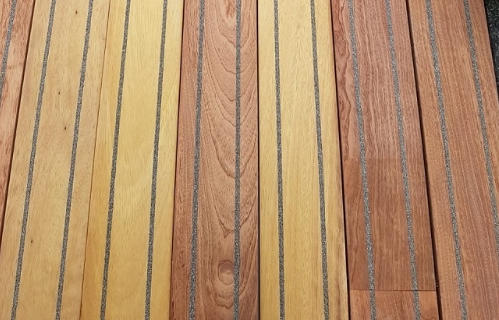
Iroko is harvested from two main species—Milicia excelsa and Milicia regia—within the Moraceae family. These trees reach heights of 30–40 meters and boast trunk diameters of up to 1.5 meters. The heartwood is golden to medium brown, darkening with age, while the pale sapwood is clearly demarcated.[2][6][3]
- Grain: Interlocked and sometimes irregular, contributing to Iroko's durability and aesthetic character.[6][3]
- Texture: Medium to coarse; unfinished wood feels oily/greasy.
- Density: Average dried weight of 660 kg/m³.[5][3]
- Calcium Carbonate Deposits: Some boards may contain white mineral deposits, affecting tool sharpness and surface finish.[6]
- Natural Luster: Iroko often shows a glossy finish when polished.
Iroko wood contains unique phenolic compounds, especially chlorophorin, which is notable for being a powerful antioxidant. This compound helps the wood resist fungal decay and insect attack, making it highly durable outdoors, even without chemical treatment.[1][2]
Unfinished Iroko is often oily to the touch. Naturally occurring oils and resinous substances may help inhibit bacteria but can complicate finishing—requiring special de-oiling before painting and varnishing with synthetic products. Calcium carbonate deposits embedded in the heartwood blaze can have a severe dulling effect on cutting edges and sometimes cause unsightly surface spots.[2][6]
Among the chemicals present, phenolic sensitizers like chlorophorin and related compounds are suspected of provoking allergic responses. When Iroko is planed, sanded, or cut, fine dust becomes airborne and can cause reactions ranging from mild irritation to severe allergies in susceptible individuals.[8][3]
Iroko's robustness derives from its specific gravity (0.56–0.66), Janka hardness (1190–1260), and impressive strength metrics:
- Modulus of Rupture: 14,080 lb f/in⊃2;.[3][2]
- Crushing Strength: 7,832–7,750 lb f/in⊃2;.
- Shrinkage: Tangential 4.8–5.4%, radial 3.3–3.5%.
- Stability: Moderately stable, with little movement in service.
Iroko generally machines, glues, and finishes well, though its interlocked grain can result in tearout when surfacing. The mineral deposits accelerate tool blunting, and its oiliness may demand cleaning with methylated spirit before painting. Despite these drawbacks, Iroko is favored for exterior joinery, boat decks, flooring, and laboratory benches.[5][3][6]
- Furniture & Cabinetry
- Ship/Yacht Building
- Outdoor Joinery—Windows, Doors, Cladding
- Flooring & Paneling
- Laboratory Benches and Marine Work
Its resistance to rot and insects makes it suitable for harsh environments, offering a longer lifespan than many softwoods or even commonly-used hardwoods.
Iroko is not officially labeled as "poisonous" like yew or laburnum, but some risks are present, particularly for woodworkers and those with allergies. The primary issues stem from dust exposure and ongoing skin contact.[9][10][3][6]
- Dermatitis and Boils: Some users develop rashes, nettle-like irritation, boils, or furunculosis.[9][6]
- Respiratory Issues: Asthma, hypersensitivity pneumonitis, and bronchial inflammation are documented, mostly in those exposed to fine dust in workshops.[11][12][6]
- Eye Irritation: Redness, itching, or watering is possible when dust contacts the eyes.[13][14]
- Other Issues: Rarely, headache or dizziness occur.
Medical literature cites occupational asthma from Iroko wood dust exposure, caused by immune sensitization rather than classical IgE-mediated allergy. Symptoms may include tightness of the chest, wheezing, and reduced lung function.[12][11]
Sensitization involves the body's immune system gradually responding more aggressively to repeated contact—meaning even minor, early symptoms may become critical with continued exposure. Precaution is especially vital for workers with atopic backgrounds or existing respiratory allergies.[10][15]
- Personal Protection: Use dust masks/respirators and barrier creams on exposed skin.
- Ventilation: Ensure workshop air is adequately filtered and ventilated.
- Surface Cleaning: Regular cleaning prevents dust buildup and reduces airborne allergens.
- Finish Application: Applying sealant/varnish reduces risks for end-users.
Finished products rarely present risks; unsealed or dusty surfaces require caution.[16][3]
Iroko trees are revered in some African cultures; for example, the Yoruba tradition suggests felling Iroko trees can bring misfortune, with spirits believed to inhabit the tree. This superstition adds an extra layer to the cultural significance of Iroko, making it more than just a building material.[6]
Historically, heavy exploitation reduced East African Iroko availability, relocating much of the trade to West Africa. While not critically endangered, Iroko is listed as near-threatened by the IUCN Red List due to overharvesting and habitat challenges. Modern regulations and improved forestry practices are helping stabilize some wild populations, but responsible sourcing is essential.[6]
| Wood Species | Poisons/Allergens | Common Symptoms | Severity |
|---|---|---|---|
| Iroko | Phenolic sensitizers | Dermatitis, Asthma, Boils | Moderate |
| Mahogany | Sensitizer | Vomiting, Boils, Nosebleed | Moderate-High |
| Laburnum | Direct toxin | Severe Poisoning/Death | Severe |
| Yew | Direct toxin | Intestinal Issues/Death | Severe |
| Padauk, Purpleheart | Sensitizer | Strong Reactions | Moderate |
Compared to highly poisonous woods, Iroko sits closer to sensitizing species: safe for most uses with proper precautions, but less appropriate for food-contact surfaces or children's toys.
- Avoid Iroko for chopping boards, butcher blocks, or toys where direct skin or food contact is frequent.[3][6]
- Opt for full finishing with sealant or varnish for indoor and outdoor products.
- Source Iroko responsibly—check for certification or supplier sustainability documentation.
- Dust extraction and ventilation systems are crucial where frequent sanding, sawing, or planing occur.
- Use sharp, carbide-tipped tools to offset the dulling effect of calcium carbonate inclusions.
- Clean hands and exposed skin thoroughly after handling unsealed Iroko.
There are no hazardous chemicals released during Iroko disposal, but dust management remains crucial for environmental and occupational health reasons. Recycling, reuse, and responsible disposal practices help safeguard workers, communities, and local ecosystems.
Iroko wood is not acutely poisonous but is best approached with caution due to significant risks of skin, eye, and respiratory irritation—mainly caused by dust and natural sensitizers. Most end-users are protected by surface sealing, but woodworkers, fabricators, and individuals prone to allergies must observe standard protective measures. Iroko's remarkable durability, weather resistance, and aesthetic appeal mean it will continue to be a premium material for decades. With sustainable sourcing, thoughtful handling, and diligent finishing, Iroko remains both a safe and desirable choice for diverse construction, marine, and furniture applications.[2][5][3][6]
Iroko is generally safe for furniture, especially when surfaces are finished and sealed. Unfinished wood or dust presents more risks during handling and processing.[3][6]
Yes, Iroko wood dust or unfinished surfaces can provoke dermatitis, asthma, or respiratory conditions in sensitive individuals. Most people remain unaffected, but woodworkers should use safety equipment.[8][6]
Iroko dust is a known cause of occupational asthma and must be avoided or minimized using dust masks and extraction systems in workshops.[11][12]
Finished products have low risk as varnishes and sealants prevent dust and allergens from becoming airborne. This makes the wood safe for most domestic and commercial use.[16][3]
Proper ventilation, dust masks, barrier creams, gloves, and regular cleaning of skin and clothing are advised. Avoid using Iroko for food-contact items unless fully sealed.[15][17][6]
[1](https://tropix.cirad.fr/FichiersComplementaires/EN/Africa/IROKO%202023.pdf)
[2](https://www.ohc.net/wp-content/uploads/2020/03/Iroko-Technical-Data-.pdf)
[3](https://www.wood-database.com/iroko/)
[4](https://www.sciencedirect.com/science/article/abs/pii/S135983681631719X)
[5](https://cameo.mfa.org/wiki/Iroko)
[6](https://www.anyonewood.com/iroko/)
[7](https://www.sciencedirect.com/science/article/pii/S2352484723001476)
[8](https://www.wood-database.com/wood-articles/wood-allergies-and-toxicity/)
[9](https://www.mountainwoodworker.com/articles/toxic_woods.pdf)
[10](https://www.woodturner.org/common/uploaded%20files/discover%20woodturning/toxicity/woodtoxtable2.pdf)
[11](https://pubmed.ncbi.nlm.nih.gov/14582819/)
[12](https://www.occupationalasthma.com/occupational_asthma_causative_agent.aspx?id=247)
[13](https://woodbin.com/ref/wood-toxicity-table/)
[14](https://www.woodcraft.com/blogs/wood/toxic-woods)
[15](https://workshopcompanion.com/know-how/materials/hardwoods-softwoods/health-hazards.html)
[16](https://www.timber2udirect.co.uk/iroko-wood-for-cladding-what-you-need-to-know/)
[17](https://www.ukworkshop.co.uk/threads/iroko-dust-health-problems.36709/)


