
Views: 222 Author: SENHEDA WOOD Publish Time: 2026-06-12 Origin: Site


Content Menu
>> Advantages of untreated timber
>> How pressure treatment actually works
>> Advantages of treated timber
● Treated vs Untreated Timber: A Practical Comparison
>> Key differences at a glance
● How Professionals Actually Decide: Key Questions to Ask
>> 1. Where will the timber live?
>> 2. What lifetime and warranty do you need?
>> 3. Are there regulatory or buyer‑side requirements?
● Industry Trends: Timber Markets in Vietnam and Beyond
>> Vietnam's growing wood industry
>> African timber to Vietnam: opportunities and challenges
● Expert Use Cases: When to Choose Which Timber
>> Best fits for untreated timber
>> Best fits for treated timber
● Compliance, Sustainability, and Documentation
>> Key compliance points for exporters and importers
>> Why serious buyers expect strong documentation
● How We Support Buyers as an African Timber Specialist
>> Our capabilities at a glance
>> Typical collaboration workflow
● Practical Checklist: Choosing Treated or Untreated Timber for Your Next Project
● Call to Action: Plan Your Next Timber Shipment With Confidence
● Frequently Asked Questions (FAQ)
When you are planning a structure, furniture line, or export shipment, the decision between treated and untreated timber is not just a technical detail – it affects safety, durability, cost, and compliance in every market you serve. Drawing on our 16+ years in African hardwoods and global timber export, I'll walk you through how professionals actually make this choice in real projects, and how our team at HONG KONG SENHEDA WOOD LIMITED supports buyers from Africa to Vietnam and beyond. [georgehill-timber.co]
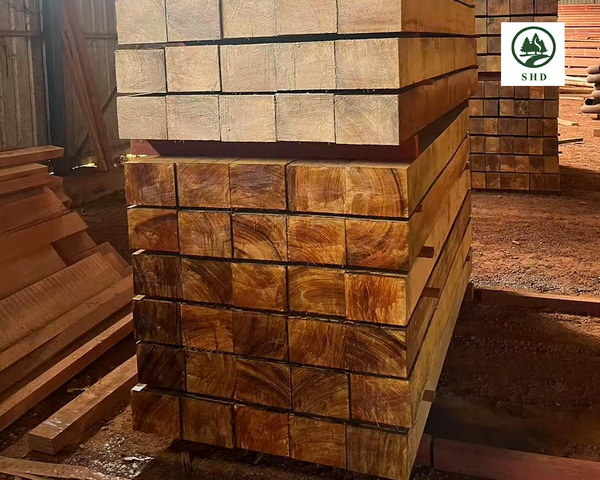
Untreated timber is wood in its most natural state: sawn from the log, stacked, and dried through air‑drying or kiln‑drying, with no chemical preservatives added. This is the starting point for most interior joinery, furniture, and decorative applications. [georgehill-timber.co]
- Natural moisture management
After sawing, boards are stacked with spacers to allow air circulation and gradual drying; in some cases, they are kiln‑dried to accelerate moisture reduction and improve dimensional stability. [georgehill-timber.co]
- No added chemicals
Because there is no preservative treatment, the wood keeps its original color, grain, and scent, which many architects and furniture brands prefer for high‑end interiors. [pgrtimber.co]
- Flexible post‑processing
Untreated timber is generally easier to cut, sand, glue, and finish because there are no treatment chemicals interfering with coatings or adhesives. [georgehill-timber.co]
- Cost‑effective for indoor use
Without the extra treatment process, untreated wood is usually cheaper per cubic meter than comparable treated stock, especially for volumes used in furniture and interior joinery. [georgehill-timber.co]
- Superior natural appearance
The wood retains its intrinsic color and grain, which is crucial for visible elements such as furniture, cabinetry, paneling, and decorative trims. [georgehill-timber.co]
- Safer for close human contact
For applications like children's furniture, indoor flooring, or pet‑related products, many buyers prefer untreated or low‑treatment options to avoid unnecessary chemical exposure. [georgehill-timber.co]
- Lower environmental footprint (when responsibly sourced)
Without preservatives, untreated wood is biodegradable and less problematic at end‑of‑life, especially when it comes from sustainably managed forests. [pgrtimber.co]
Treated timber starts life as regular sawn wood, then goes through a pressure‑treatment process to protect it from insects, fungi, rot, and in some systems even fire. [pgrtimber.co]
- Boards are loaded into a sealed cylinder.
- Air is removed under vacuum so the preservative can penetrate the cell structure.
- A preservative solution is pumped in and pressurized, forcing it deep into the wood fibres.
- The timber is then conditioned and dried before dispatch. [sabiepoles.co]
Depending on the chemistry used, treatment may contain copper compounds, chromium, and other active ingredients to lock in protection and slow leaching. [sabiepoles.co]
- Significantly extended service life
The preservative barrier dramatically improves resistance to rot, decay, and insect attack, especially in ground‑contact or high‑moisture environments. [pgrtimber.co]
- Lower long‑term maintenance costs
While periodic sealing or coating is still recommended, treated wood typically needs fewer replacements and repairs over its life cycle than equivalent untreated species. [pgrtimber.co]
- Application‑specific grades
Many markets classify treated timber by use class (e.g., above ground, ground contact, marine), making it easier for specifiers to match durability to risk. [pgrtimber.co]
- Good availability for construction
Treated structural lumber is widely available, making it a practical choice for decking, fencing, poles, and outdoor structures in many countries. [pgrtimber.co]
The following table summarises how professionals typically compare treated and untreated timber when specifying for real‑world projects. [sabiepoles.co]
| Factor | Untreated timber | Treated timber |
|---|---|---|
| Appearance | Natural color and visible grain, easy to stain to desired tone. (georgehill-timber.co) | Color may shift (often greenish or darker); grain can be partially masked. (georgehill-timber.co) |
| Durability | Lower resistance to rot, insects and moisture outdoors; suitable indoors. (georgehill-timber.co) | High resistance to decay and insects, ideal for outdoor and ground‑contact use. (georgehill-timber.co) |
| Workability | Easier to cut, sand, glue and finish; more predictable with coatings. (georgehill-timber.co) | Harder on tools; chemicals can affect some adhesives and finishes. (georgehill-timber.co) |
| Health & safety | No added preservatives; preferred where people and pets have close contact. (georgehill-timber.co) | Requires PPE when cutting/handling; some formulations restricted in certain uses. (georgehill-timber.co) |
| Environmental impact | Biodegradable if sustainably sourced; simpler disposal at end‑of‑life. (georgehill-timber.co) | Potential chemical leaching to soil/water; must follow disposal guidelines. (georgehill-timber.co) |
| Cost profile | Lower upfront cost; may require more maintenance or earlier replacement outdoors. (georgehill-timber.co) | Higher upfront cost but often more economical over the lifecycle in harsh conditions. (georgehill-timber.co) |
| Typical use cases | Indoor furniture, cabinetry, interior paneling, decorative elements, some protected structural components. (georgehill-timber.co) | Decks, fences, poles, landscaping, marine and agricultural structures, outdoor framing. (georgehill-timber.co) |
In our export projects, whether we supply untreated African hardwood or chemically treated stock, we always walk clients through a simple decision framework before shipping. This can drastically reduce warranty issues and callbacks. [cn.linkedin]
- Fully indoors and climate‑controlled
For hotel furniture, kitchen cabinets, and office fit‑outs, untreated or naturally durable hardwoods usually offer the best balance of aesthetics and cost. [georgehill-timber.co]
- Partially sheltered (e.g., verandas, covered decks)
Here, a mix of naturally durable untreated hardwoods and treated structural elements is common to balance look and longevity. [pgrtimber.co]
- Fully exposed or in contact with ground/water
For fencing, decking, agricultural structures, and marine components, treated timber or very high‑durability species is strongly recommended. [sabiepoles.co]
- Short‑term projects (pop‑up structures, temporary works) can sometimes justify untreated timber outdoors if the expected life is only a few years.
- Permanent structures (public decks, commercial fencing, utility poles) often need 10–25‑year service life, making treated options or premium hardwoods more appropriate. [sabiepoles.co]
- Many export markets require ISPM 15 compliant treatment for wood packaging and pallets used in international shipments, including debarking and heat treatment. [shippingsolutionssoftware]
- For CITES‑listed or sensitive species, buyers may also require documentation proving legal harvest and proper permits. [fws]
- Some projects (schools, playgrounds, food‑related facilities) restrict certain preservative chemistries in high‑contact areas. [fws]
If you export or source timber, the treated vs untreated decision also affects compliance, supply stability, and logistics. Vietnam is a clear example of a fast‑growing, quality‑sensitive market.
- Vietnam's wood and wood product exports reached around 17.2 billion USD in 2025, up roughly 6% year‑on‑year, underlining its role as a top global furniture and wood product exporter. [vietnam-briefing]
- Local manufacturers balance imported African timber with domestic and regional species to meet price points across Europe, the U.S., and Asia. [sciencedirect]
- Vietnamese buyers see African hardwoods as an opportunity to diversify supply and access unique species for mid‑ to high‑end furniture and interior projects. [sciencedirect]
- They also highlight challenges around documentation, grading consistency, and aligning moisture content and treatment levels with factory requirements. [sciencedirect]
With 4,000–8,000 tons (or m³) of African timber handled monthly and over 200 containers shipped to Vietnam, we've learned that aligning treatment, drying, and species choice with end‑use is decisive for repeat business and long‑term cooperation. [vietnam-briefing]

To make this concrete, here is how experienced buyers typically match timber type to project scenarios. [shippingsolutionssoftware]
- Indoor furniture and cabinetry
High‑value species like Iroko, Sapelli, or Okoume – typically supplied kiln‑dried and untreated – are popular in Vietnam, the Middle East, and Europe for furniture frames, panels, and veneers.
- Decorative and architectural elements
Interior ceilings, wall cladding, handrails, and trim benefit from untreated timber's natural look, especially where designers want a warm, tactile finish.
- Projects with tight chemical constraints
Children's rooms, healthcare interiors, and pet products often specify untreated or very low‑treatment materials.
- Decks, pergolas, and outdoor living spaces
Treated structural sections combined with higher‑end hardwood decking boards are a common value‑engineered solution in coastal or humid climates. [georgehill-timber.co]
- Fencing, posts, and agricultural structures
Ground‑contact poles and posts almost always require treatment for long‑term performance, especially in termite‑prone regions. [sabiepoles.co]
- Packaging for international trade
Pallets, crates, and dunnage must meet ISPM 15 heat‑treatment standards (or equivalent) to avoid border delays and fines. [shippingsolutionssoftware]
Modern timber buyers care about more than just price and dimensions. They increasingly ask for traceability, certifications, and treatment proof. [reddit]
- ISPM 15 for wood packaging
Wood pallets and packaging used in international shipments must be debarked and either heat‑treated or fumigated, then stamped with the IPPC mark, country code, facility code, and treatment type. [shippingsolutionssoftware]
- CITES and endangered species
For CITES‑listed timber, exporters must provide permits proving legal harvest and trade, supported by transfer documents and prior imported CITES permits in case of re‑exports. [fws]
- Phytosanitary and fumigation certificates
Some countries still request additional phytosanitary or fumigation certificates beyond the visible ISPM 15 marking, so exporters should confirm documentary requirements per destination. [shippingsolutionssoftware]
- It reduces customs delays and unexpected storage charges at arrival ports.
- It signals that the supplier can be trusted with repeat contracts and larger volumes.
- It supports downstream brands' claims around responsible sourcing and ESG commitments. [reddit]
As a long‑term operator focused on African timber and global logistics, our role is not only to ship wood but to help you choose the right wood and treatment approach for your market. [cn.linkedin]
- 16+ years dedicated to African timber trade
We specialise in species such as Iroko, Okoume, Sapelli, Tali, Azobe, and other African hardwoods, supplying both logs and sawn timber to global clients. [cn.linkedin]
- 4,000–8,000 tons (or m³) of African timber processed monthly
This scale gives us the flexibility to build mixed‑species and mixed‑treatment loads tailored to your order structure.
- Over 200 containers exported to Vietnam alone
We understand the technical expectations of Vietnamese manufacturers and can harmonise grading, moisture, and treatment with your production lines. [vietnam-briefing]
- Global reach with African roots
From Africa to Vietnam, the Middle East, and beyond, we handle multi‑country routing, documentation, and coordination across time zones. [reddit]
1. Define your application (indoor, outdoor, structural, decorative, or packaging).
2. Match species, treatment level, and drying method to your performance and cost targets.
3. Confirm regulatory requirements for your destination market (ISPM 15, CITES, local standards).
4. Agree on grading rules, moisture targets, and packing specifications.
5. Scale up from trial container to regular shipments once performance is validated. [reddit]
Use this quick checklist to guide your next sourcing or project decision.
1. Location of use
- Indoors, dry, controlled environment → start with untreated timber or naturally durable hardwoods.
- Outdoors or ground contact → prioritise treated timber or high‑durability species.
2. Target service life
- Less than 5 years → untreated may be acceptable even outdoors (depending on risk).
- 10–25 years required → specify treated timber or premium durable hardwoods with proven performance.
3. Regulatory and buyer standards
- Export packaging → ensure ISPM 15 compliance and correct stamping.
- Public / high‑contact areas → verify allowed preservative systems and any CITES constraints.
4. Aesthetic and branding requirements
- Visible interior surfaces → lean towards untreated timber with strong grain and color.
- Hidden structural members → treated options often deliver better value.
5. Supply and logistics
- Confirm container loading plan, documentation package, and shipment schedule with your supplier before committing to volume orders.
If you are sourcing African timber for Vietnam, Asia, the Middle East, or other global markets and want to make the right call between treated and untreated options, our team at HONG KONG SENHEDA WOOD LIMITED can help you specify, document, and ship with fewer surprises. [cn.linkedin]
Share your project details (end‑use, target market, required lifetime, and any standards you must meet), and we will recommend fit‑for‑purpose species, treatment strategy, and loading plan based on 16+ years of African timber export experience and thousands of containers shipped worldwide. [vietnam-briefing]

1. Is untreated timber always unsuitable for outdoor use?
Not always; some naturally durable species perform reasonably well outdoors, especially in above‑ground, well‑ventilated applications, but they still carry higher risk than treated timber in high‑moisture or ground‑contact conditions. [sabiepoles.co]
2. Does treated timber stay protected forever?
No; while treatment provides long‑lasting resistance, UV exposure, mechanical damage, and surface checking can still occur over time, so periodic inspection and maintenance coatings are recommended. [sabiepoles.co]
3. What is ISPM 15 and why does it matter?
ISPM 15 is an international phytosanitary standard that requires wood packaging material used in export to be debarked and either heat‑treated or fumigated, then marked with the official stamp to show compliance; without this, shipments risk delays or rejection at borders. [shippingsolutionssoftware]
4. How do I know if my timber species is CITES‑listed?
You can verify using databases maintained by authorities such as the U.S. Fish & Wildlife Service or the CITES Secretariat, usually by searching the scientific name or country of origin, then reviewing any permit requirements. [fws]
5. What information should I prepare before contacting a timber supplier?
Professional buyers typically prepare expected volumes, target species or performance requirements, destination country, end‑use (indoor, outdoor, structural, packaging), and any required certifications (e.g., ISPM 15, CITES, sustainability schemes) to speed up accurate quotations and technical support. [reddit]
1. George Hill Timber – "Timber Selection Guide: Treated vs Untreated Wood Explained". [Link] [georgehill-timber.co]
2. PGR Timber – "Treated vs Untreated Timber: A Comprehensive Guide". [Link] [pgrtimber.co]
3. Sabie Poles – "Should we use CCA treated or Untreated timber for construction?". [Link] [sabiepoles.co]
4. Shipping Solutions – "Wood Packaging Materials in International Export: Compliance and ISPM 15". [Link] [shippingsolutionssoftware]
5. Vietnam Briefing – "Navigating Vietnam's Wood Industry in 2026". [Link] [vietnam-briefing]
6. ScienceDirect – "Opportunities and challenges for Vietnamese companies to source timber and wood from African countries". [Link] [sciencedirect]
7. U.S. Fish & Wildlife Service – "Wood, Timber, and Other Tree Products". [Link] [fws]
8. Reddit r/importexport – "Export timber – practical advice for finding buyers and managing documentation". [Link] [reddit]
9. K‑Timber article – "Treated and Untreated Timber: Choose Your Fit". [Link] [georgehill-timber.co]
10. HONG KONG SENHEDA WOOD LIMITED – Company and product information. [Link] [cn.linkedin]


