
Views: 222 Author: SENHEDA WOOD Publish Time: 2026-06-08 Origin: Site


If your entire log supply comes from one country, one port, or one supplier family, you are not a buyer – you are a hostage.
In 2022, Gabon banned raw logs of Okoume and other species to promote local processing. In 2026, they proposed increasing export duties from 8.6% to 12.5%. Similar restrictions have happened in Cameroon, Congo, and Côte d‘Ivoire. When a government changes its policy, you get zero warning. One container of Iroko or Sapelli that was quoted at $X/m³ suddenly becomes unavailable or 20% more expensive.

West Africa’s major timber ports (Douala, Pointe-Noire, Libreville, Abidjan) are efficient but not immune to strikes, fuel shortages, or customs delays. In 2023, a two-week strike at Douala delayed over 500 containers. Buyers who relied 100% on Cameroonian Wenge and Padouk had to idle production. Those with diversified African sources (e.g. Congo Kossipo + Gabon Ovangol) simply rerouted.
Many small African traders operate on short-term borrowing. When local currency devalues against the USD (e.g. NGN, XAF, CDF), their working capital evaporates. We have seen cases where a buyer paid a 30% deposit for Zingana logs, only to have the supplier disappear or deliver substandard Mixe (lower grade) claiming “shortage of FAS”. This is not just a supply issue – it’s a credibility issue.
A single mill or forest concession often produces a narrow range of grades. If your entire supply of Movingui or Dabema comes from one source, you will receive the same pattern of defects (wane, knots, heart rot) every shipment. You have no leverage to demand better sorting. At SENHEDA WOOD, we source from multiple concessions in Congo and Gabon, allowing us to blend or substitute species while maintaining your required FAS standard.
When you have only one or two approved suppliers for a species like Beli or Ovangol, they control the price. In 2025, we saw prices for certain grades of Kossipo jump 18% in three months simply because a major supplier reduced output. Buyers with alternative sources (e.g. switching between Sapelli and Kossipo, or Okoume and light Meranti) negotiated better contracts.
If you run a furniture factory in Nicaragua or a plywood plant in Honduras, and you miss delivery because “my only Padouk supplier failed”, your client will find someone else. Reliability is not a luxury – it is the price of entry.
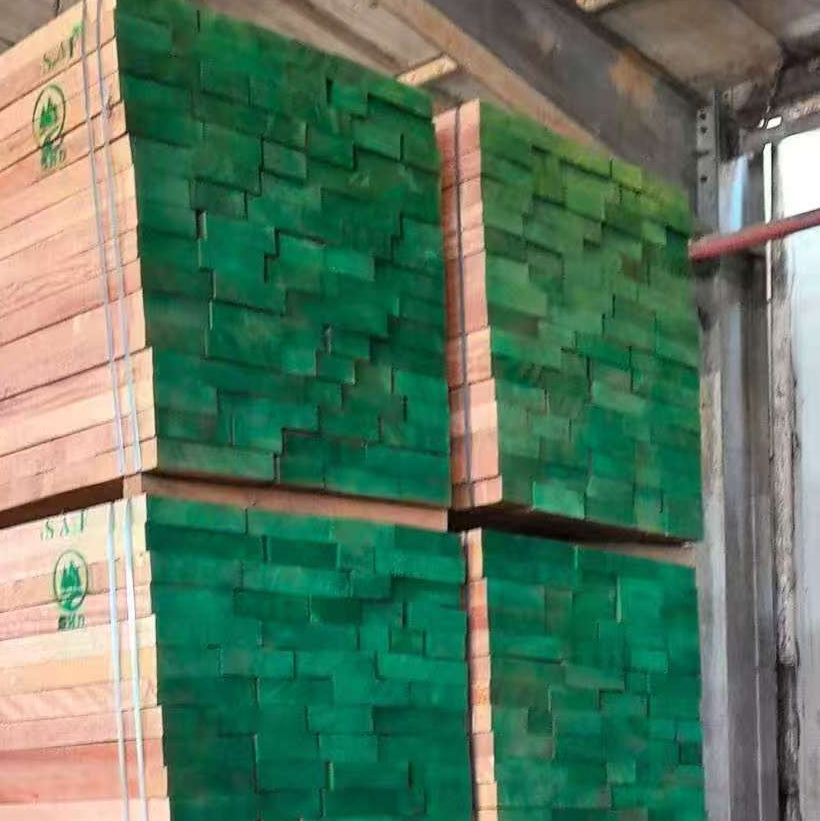
Map your risk – List every species you buy and count how many independent supply sources you have. If any species has only one source, that’s a red flag.
Build a buffer stock – Keep 6–8 weeks of safety inventory for critical species like Iroko (for decking), Wenge (for luxury furniture), and Okoume (for plywood core). We maintain safety stock in our African yards and can reserve volumes for committed buyers.
Diversify origins – Don‘t rely on a single country. We offer Okoume from both Congo and Gabon; Padouk from Cameroon and Congo; Wenge from Congo and Equatorial Guinea. Different origins, same quality standards.
Partner with a multi-source supplier – HONG KONG SENHEDA WOOD LIMITED owns factories and concessions in Congo and Gabon, and has long-term off-take agreements in Cameroon. We are not a trading post – we control the chain from forest to ship. Our monthly volume of 8,000+ tons across 11 species means we can flex supply when one region tightens.
Closing hook: How many weeks of hardwood inventory do you keep for your top 3 species? If the answer is less than 8 weeks, or if any of those species comes from only one country, let’s talk.
WhatsApp / WeChat / Call:
+86 13534205619 (Anna Liu)
+86 13530895049 (Vivian)
Visit us: www.shdtimber.com
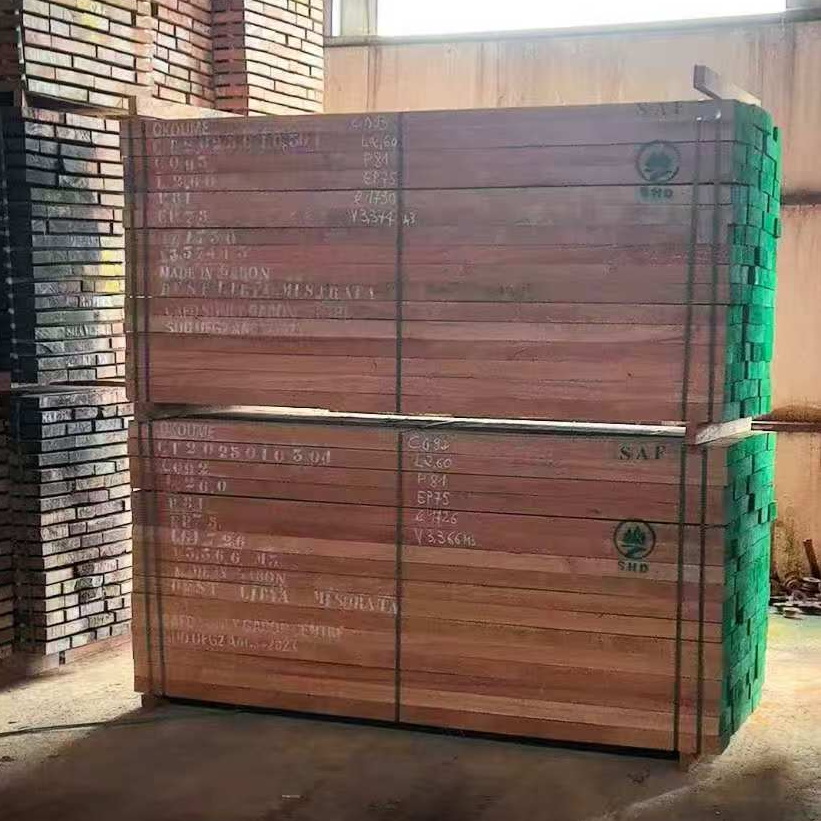
HONG KONG SENHEDA WOOD LIMITED – Multi-origin African hardwood supply | www.shdtimber.com | Species: Okoume, Iroko, Sapelli, Dabema, Movingui, Zingana, Padouk, Kossipo, Wenge, Ovangol, Beli & more


